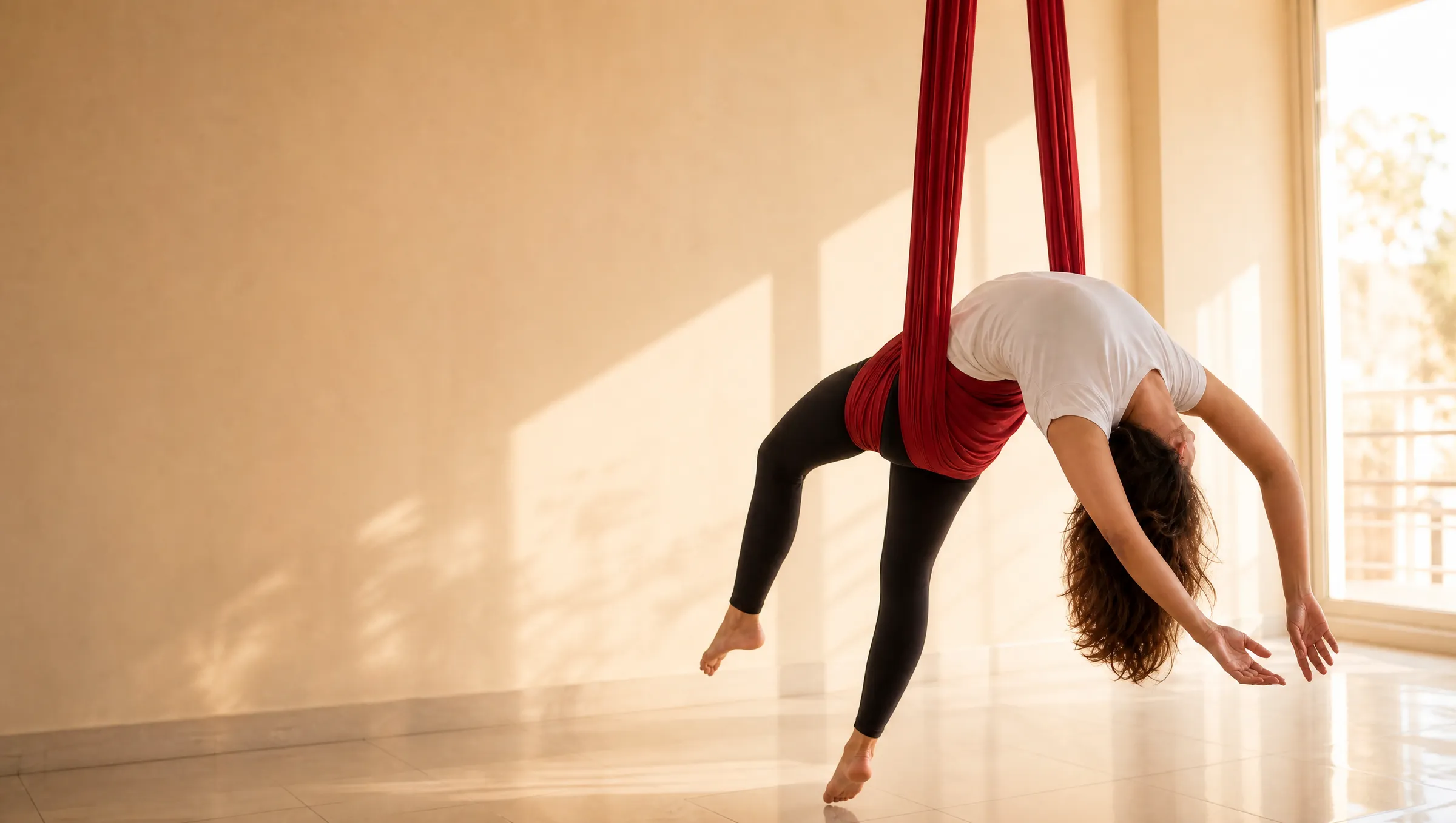


At a school that teaches only aerial
50-Hour Aerial Yoga Teacher Training in Rishikesh, India
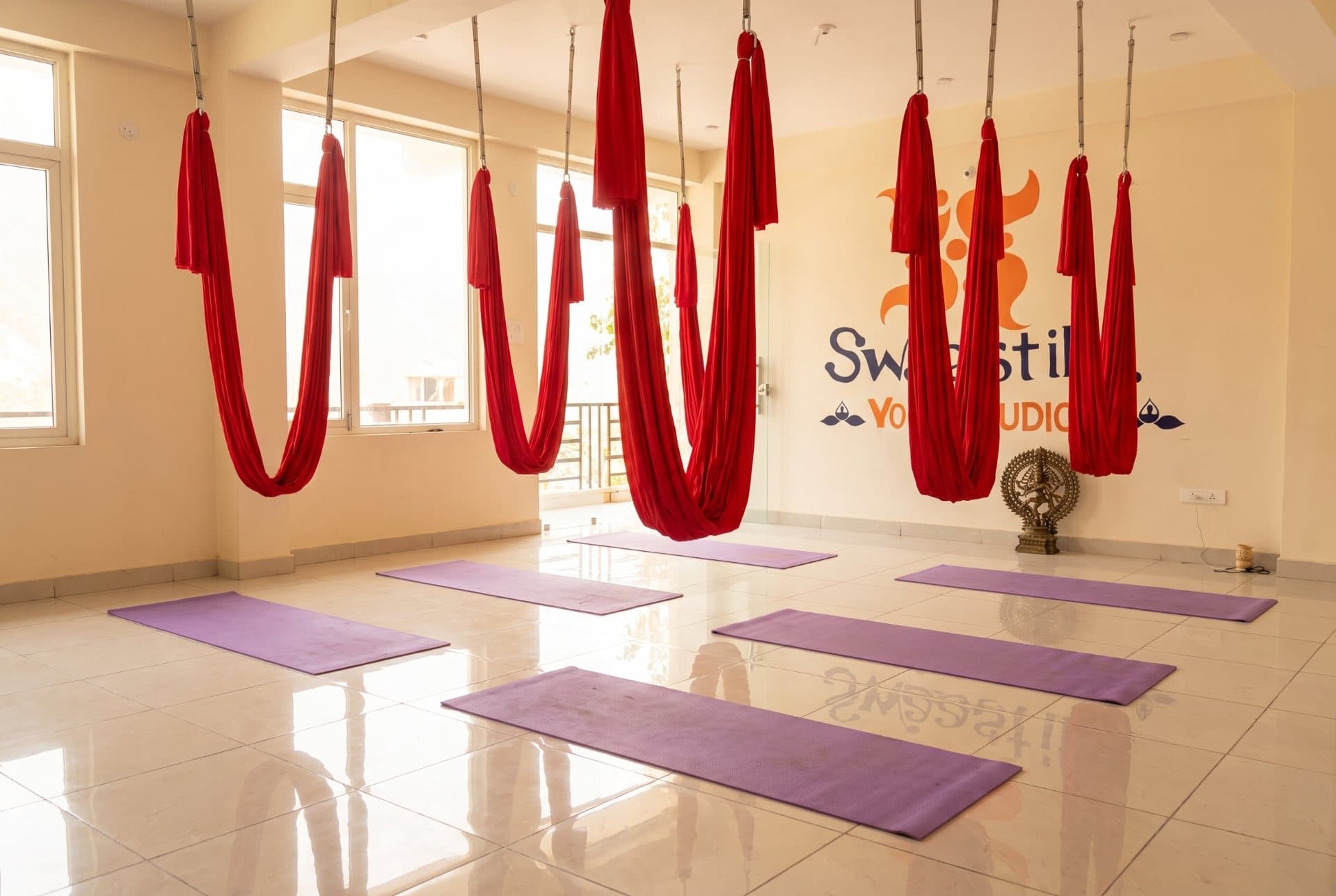
Seven days in Tapovan to learn the hammock properly — how to rig it, how to hang in it, and how to put a class in it that a nervous beginner will come back to. No aerial experience needed, and no assumption that you already teach.
- 7 days / 6 nights
- YACEP certified
- No experience needed
- Tapovan, Rishikesh
- From $195
4.8 on GoogleYoga Alliance YACEP certifiedFrom $195 all-inclusive
What the 50-hour training is
A seven-day residential certification in Tapovan, Rishikesh, covering everything you need to lead an aerial hammock class safely: rigging and load, inversions, hammock-supported asana, and the methodology to put it together into a class a nervous beginner will come back to.
Most people arrive having taken two or three hammock classes and loved them, with no idea what holds the thing up. That gap is the first thing we close — day one is rigging, hardware and the pre-class inspection you will run for the rest of your teaching life, before anyone leaves the ground.
Groups stay small. Over seven days you will teach in front of the room more than once and get direct feedback both times, which is the part that actually makes you employable.
- Duration
- 7 Days
- Level
- Open to all levels
- Certification
- YACEP certified
- Location
- Tapovan, Rishikesh, India
- Fees, all-inclusive
- From $195
- Next batch
- 12–18 Oct October 2026
- Batches start
- Every Monday
- Group size
- Small groups, 15–20
Why aerial is worth training in
Experience the magic of aerial yoga — also known as flying yoga, hammock yoga or anti-gravity yoga — in the spiritual heart of Rishikesh. This 7-day intensive is built for yoga teachers, studio owners and committed practitioners who want to add a genuine specialty to what they already teach.
Aerial yoga combines traditional asana, Pilates and dance using a soft fabric hammock suspended from the ceiling. The hammock lets you explore inversions safely, decompress the spine, build real strength and feel what it is like to fly — and it gives you something to offer that most mat-yoga teachers cannot.
No prior aerial experience is required. You will be taken from the basics through to advanced technique, covering rigging and safety protocols, teaching methodology and how to set the practice up as a business. By the end of the seven days you will be ready to lead an aerial class of your own.

What aerial yoga actually is
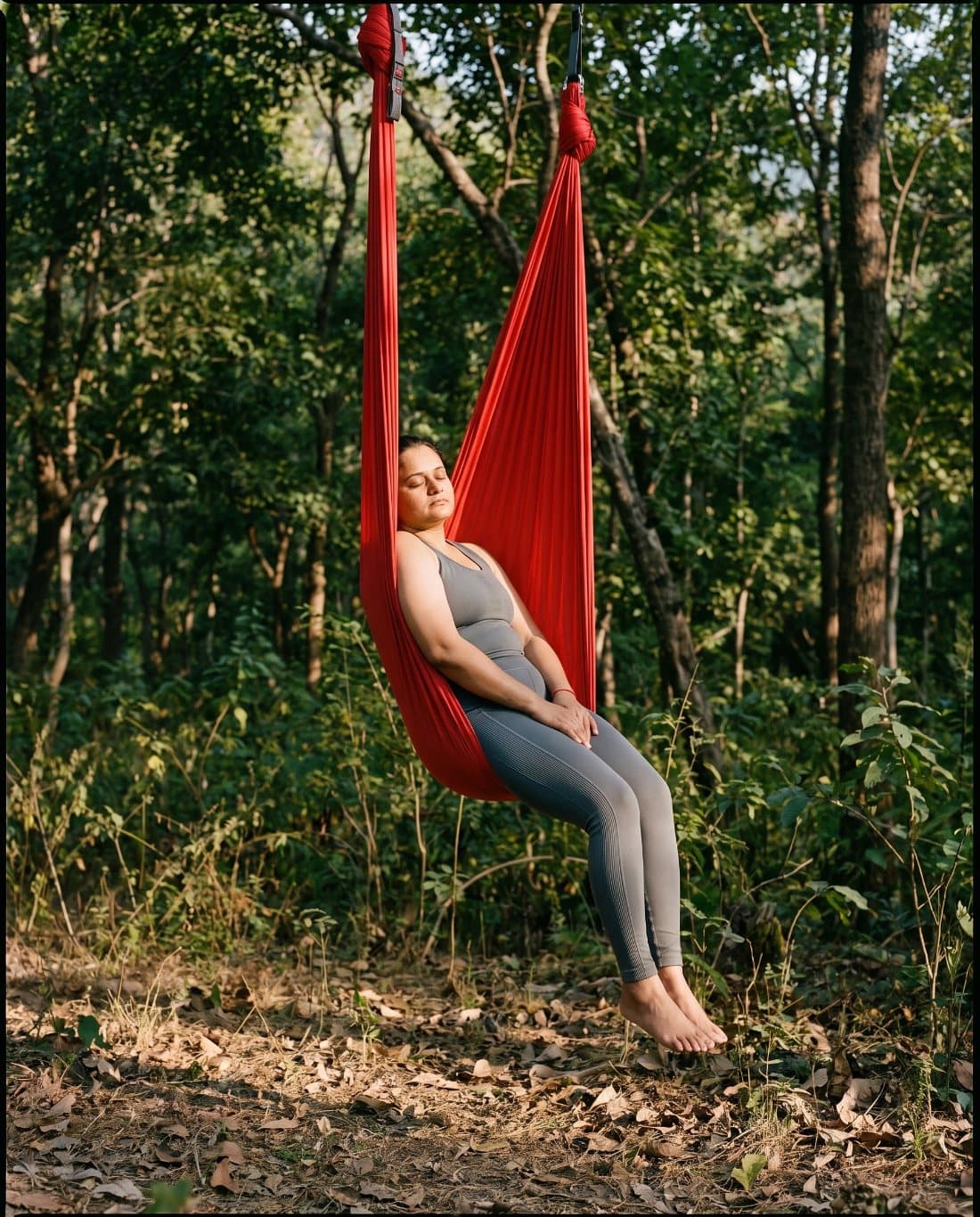
Aerial yoga — also called hammock yoga or anti-gravity yoga — hangs a strong, low-stretch fabric from a rated ceiling point or a free-standing frame. The hammock is a prop, not an apparatus: you use it to get into yoga postures, inversions and flows that are difficult or impossible to hold on a mat alone.
The difference from mat practice is where the weight goes. The fabric spreads load across a wide surface instead of stacking it into wrists, shoulders and neck, which is why deep hip openers and backbends open up sooner, and why someone can be safely upside down in their first session without the upper-body strength a headstand demands.
Hammock yoga
Aerial yoga
Aerial arts and silks
What the hammock does for a body
The reasons students keep coming back, and the ones you will be explaining in your own classes.
Spinal decompression
Inversions made accessible
Core strength and stability
Better body awareness
Stress relief, and play
Deep, sustained flexibility
Safety and what your body needs to be able to do
Aerial is safe when it is practised and taught properly. Here is what that means for you now, and what you will be teaching your own students later.
Physical readiness
- Generally good health, with no acute musculoskeletal injury
- Able to take your bodyweight through your arms for short periods
- No unstable joints, recent surgery or severe spinal condition — ask your doctor if you are unsure
- Glaucoma, uncontrolled high blood pressure and pregnancy are the usual contraindications to full inversion; modifications exist for all three
- A willingness to be upside down, which the week builds up to gradually rather than demanding on day one
Equipment safety principles
- Fabric is inspected before every single class — fraying, discolouration, worn seams
- Carabiners and swivels must be load-rated and tested; decorative hardware has no place on a rig
- Ceiling attachments need structural sign-off, because dynamic load far exceeds static bodyweight
- Ceiling height has to suit the style being taught; the minimum changes with the practice
- Hammock points are spaced so that two students cannot make contact mid-practice
This matters: The moment you teach aerial, you are responsible for someone else every time you hang a hammock. This training covers contraindications, screening, spotter position, and what to do when a student loses their grip — so you finish it able to run a class safely rather than hopefully.
Who this training is for
No aerial experience is required. These are the people who do well here.
Yoga teachers
Committed practitioners
Fitness professionals
Studio owners
Complete beginners
Therapists and bodyworkers
What you leave with
The specifics, in one place.
- A specialty certification that separates you from mat-only teachers
- Seven days, start to finish — a week off work, not a season
- No prerequisites: teachers, practitioners and complete beginners all welcome
- Rigging and hardware taught properly, not glossed over
- Small groups of 15 to 20, so you are seen
- Practice teaching in front of the room, more than once, with feedback
- Everything included: room, three meals a day, equipment and manual
- YACEP hours that count towards Yoga Alliance continuing education
- A batch starting every Monday, so the dates fit around you
- The business module: equipment, insurance, pricing and class design
The syllabus
What is actually taught, module by module.
Rigging, hardware and safety
- Mount points, carabiners, daisy chains and swivels
- Load ratings, and why dynamic load is the number that matters
- The pre-class inspection, run every session without exception
- Assessing an unfamiliar room honestly
- Hammock height, spacing and fall zones
Aerial fundamentals in your own body
- Fabric placement, grip and the basic wraps
- Supported forward folds and hip openers
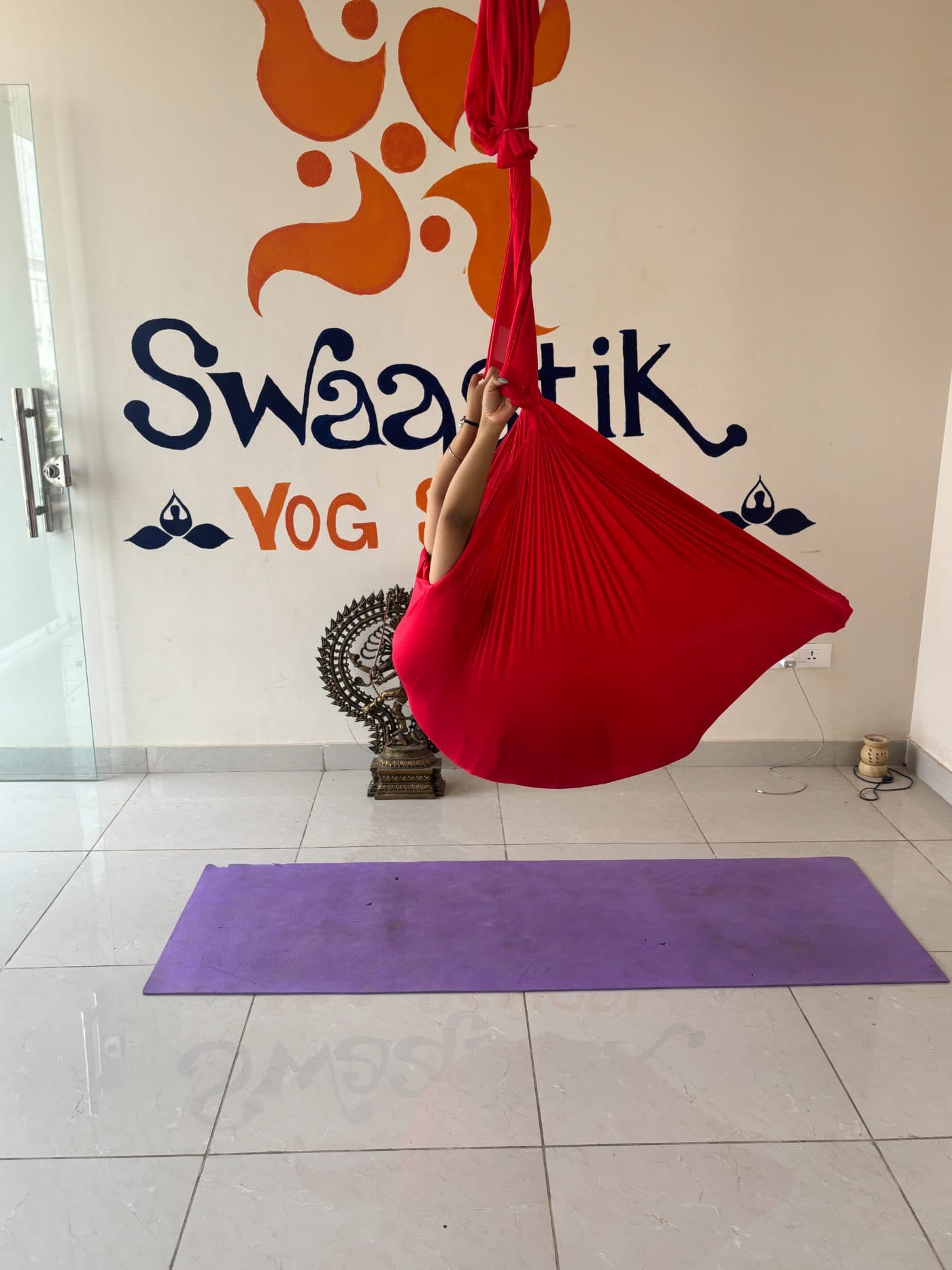
- The inverted straddle and the cocoon
- Finding your own hammock height
- Warming up specifically for suspended practice
Inversions without fear
- Getting upside down safely and staying there comfortably
- Coming out without a scramble
- Working with the first-time panic almost everyone has
- Progressions from floor-level to full inversion
- Spotting an inversion for someone else
Anatomy of suspension
- What traction actually does to the spine
- Shoulder and hip mechanics under load in fabric
- Where the hammock takes pressure off, and where it adds it
- Contraindications, and what they mean in a real class
- Screening a student before their first inversion
Sequencing a beginner class
- Building a 60-minute class with a shape to it
- Warming up on the ground before earning an inversion
- Landing people back on the mat calm rather than dizzy
- Pacing for a room where everyone is a first-timer
- Adapting on the spot when a posture is not happening
Spotting, assists and teaching practice
- Hands-on support in the fabric
- Verbal cueing that works when a student cannot see you
- Where to stand, and where never to stand
- Supervised practice teaching with detailed feedback
- Setting up a class for equipment and studio work
What a day looks like
Days start early and end early, the way they have in Rishikesh for a very long time. This is the shape of a typical training day — it shifts with the group.
06:00
Wake and herbal tea
The campus is quiet and the river is loud
06:30
Pranayama and grounding
Breathwork before anything leaves the floor
07:30
Aerial practice
Asana and wraps in your own body
09:15
Breakfast
Sattvic vegetarian, cooked on site
10:30
Theory
Anatomy, rigging or sequencing
12:30
Lunch and rest
The hottest part of the day is yours
15:30
Methodology and practicum
Teaching, cueing and feedback
17:00
Second aerial session
Restorative work or inversions
19:00
Dinner
Together, on the veranda
20:00
Satsang or self-study
Or the ghats, if the evening is good
Timings shift a little with the season and with the group. Class and meal times are confirmed on arrival.
What the fee covers
Included in the fee
- 6 nights' accommodation in your chosen room type
- Three sattvic vegetarian meals a day, plus herbal tea
- All 50 contact hours of teaching
- Use of all hammocks, rigging and equipment for the week
- Printed course manual and study materials
- Filtered drinking water and campus Wi-Fi
- Your YACEP-certified completion certificate
Not included
- Flights and airport transfers
- Indian visa and travel insurance
- Laundry and personal expenses
- Medical costs incurred during the course
- A hammock of your own, if you want to take one home
- Excursions and treatments booked separately
What we ask of you
- No prerequisites — teachers, practitioners and complete beginners are all welcome
- Good general health and the ability to take bodyweight through your arms briefly
- A willingness to be upside down, built up gradually across the week
- Attendance at all seven days; the certificate depends on it
- Fitted yoga clothing that covers the backs of the knees and the underarms
- No zips, buckles or jewellery that could snag the fabric
- A bath towel, toiletries and any medication you take
Upcoming dates
Every Monday. Dates roll forward automatically, so what you see here is always the next available intake.
| Dates | Availability | Dormitory | Shared room | Private room | Reserve |
|---|---|---|---|---|---|
| October 202612–18 Oct | Filling fast | $195 | $385 | $550 | Enquire |
| October 202619–25 Oct | Limited seats | $195 | $385 | $550 | Enquire |
| October 202626 Oct – 1 Nov | Open | $195 | $385 | $550 | Enquire |
| November 20262–8 Nov | Open | $195 | $385 | $550 | Enquire |
| November 20269–15 Nov | Open | $195 | $385 | $550 | Enquire |
| November 202616–22 Nov | Open | $195 | $385 | $550 | Enquire |
| November 202623–29 Nov | Open | $195 | $385 | $550 | Enquire |
| November 202630 Nov – 6 Dec | Open | $195 | $385 | $550 | Enquire |
- Filling fast
October 2026
12–18 Oct
- Dormitory
- $195
- Shared room
- $385
- Private room
- $550
- Limited seats
October 2026
19–25 Oct
- Dormitory
- $195
- Shared room
- $385
- Private room
- $550
- Open
October 2026
26 Oct – 1 Nov
- Dormitory
- $195
- Shared room
- $385
- Private room
- $550
- Open
November 2026
2–8 Nov
- Dormitory
- $195
- Shared room
- $385
- Private room
- $550
- Open
November 2026
9–15 Nov
- Dormitory
- $195
- Shared room
- $385
- Private room
- $550
- Open
November 2026
16–22 Nov
- Dormitory
- $195
- Shared room
- $385
- Private room
- $550
- Open
November 2026
23–29 Nov
- Dormitory
- $195
- Shared room
- $385
- Private room
- $550
- Open
November 2026
30 Nov – 6 Dec
- Dormitory
- $195
- Shared room
- $385
- Private room
- $550
Every price is per person and covers your room for the whole course, three sattvic meals a day, use of all hammocks and rigging, your course manual, and your certificate.
Putting aerial into a studio
Aerial is one of the most searched specialty disciplines in yoga, and the economics are unusual: because rigging points physically cap the class size, scarcity is built into the format. Small classes, premium pricing and a waiting list are the normal state of a working aerial programme rather than something you have to engineer.
The real investment is structural, not decorative. Ceiling load capacity, rigging hardware and fabric are where the money goes, and each of them has a right answer. The business module walks through assessing a space, sourcing from manufacturers who publish load ratings, getting an engineer to sign off, and writing a waiver and screening process that stands up.
It also films well, which matters more than it should. One well-lit aerial class produces more usable social content than a month of mat classes. Graduates leave with guidance on positioning the offering and on structuring multi-week foundation courses, which is what turns a novelty class into a community that returns.
Sourcing equipment
Insurance and liability
Class design and pricing
What our students say
Rated 4.8 out of 5 by 127 students on Google. These are their own words, reproduced unedited.
5 out of 5 stars
Aerial“Today I did my first aerial class. Without any previous yoga experience I can say I felt very welcomed by the teacher. She was great, guiding us through the session matching all of the participants levels individually. What a great experience, thank you.”
MauroX1910
Google review · August 2026
5 out of 5 stars
Aerial“I had an incredible experience at Swaastik Yog School during the June batch, where I completed both the 200-Hour Yoga Teacher Training and the Aerial Yoga Teacher Training. The entire journey was well-structured, inspiring, and transformative. The teachers were highly knowledgeable, patient, and genuinely dedicated to every student’s growth. The 200-hour TTC covered yoga philosophy, anatomy, alignment, pranayama, meditation, and teaching methodology in depth, while the Aerial Yoga course was fun, safe, and professionally taught, helping me build confidence with every practice. The peaceful atmosphere, delicious sattvic meals, and supportive community made me feel at home throughout the course. Every day brought new learning, personal growth, and meaningful connections with students from different parts of the world.🌺 I am deeply grateful to the entire Swaastik Yog School team for creating such a positive and authentic learning environment. I highly recommend this school to anyone looking for a genuine yoga education, whether you’re beginning your journey or advancing your practice. Thank you for making my June training such a memorable and life-changing experience!💗☺☺🙏🙏”
Om Bisht
Google review · July 2026
5 out of 5 stars
Aerial“Saawstik is an amazing school for those looking to learn in a safe and non predatory environment. The master teacher is a woman and it’s female owned- maybe the only or one of the only places like this in Rishikesh. The classes are very good and I deeply enjoyed doing my Aerial TTC as well as my 200H course here. I found that after some time, the staff and faculty became like family and the food was made vegan and even non spicy for us upon request. It’s affordable and fair; meaning this is more yoga practice and less of a business to make money and just hand out certificates. It was a big contrast to several other schools we scouted before choosing. I’m grateful that I chose to come here.”
Huraiquire OjaRiveri
Google review · May 2026
5 out of 5 stars
Aerial“I attended an aerial yoga workshop and a healing session. Both were amazing. I enjoyed, learned, and healed. The place was comfortable, and the trainer, Mayuri, was very supportive. Everything was so good — it was an amazing experience I can't forget. All thanks to Mayuri, who created a space where everyone could feel comfortable and perform their best. Worth it❤️”
Mahak Saini
Google review · April 2026
5 out of 5 stars
Aerial“I recently completed my training at Swastik Yoga School in Rishikesh and had a really positive experience. As a beginner, I learned Hatha, Ashtanga, and even Aerial yoga in a very supportive environment. My teachers, Mayuri and Rahul, were knowledgeable, patient, and truly dedicated. I’ve already started seeing positive changes in my body, flexibility, and overall strength. The school is also great for a multicultural experience, with students coming from all around the world, which made learning even more enriching. Grateful for the journey and highly recommend it to anyone starting or deepening their yoga practice.”
Gurupreet Singh
Google review · April 2026
5 out of 5 stars
Aerial“wow.. i have made family, friends and home at Swastik! And learning yoga the correct way - from local Indians the right way (the Indian way). I would take this course over again! But instead - I’ll come for the 500hour YTT next year 🤲🏼😃 i have no words to describe how the 200h YTT has left me. Not only was it a physical and emotional transformative experience, it helped me to transcend my persona and I believe I have made lifelong friends thanks to the March 2026 batch. Mayuri has made Swaastik a place that pulls you in and makes you want to practice more, challenge yourself and see where the yoga journey will help you. Rahul-ji’s calm but knowledgable hatha yoga sessions will also make you sweat, huff and puff but be very very grateful for it all afterwards. Thank you so much and I definitely recommend taking your yoga course here!! Be it yoga teacher training, sound healing course or aerial yoga! I think if you come to Swaastik with an open mind and heart, ready to learn about yoga and push yourself a little bit of it - it will be the best experience for you! Breathwork & Sound Bath with Flor - I also experienced this during my time in Swaastik Yogschool. It was a truly tranformative experience! I felt sensations and emotions I have not otherwise felt before and thanks to the facilitator Flor - she opened up this new world for me. I am grateful for her calm and down to earth approach, which immensely helped me to feel comfortable and not worried, since I was a bit stressed cuz it was my first time trying something like this. I recommend this to anyone who’s around in Rishikesh and wants to try something new for their spirituality :)”
Madara Neilande
Google review · April 2026
Aerial, on our campus
Real trainees in the hammock — filter by pose type and tap any photo for the full-screen view and a teaching note.
Living on the campus
The residential campus sits in gardens and forest in Tapovan, a short walk from the Ganga. Where you sleep is the only thing that changes with the price.


Dormitory rooms
Shared rooms
Private rooms
Sattvic meals
Who teaches you
Two teachers, both aerial specialists, both on the mat with you for the whole training.
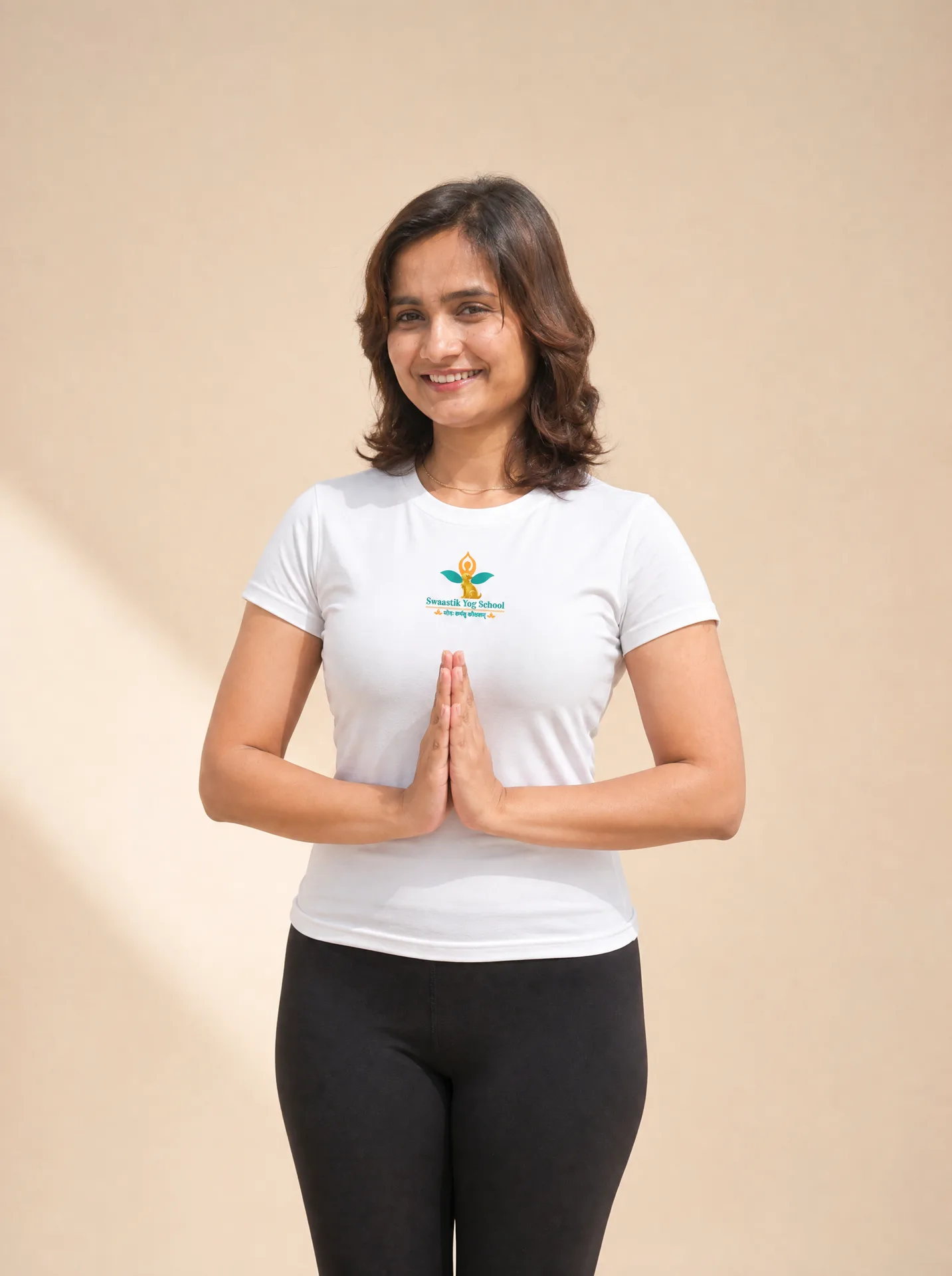
Mayuri Shewale
E-RYT 500Founder & Lead Teacher
Mayuri founded Swaastik Yog School in Tapovan, Rishikesh and leads the aerial programme. An E-RYT 500 teacher with 15 years on the mat, she teaches hammock fundamentals, rigging and safety, and the alignment work that makes suspended practice accessible to complete beginners.
Teaches
- Aerial Yoga
- Hammock Yoga
- Hatha Yoga
- Vinyasa Yoga
- Yoga Teacher Training
- Asana Alignment
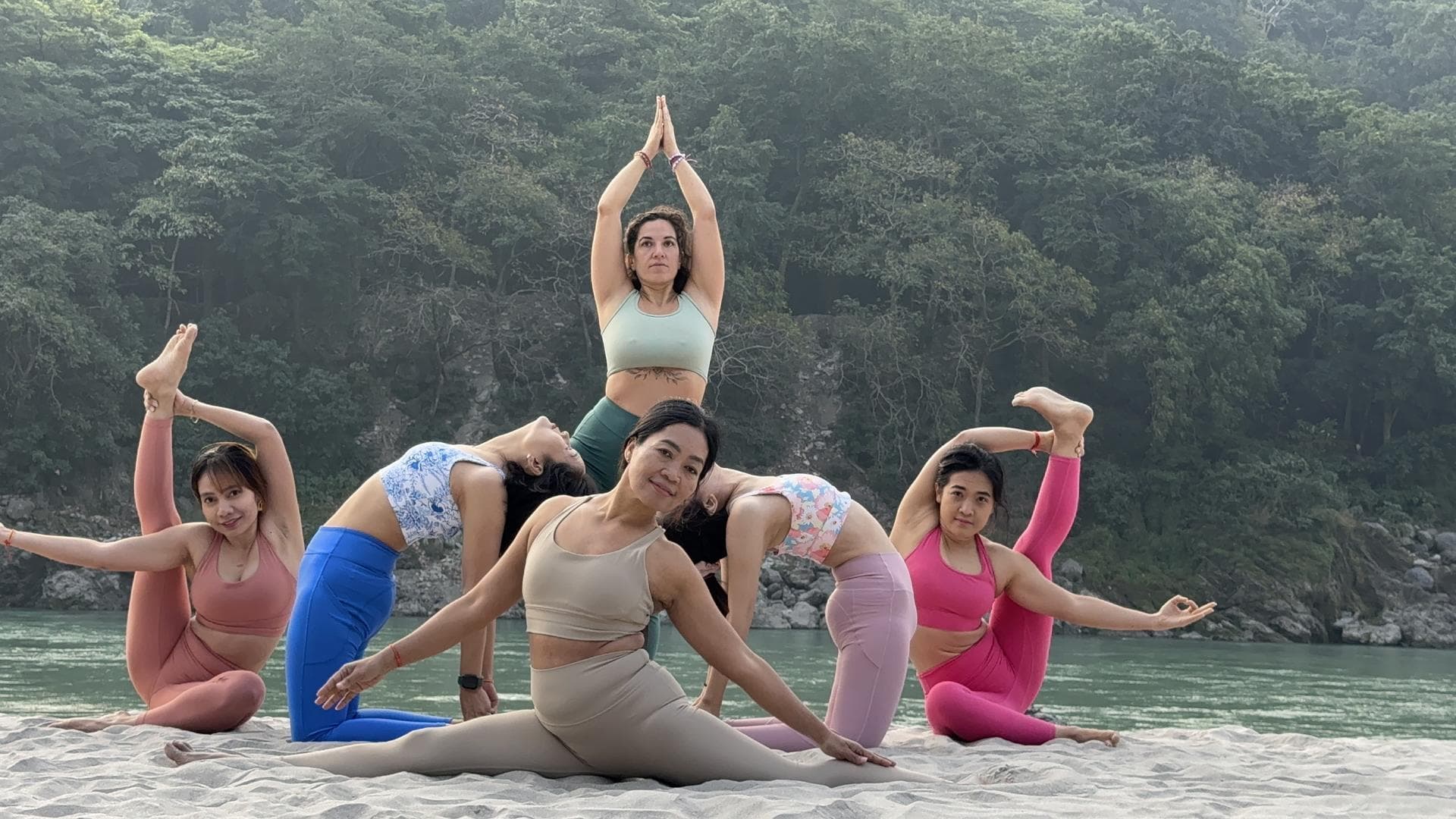
Priya Sharma
RYT 500Aerial Yoga Specialist
Priya is an RYT 500 teacher specialising in aerial and hammock work. She leads the inversion and restorative modules, and the spotting-and-assists practicum where trainees learn to support students safely in the silk.
Teaches
- Aerial Yoga
- Hammock Yoga
- Inversions
- Restorative Yoga

The certificate you leave with
Finish the training and you receive an aerial yoga specialty certificate issued under YACEP — Yoga Alliance Continuing Education Provider. If you are already a registered teacher, the contact hours count towards your continuing education requirement.
This is deliberately not described as an RYS credential. RYS registration applies to 200, 300 and 500-hour programmes; a 50- or 100-hour specialty training is certified under YACEP, and any school telling you otherwise is describing something that does not exist.
Before you book
- Benefits of aerial yoga — the complete guideWhat the hammock does physically and mentally, and where the evidence for it actually sits.
- Yoga teacher training in Rishikesh — a complete guideWhat to know before choosing any training in the town: visas, seasons, costs and questions to ask.
- Choosing a yoga school in RishikeshHow the schools here differ, and what separates a serious training from a certificate mill.
- Swaastik Yog SchoolOur parent school, and its 100, 200, 300 and 500-hour mat-based teacher trainings.
Ready to get off the ground?
Tell us roughly when you want to travel and we will tell you which batch still has room. No deposit is taken at enquiry.
Part of Swaastik Yog School
One school — with a home of its own for aerial
Same campus
Every training runs at the Swaastik Yog School campus on Badrinath Road in Tapovan, Rishikesh — the same hall, rooms and kitchen.
Same teachers
Mayuri Shewale and Priya Sharma lead the aerial trainings, and both teach on Swaastik Yog School courses too.
One team to talk to
One WhatsApp line answers for both. Ask about aerial, a 200-hour course, or doing both on the same trip.
Running since 2015
Swaastik Yog School is a Yoga Alliance registered school. Its aerial trainings are Yoga Alliance YACEP-certified continuing education.
Questions people ask before booking
How long are the aerial teacher trainings and what do they cost?
- 50-Hour Aerial YTT — 7 days, starting every Monday. Dormitory $195, Shared room $385, Private room $550.
- 100-Hour Aerial YTT — 12 days, starting the 17th of each month. Dormitory $390, Shared room $770, Private room $1,100.
When do the batches start?
Is aerial yoga safe for beginners?
What will I learn in the 50-Hour Aerial YTT?
- Hammock fundamentals: setup, rigging, knot tying, height adjustment and safety checks
- Aerial asanas: inversions, wraps, drops and aerial flows using the hammock
- Aerial anatomy: how the body responds to suspension, decompression and inversion
- Sequencing: how to structure a safe and engaging aerial class
- Spotting and assists: hands-on techniques for supporting students in the hammock
- Business skills: setting up an aerial studio, sourcing equipment, and marketing
Do I need a prior yoga teacher certification to enrol?
What certification do I receive?
To be clear about what this is and is not: RYS designations apply to 200-, 300- and 500-hour foundational trainings. A 50- or 100-hour aerial specialty is a YACEP credential, not an RYS one. Anyone advertising a 50-hour course as "RYS certified" is describing it wrongly.
What is included in the fee?
What should I wear for aerial yoga?
- Fitted clothing: leggings and a fitted top that covers the armpits — loose clothing gets tangled in the hammock
- Sleeves: short or long sleeves to prevent friction burns on the arms
- No jewellery: remove rings, bracelets, watches and necklaces that could snag the fabric
- No zips or buttons: these damage the silk
Is there a weight limit for the aerial hammock?
Are there medical conditions that would stop me from doing aerial yoga?
- Pregnancy: aerial yoga is not recommended during pregnancy
- Glaucoma or other eye conditions: inversions raise eye pressure
- Recent surgery: particularly abdominal, spinal or joint surgery
- Uncontrolled high blood pressure: inversions affect blood pressure
- Heart conditions: consult your cardiologist first
- Inner-ear conditions: these can affect balance during aerial movement
Not sure which one?
The 50-hour is a specialty you can add to a practice you already have. The 100-hour is what you take if aerial is going to be the thing you build a schedule around.
Compare with the 100-Hour trainingReady to pick your dates?
Tell us roughly when you want to travel and we will tell you which batch still has room.
Tapovan, Rishikesh, India