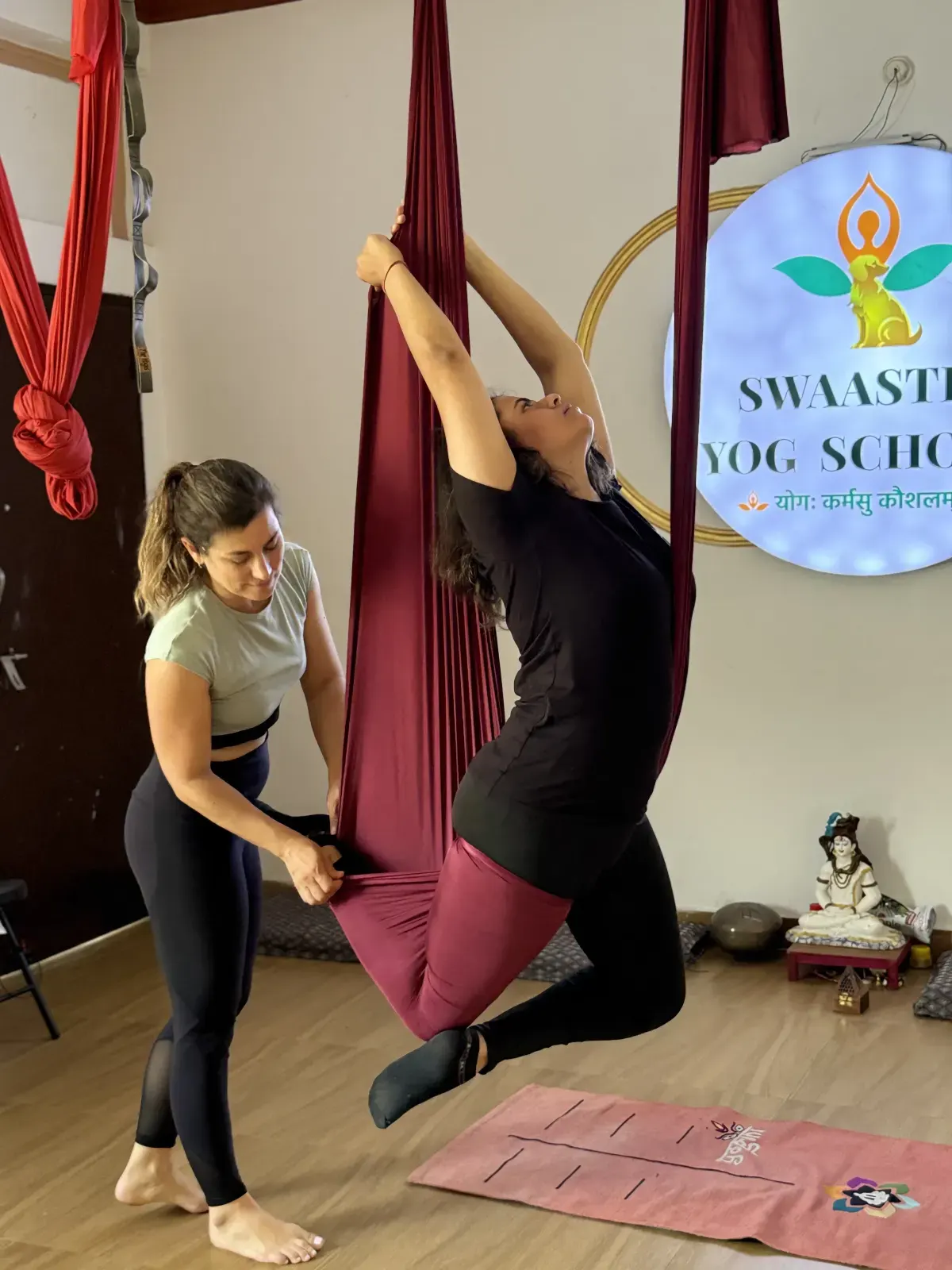
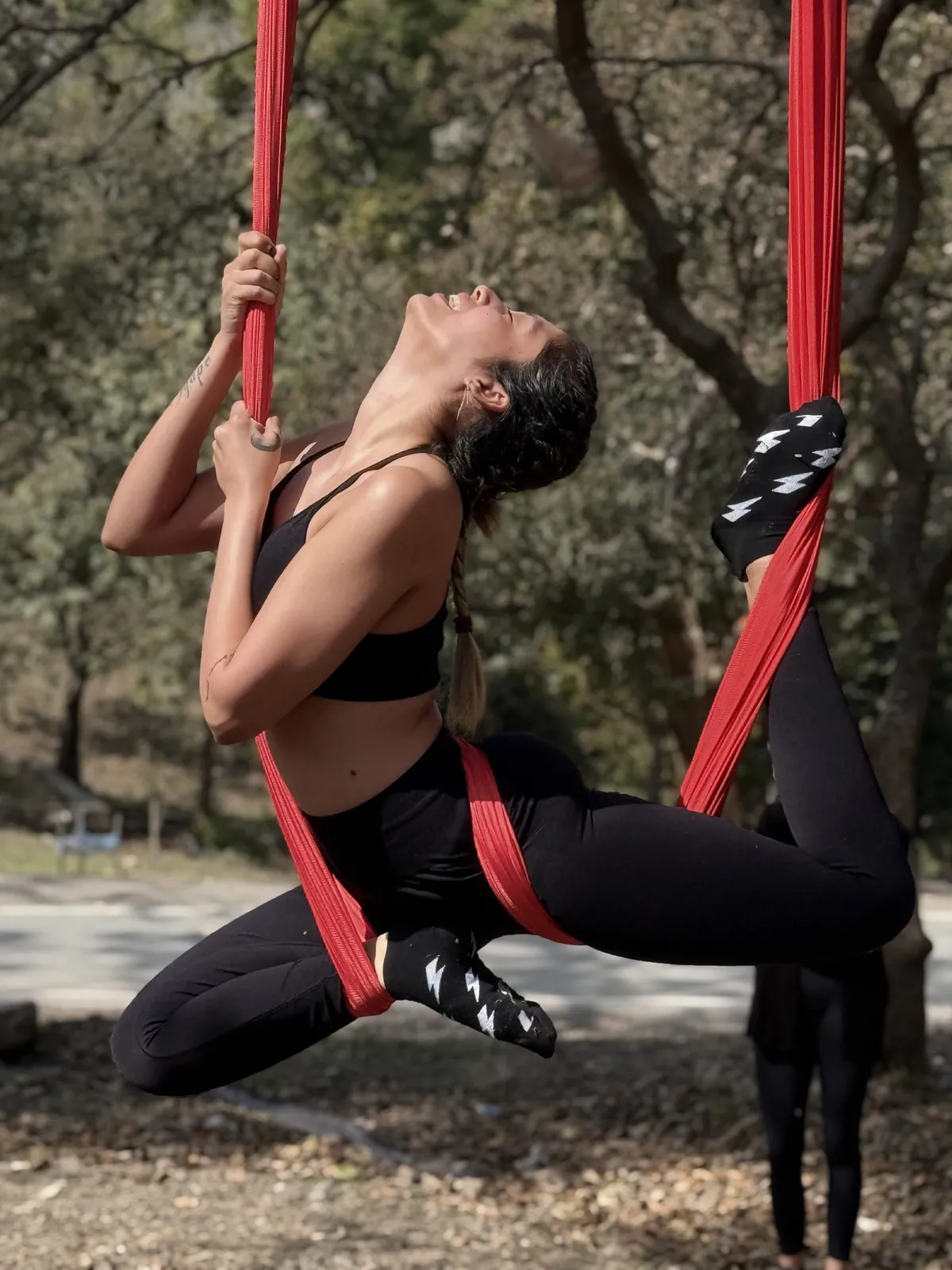
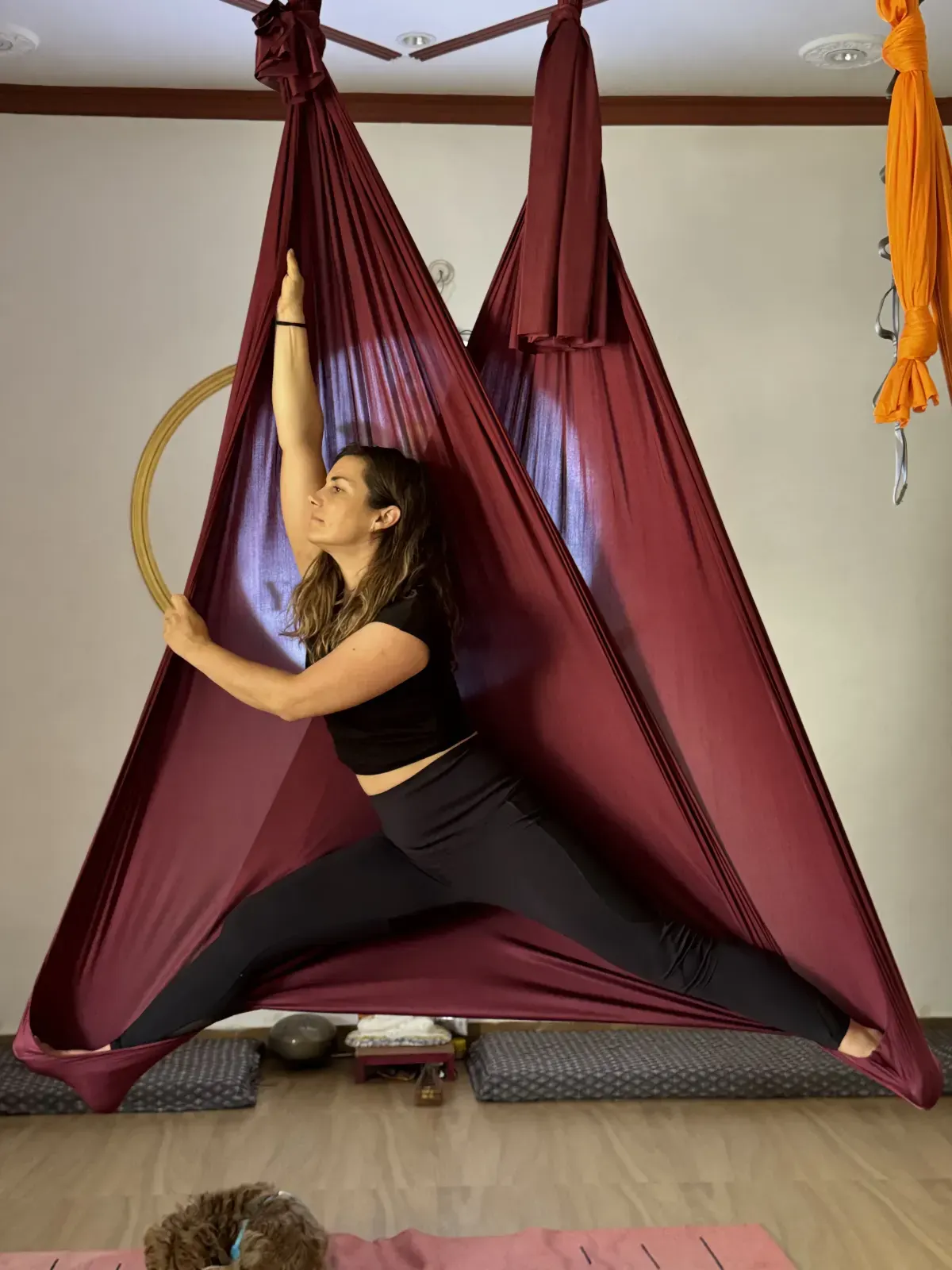
Aerial Yoga Teacher Training Cost: What You Pay For and What to Check
By Aerial Rishikesh · Updated · 10 min read
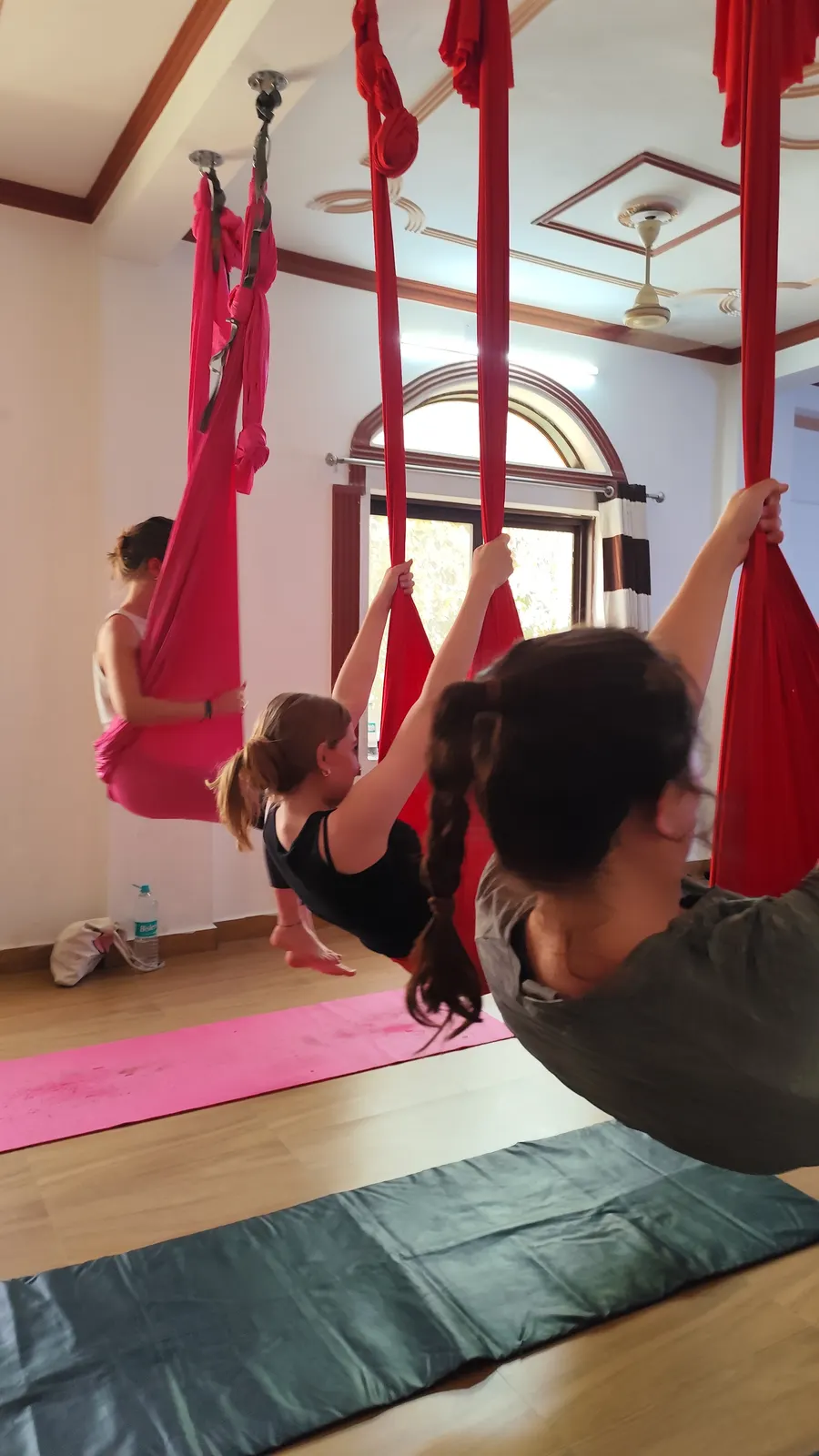
Quick answer
The cost of an aerial yoga teacher training depends mainly on its length in hours, whether it is residential, and what the fee actually includes. At Aerial Rishikesh every price is all-inclusive — tuition, your room, three vegetarian meals a day, course materials and Yoga Alliance YACEP certification — and our live prices for the 50-hour and 100-hour trainings are in the table in this guide.
What drives the cost of any aerial yoga teacher training
Two aerial trainings with similar names can be priced very differently, and the headline figure rarely tells you why. Before comparing numbers, it helps to know what each school is actually charging for. These are the factors that move the price of any aerial yoga certification, wherever you train:
- Contact hours. A 50-hour course and a 100-hour course are different products. More hours means more teaching, more supervised practice and more of the teachers’ time, so the fee rises with them.
- Residential or non-residential. A residential training includes somewhere to sleep and usually your meals. A non-residential course looks cheaper on paper, but you then pay for accommodation, food and daily travel yourself.
- What the fee includes. Some schools quote tuition only and add the manual, the certificate, the exam or the hammock hire as extras. An all-inclusive fee looks higher and often works out lower.
- Location and cost of living. The same course costs very differently to run in a major Western city and in Rishikesh, where rent, food and staff costs are lower. Location also shapes your travel costs.
- Group size. Aerial teaching needs a teacher close enough to spot every student. Smaller groups mean more hands-on attention per student, which costs the school more per place.
- Teacher experience. Senior teachers with years of aerial-specific teaching behind them are worth more than a general yoga teacher who added aerial recently — and you should expect that to show in the price.
- Equipment and rigging. Professional rigging, rated hardware and good-quality hammocks for every student are a real expense. A suspiciously cheap course may be saving money here, which is the one place you do not want it saved.
None of these factors is good or bad on its own. A short non-residential course can be exactly right for someone who lives nearby. The point is to compare like with like, which means turning every quote into the same question: what will this training cost me in total, from arrival to certificate?
Our prices: all-inclusive, by room tier
At Aerial Rishikesh we teach aerial yoga and nothing else, and we price our trainings the simplest way we know: one all-inclusive figure per training and room type. The table below is generated from our live course schedule, so it is always current.
| Training | Starts | Dormitory | Shared room | Private room |
|---|---|---|---|---|
| 50-hour aerial YTT7 days | Every Monday | $195 | $385 | $550 |
| 100-hour aerial YTT12 days | 17th monthly | $390 | $770 | $1,100 |
The three room tiers — dorm, shared and private — are the only thing that changes the price within a training. Tuition, meals, materials and certification are identical whichever room you choose, and so are the teachers, the hammocks and the hours. Choose the room that suits your budget and how much privacy you need after a full day in the hammock.
Our 50-hour aerial yoga teacher training runs over seven days and starts every Monday. Our 100-hour aerial yoga teacher training runs over twelve days and starts on the 17th of each month. Both are Yoga Alliance continuing-education (YACEP) certified.
What is included, and what is not
An all-inclusive price only means something if you know exactly where the line falls. Here is ours, in plain terms.
| Included in the price | Not included |
|---|---|
| All tuition for the full training, with both lead teachers present throughout | International and domestic flights, and transfers to Rishikesh |
| Your room for the length of the course, in the tier you choose | Visa fees and any paperwork for travelling to India |
| All three daily vegetarian meals | Travel and medical insurance — strongly recommended |
| Course materials and use of the studio hammocks and rigging | Personal expenses: snacks, laundry, outings, shopping |
| Yoga Alliance YACEP certification on completion | Your own aerial hammock and rigging for teaching afterwards |
You do not need to buy a hammock to train with us; everything you practise on during the course is provided and checked before every session. Most graduates do invest in their own equipment later, once they know where they will teach — and that is a decision worth making with a qualified rigger rather than in a hurry.
Hidden costs to check for at any school
Whichever school you choose, ask about each of these before you pay anything. A good school will answer every one in writing without hesitation.
- Accommodation and meals. Are they included? If so, is it every meal on every day, or only on teaching days?
- Certification fees. Is the certificate included, or is there a separate charge for the exam or the paperwork?
- Manuals and materials. Is the training manual part of the fee or an extra purchase?
- Equipment. Do you need to bring or buy your own hammock to take part?
- Room upgrades. Is the quoted price for a dorm, and what does a shared or private room add?
- Payment and currency fees. Will your bank charge for an international transfer or card payment? Ask which payment methods are accepted.
- Deposit and cancellation terms. How much is the deposit, when is it due, and what happens to it if your plans change?
- Airport transfers. Are they arranged, and are they included or charged separately?
- Post-course costs. Are there renewal fees, membership fees or required follow-up modules to keep the certificate valid?
How to compare value between trainings
The cheapest course is rarely the best value, and the most expensive is not automatically the best. What you are really buying is the ability to teach aerial yoga safely and confidently. Use these factors to judge whether a training delivers it.
| Factor | Why it matters | What to ask |
|---|---|---|
| Contact hours | More supervised hours means more practice spotting, cueing and teaching before you are on your own. | How many hours are taught in person, and how many are self-study? |
| Teacher qualifications | Aerial needs specialist experience, not only general yoga credentials. | Who teaches, what are their certifications, and are they present for the whole course? |
| Group size | Every student needs to be spotted in inversions and watched while teaching. | What is the maximum group, and how many teachers are in the room? |
| Safety and rigging content | Rig checks and safe exits are what separate a teacher from a student. | Is rigging and load checking taught and practised, not just mentioned? |
| Teaching practicum | You learn to teach by teaching, with feedback. | How many times will I lead a class, and who gives feedback? |
| Certification | Recognition matters to studios and insurers. | Is the course Yoga Alliance registered, and as what? (Ours is YACEP continuing education.) |
| What the fee includes | A low tuition-only price can end up costing more. | What is the total cost including room, meals, materials and certificate? |
| Specialism | A school that teaches only aerial has built its whole programme around it. | Is aerial the main focus, or an add-on to a general yoga course? |
50-hour or 100-hour: which is better value?
The 100-hour training costs more than the 50-hour, as the table above shows, but it is not simply twice as much of the same thing. It is a different level of preparation, and the right choice depends on what you plan to do with it.
- The 50-hour training is a seven-day foundation. It is the right choice if you already teach yoga and want to add beginner aerial classes, or if you want to study aerial seriously for yourself with the option of teaching later.
- The 100-hour training goes further into anatomy, advanced inversions, restorative aerial and a longer supervised teaching practicum. It is the better value if you plan to teach aerial regularly, lead mixed-level groups or build classes around it.
Most aerial courses in Rishikesh stop at 50 hours; ours goes on to 100 for students who want that extra depth in one stay. If you are unsure, consider what it would cost to come back for a second training later — another flight, another visa, more time away — against doing the longer course once. Read more about the path in how to become an aerial yoga instructor.
How booking and the deposit work
We keep booking deliberately simple, because most of our students are arranging international travel and need certainty before they commit.
- Send an enquiry with roughly when you want to travel and which training interests you. No deposit is taken at this stage.
- We reply personally, usually within one working day, and confirm which batch still has room.
- We hold your place while you book your flights and sort out your visa.
- We send your registration details and explain how to pay the deposit to secure the place.
- You arrive in Tapovan, settle into your room and start on the first day of your batch.
If anything in the table above is unclear — which room tier suits you, which start date works with your flights — ask before you book. We would rather answer ten questions in advance than have you arrive unsure.
How teachers recoup the investment
A teacher training is an investment, and it is fair to ask how it pays back. We will not quote earnings, because they vary too much from one teacher and one place to another to be honest about. What we can tell you is which factors make the difference:
- Where you teach. Demand for aerial classes and what studios charge for them vary widely between cities and countries.
- Access to rigging. Teaching aerial needs a properly rigged space. Teachers who partner with a studio that already has rigging can start sooner than those who need to install their own.
- Existing students. Yoga teachers who add aerial to an established following usually fill classes faster than those starting from scratch.
- Class formats. Group classes, private sessions, workshops, restorative aerial and retreats each reach different students. More formats mean more ways to fill a timetable.
- Depth of training. Confidence with mixed-level groups, inversions and spotting lets you teach more kinds of classes, which is one reason some teachers choose the 100-hour.
- Keeping it safe. A teacher with a clean safety record and good rigging habits earns the trust of studios and students, and trust is what brings people back.
For a wider look at why people train in India and what to expect, read our guide to aerial yoga teacher training in India.
Frequently asked questions
How much does aerial yoga teacher training cost?
What does the price include at Aerial Rishikesh?
Do I need to buy my own aerial hammock for the training?
Do I have to pay a deposit when I enquire?
Does the room tier change anything apart from the price?
Does this certification let me teach AntiGravity yoga?
Aerial yoga teacher training in Rishikesh
Learn to teach the hammock, at a school that teaches nothing else
Seven-day and twelve-day YACEP-certified trainings in Tapovan, with your room and all meals included. Tell us when you want to come — no deposit is taken at enquiry.