What Is Aerial Yoga? A Complete Guide From an Aerial-Only School
By Aerial Rishikesh · Updated · 9 min read
Quick answer
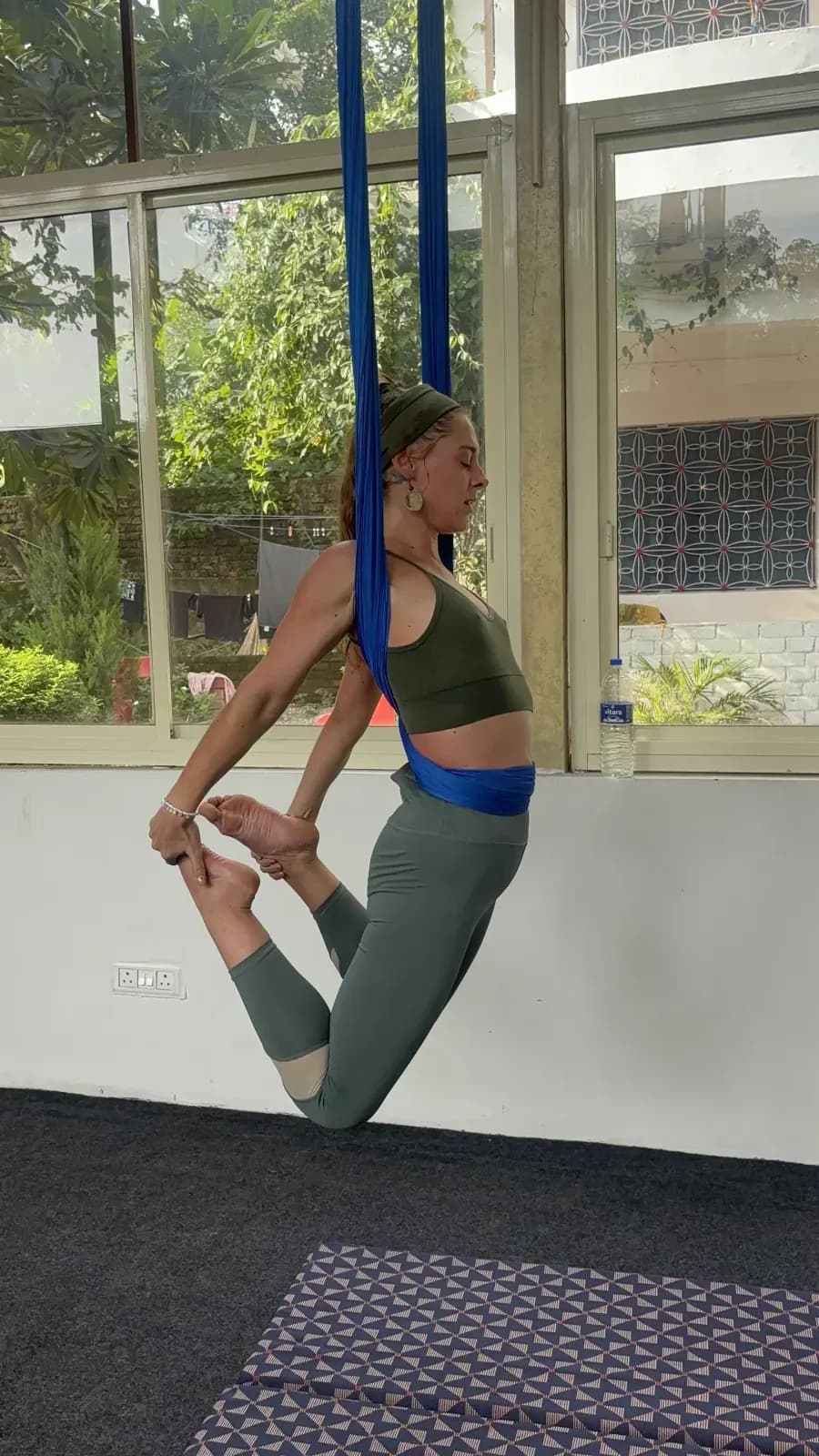
Aerial yoga is yoga practised in a soft fabric hammock hung from the ceiling, so the fabric holds some or all of your body weight. It blends hatha and vinyasa postures with supported stretches and inversions you can do without putting weight on your head or neck, and it ends lying fully wrapped in the hammock for relaxation.
Aerial yoga, defined
An aerial yoga hammock is a single length of soft, low-stretch fabric — usually nylon tricot, around three metres wide — whose two ends are hung from rated rigging points in the ceiling. It forms a deep loop that usually hangs at about hip height. You sit in it, lean into it, wrap your legs in it and, eventually, hang upside down from it.
The fabric does three jobs a mat cannot. It supports your weight, so a stretch can go further than it would on the floor. It unloads your spine in inversions, because you hang from your hips rather than balancing on your head. And it challenges you, because a moving prop asks your core, grip and balance to work in a way a static floor never does.
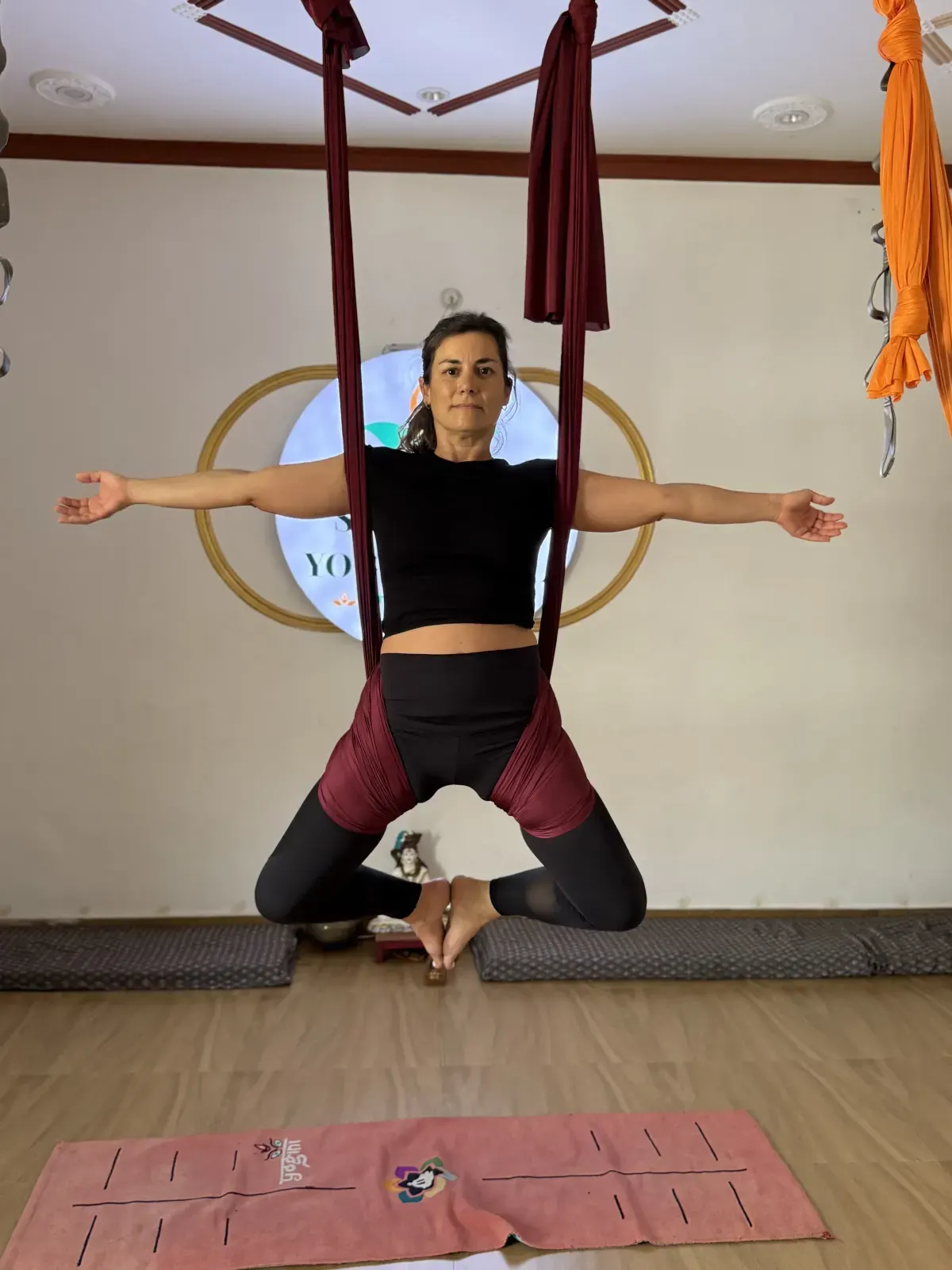
The practice took shape in New York in the mid-2000s. The best-known early method is AntiGravity®, a trademarked system with its own licensed teacher certification. Today “aerial yoga” is the general name for the whole family of hammock-based practice, taught by many independent schools — including ours.
Aerial yoga, AntiGravity, fly yoga: the names explained
You will see the same practice sold under several names. Most describe the same thing; two do not.
| Name | What it is |
|---|---|
| Aerial yoga | The general term: yoga in a soft fabric hammock. What this guide describes. |
| Hammock, fly or air yoga | Other names for the same practice, used by studios for branding. |
| AntiGravity® yoga | A specific trademarked method with its own licensed instructor training. An aerial yoga certification does not make you an AntiGravity instructor. |
| Yoga trapeze / yoga swing | A different rig: a shorter sling with handles and a bar, rather than an open loop of fabric. |
| Aerial yin / restorative aerial | A slower style built around long, supported holds and the cocoon. |
What happens in an aerial yoga class
A typical 60–75 minute class moves from the ground up, so you meet the fabric gradually:
- Arrival and warm-up — breathing and joint mobility, often half on the mat and half leaning into the hammock.
- Seated work — sitting in the sling to learn how the fabric moves and how to hold it.
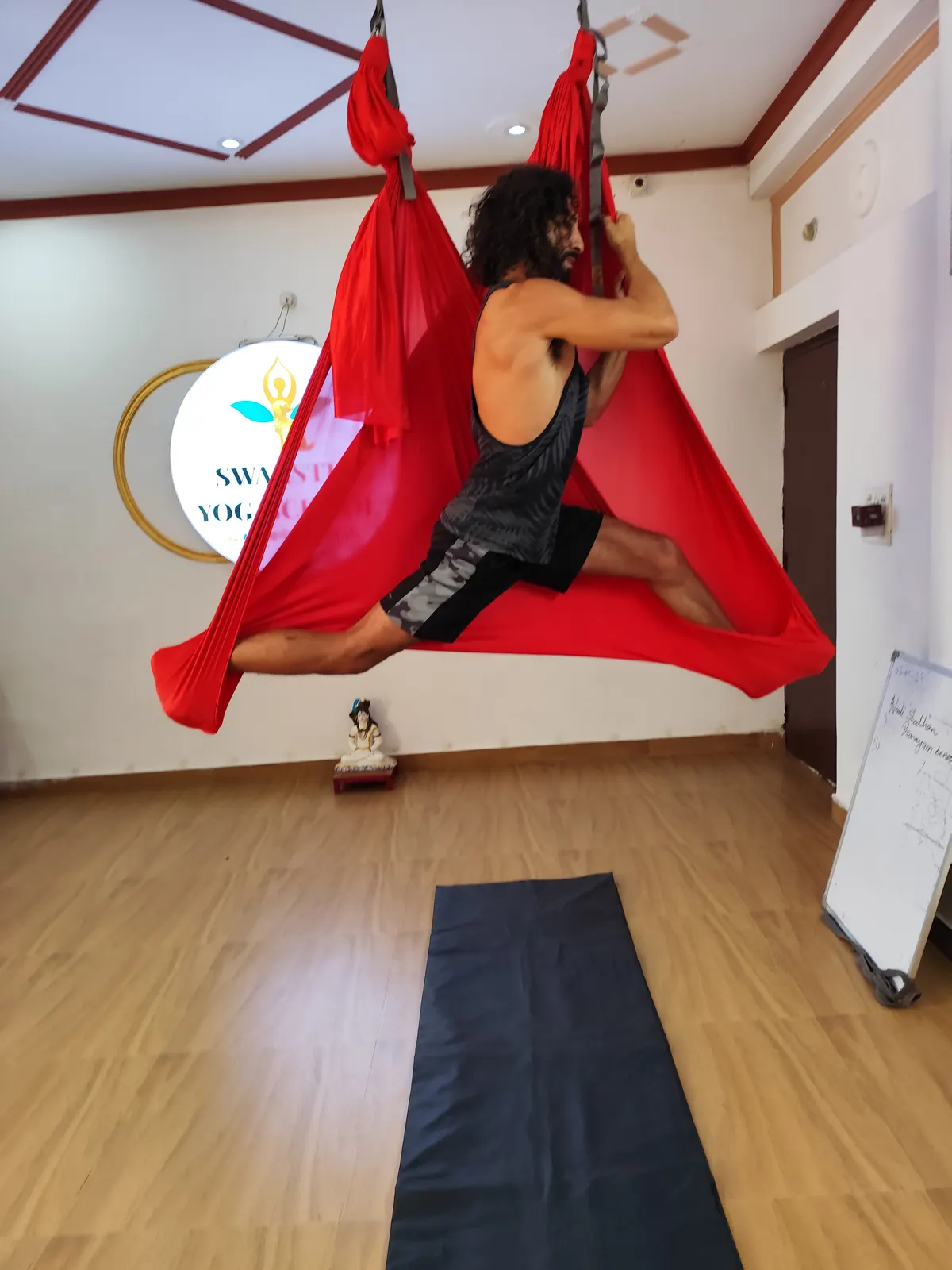
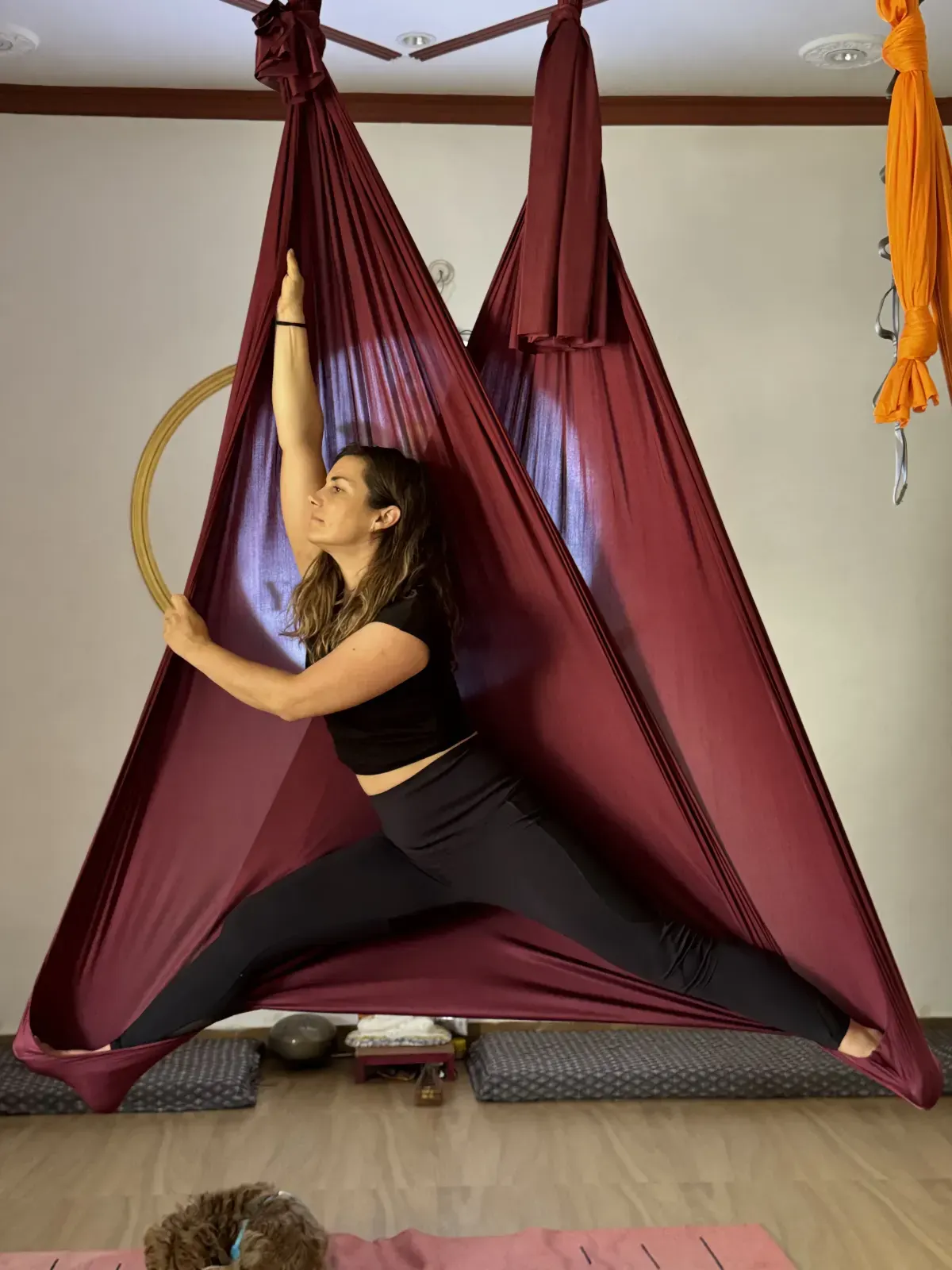
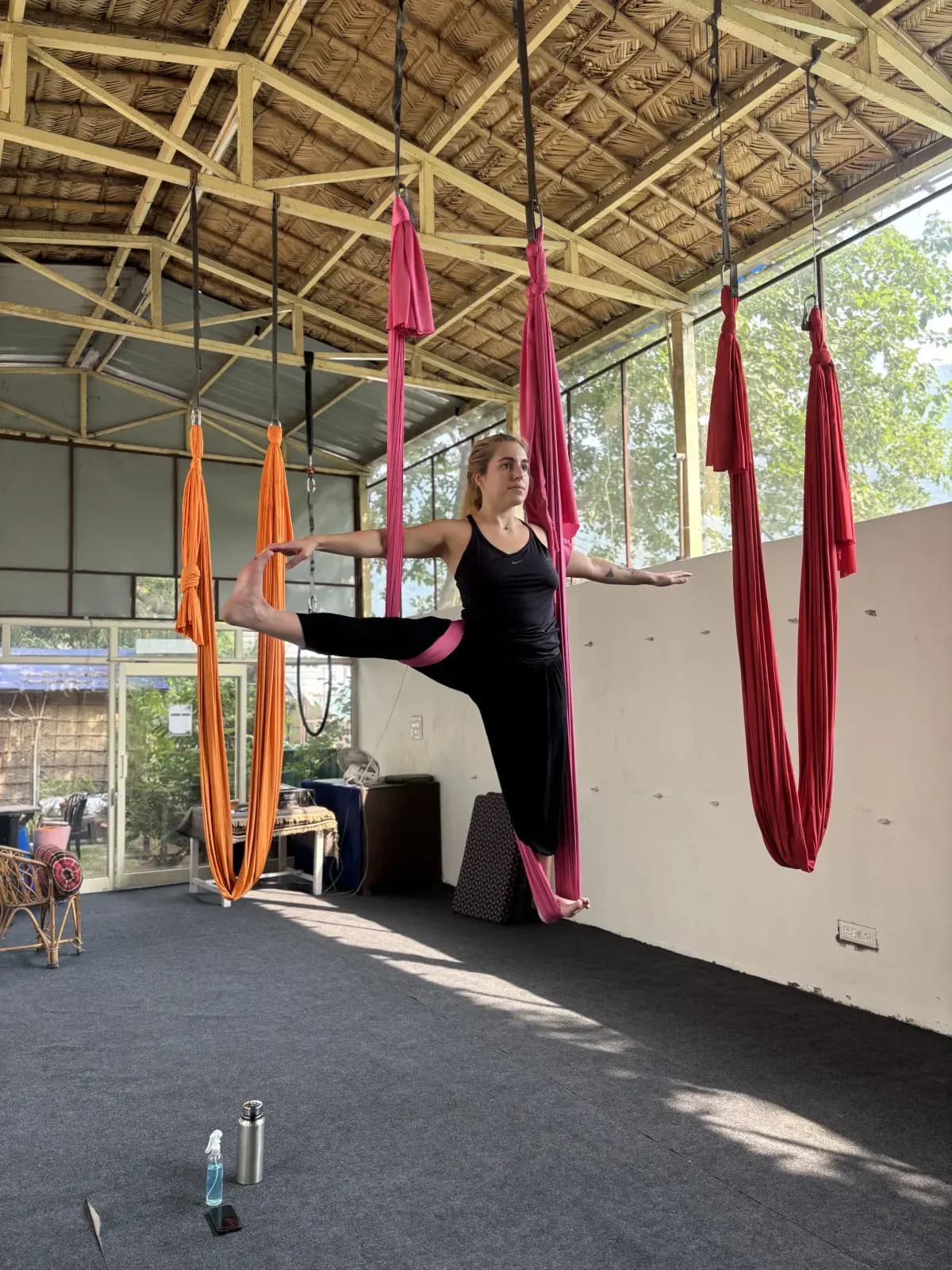
- Supported standing poses — warriors, standing splits and balances with the hammock under a hip or foot.
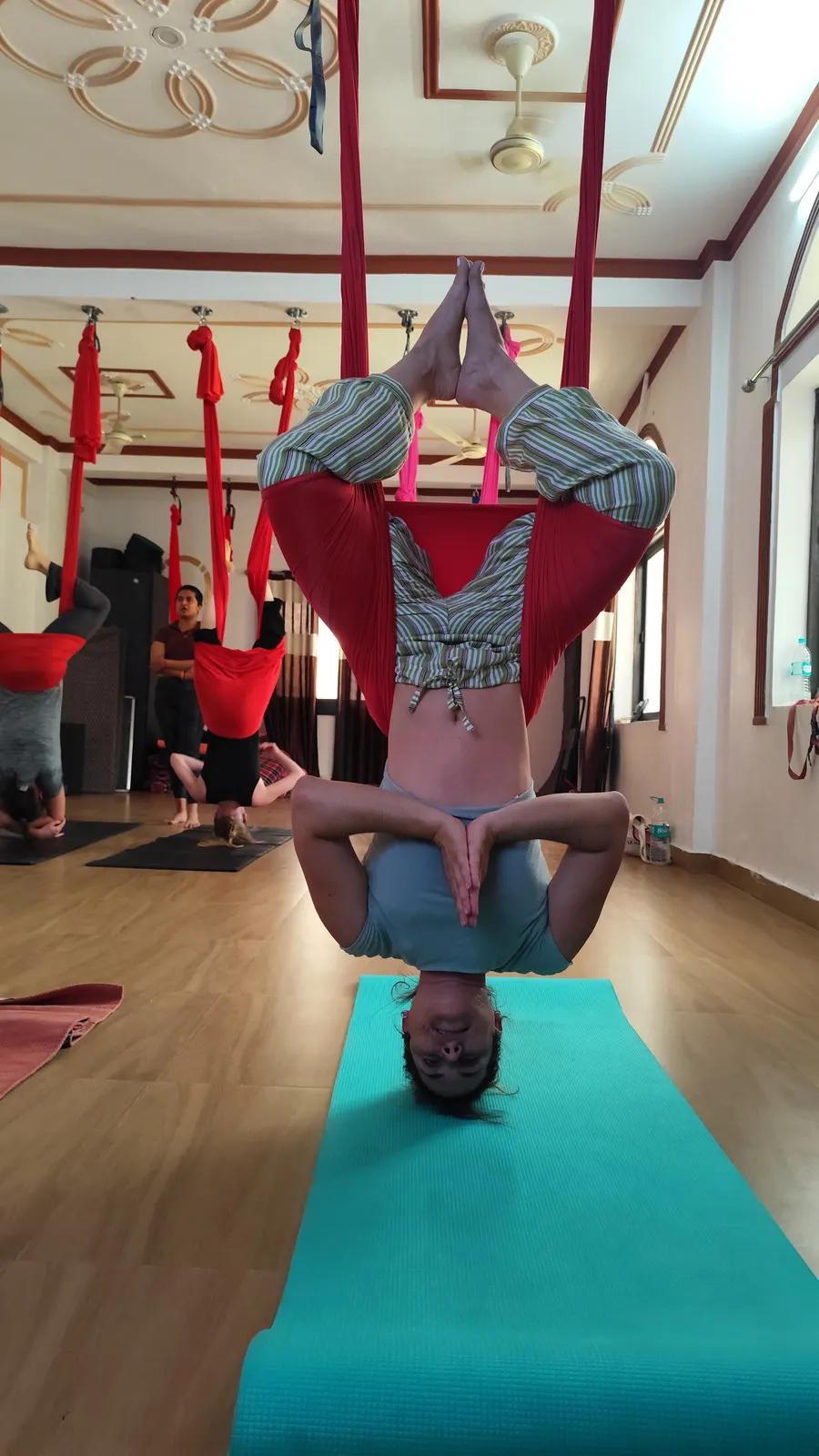
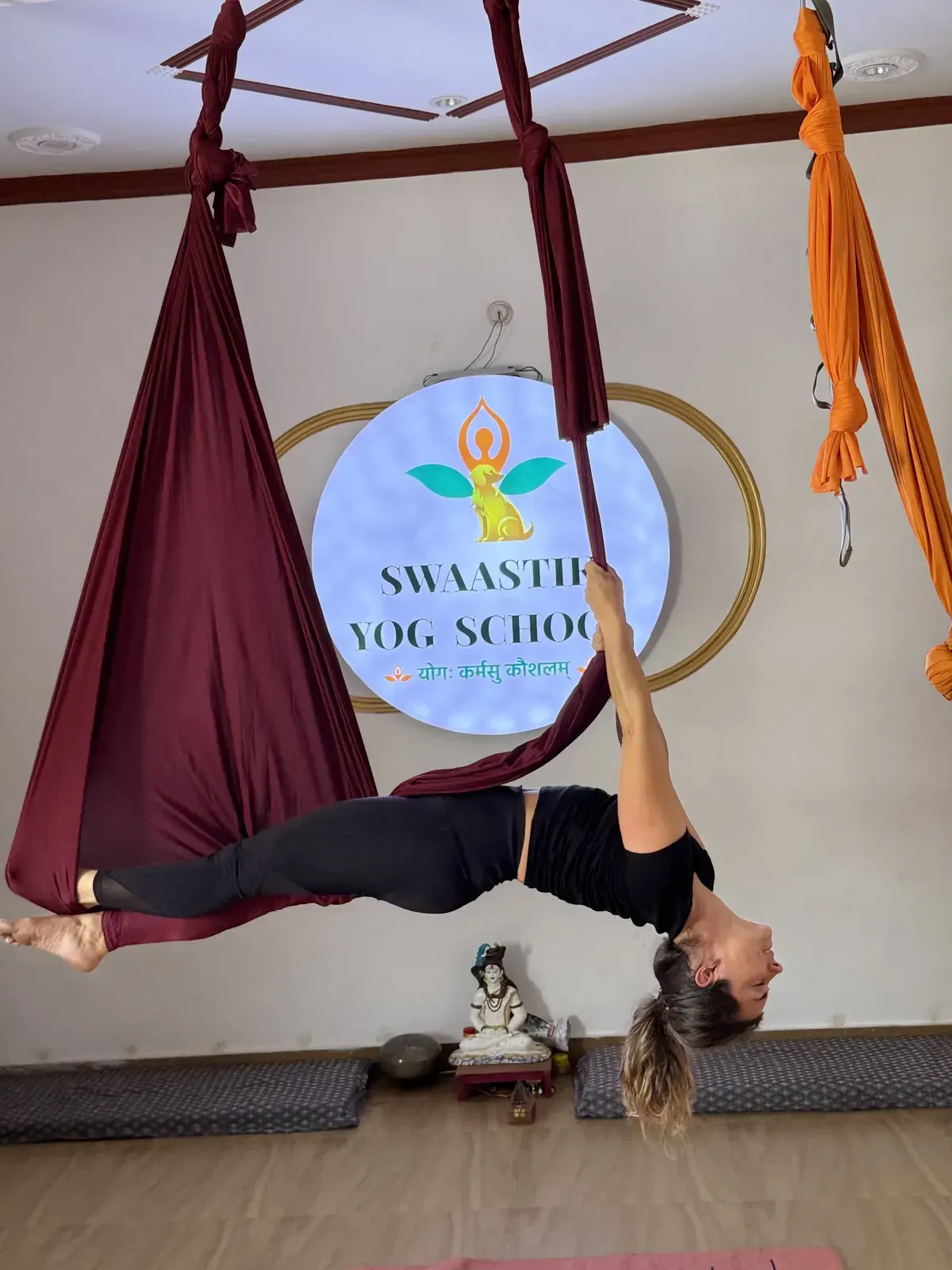
- Inversions — for those ready, a supported hang upside down, entered and exited step by step with a teacher spotting.
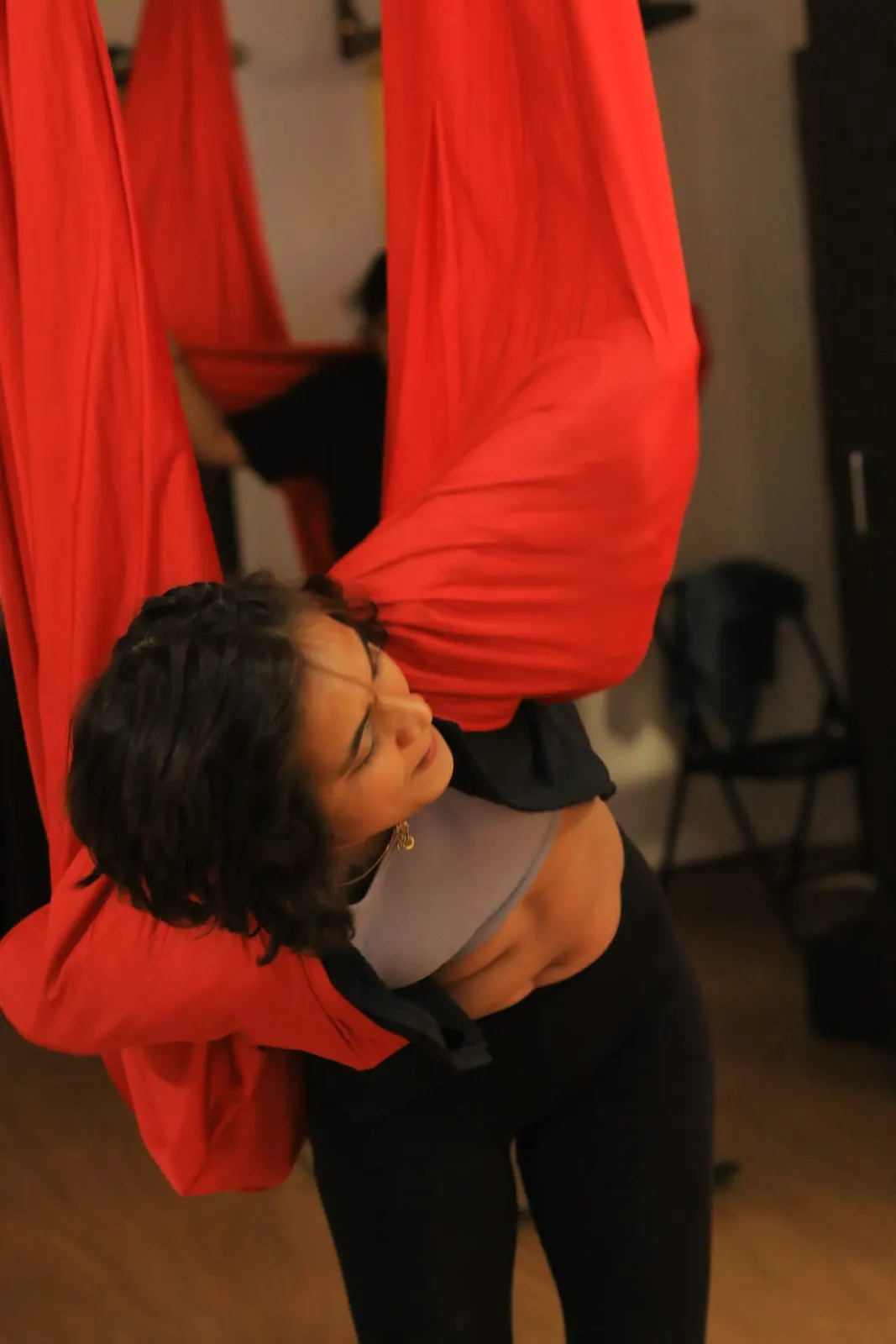
- The cocoon — you lie fully wrapped in the fabric for a final relaxation. Most first-timers say this is the part they remember.
The benefits of aerial yoga
Research on aerial yoga specifically is still small, so we will stick to what is well understood about how the practice works rather than quoting numbers. These are the benefits our students notice most:
- Spinal decompression without neck loading. In a supported inversion you hang from the hips, so the spine lengthens under its own weight instead of compressing under it, as it can in a headstand.
- Deeper, safer stretching. With the fabric taking part of your weight, muscles can release into a stretch rather than bracing against it.
- Core and grip strength. Holding and moving a hammock that sways recruits the deep stabilisers and the hands and forearms.
- Balance and body awareness. A moving prop sharpens proprioception — your sense of where your body is in space.
- Confidence. Going upside down safely, often for the first time since childhood, changes how people feel about what their body can do.
- Rest. The cocoon at the end is one of the most complete relaxations in any style of yoga.
Is aerial yoga safe? Who should avoid it
With properly rated rigging and a trained teacher, aerial yoga is a safe practice for most healthy adults. Our hammocks and rigging are rated well beyond the load of any practitioner, and every rig point is checked before each session. Inversions are what call for caution. Speak to your doctor first, and expect a teacher to modify or skip inversions, if any of these apply:
- Pregnancy
- Glaucoma, a detached retina or recent eye surgery
- Uncontrolled high or low blood pressure, or a heart condition
- Recent surgery, or a recent head, neck or spine injury
- Vertigo or a history of fainting
- Severe osteoporosis
None of these rules out aerial yoga entirely — much of a class happens upright or seated — but they change what you should do in it. Always tell your teacher before class.
Your first aerial yoga class: what to expect
- Wear fitted clothes that cover your armpits and the backs of your knees. The fabric runs across both, and bare skin can rub.
- Remove jewellery and skip the body lotion. Rings and zips can snag the fabric; lotion makes it slippery.
- Eat lightly. Leave about two hours after a full meal before going upside down.
- Expect the fabric to press. The pressure of the hammock on your hips or thighs is normal and eases as you learn where to place it.
- Come out of inversions slowly. A moment of light-headedness on returning upright is common; sit and breathe before standing.
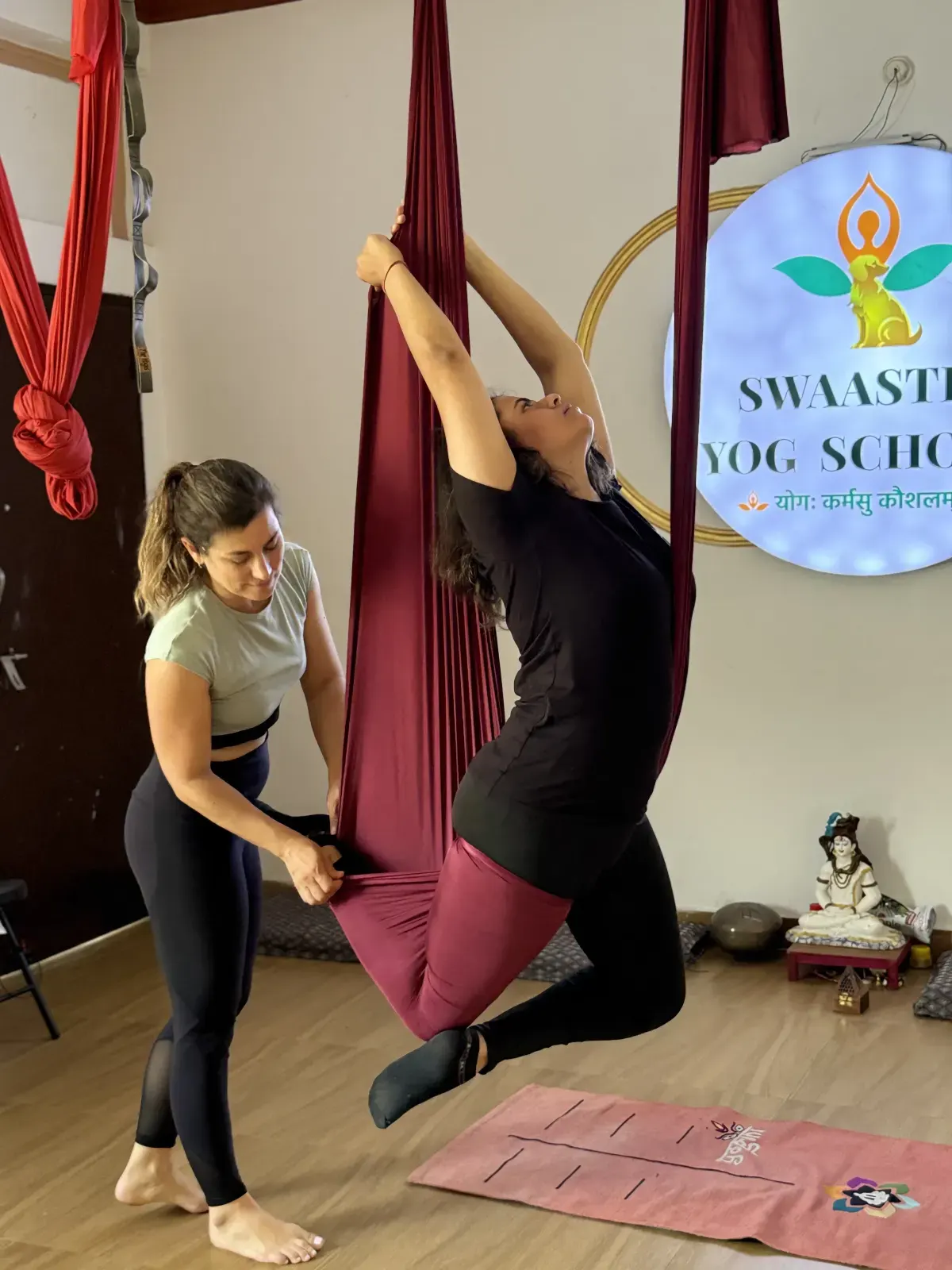
Learning to teach aerial yoga
Teaching aerial yoga safely takes training well beyond being a good student: rigging and load checks, spotting, cueing entries and exits, sequencing for mixed levels, and knowing when an inversion is wrong for someone. That is why aerial is a specialist certification rather than a module you pick up in a weekend.
At Aerial Rishikesh we teach aerial yoga and nothing else. Our 50-hour aerial yoga teacher training is a seven-day foundation for teaching beginner classes, and our 100-hour aerial yoga teacher training goes further into anatomy, advanced inversions, restorative aerial and a longer supervised teaching practicum. Both are Yoga Alliance continuing-education (YACEP) certified and include your room and meals in Tapovan, Rishikesh.
Frequently asked questions
Is aerial yoga good for beginners?
Do I need to be strong or flexible to do aerial yoga?
Is there a weight limit for aerial yoga?
Is aerial yoga a good workout?
What is the difference between aerial yoga and AntiGravity yoga?
Can I practise aerial yoga at home?
Aerial yoga teacher training in Rishikesh
Learn to teach the hammock, at a school that teaches nothing else
Seven-day and twelve-day YACEP-certified trainings in Tapovan, with your room and all meals included. Tell us when you want to come — no deposit is taken at enquiry.