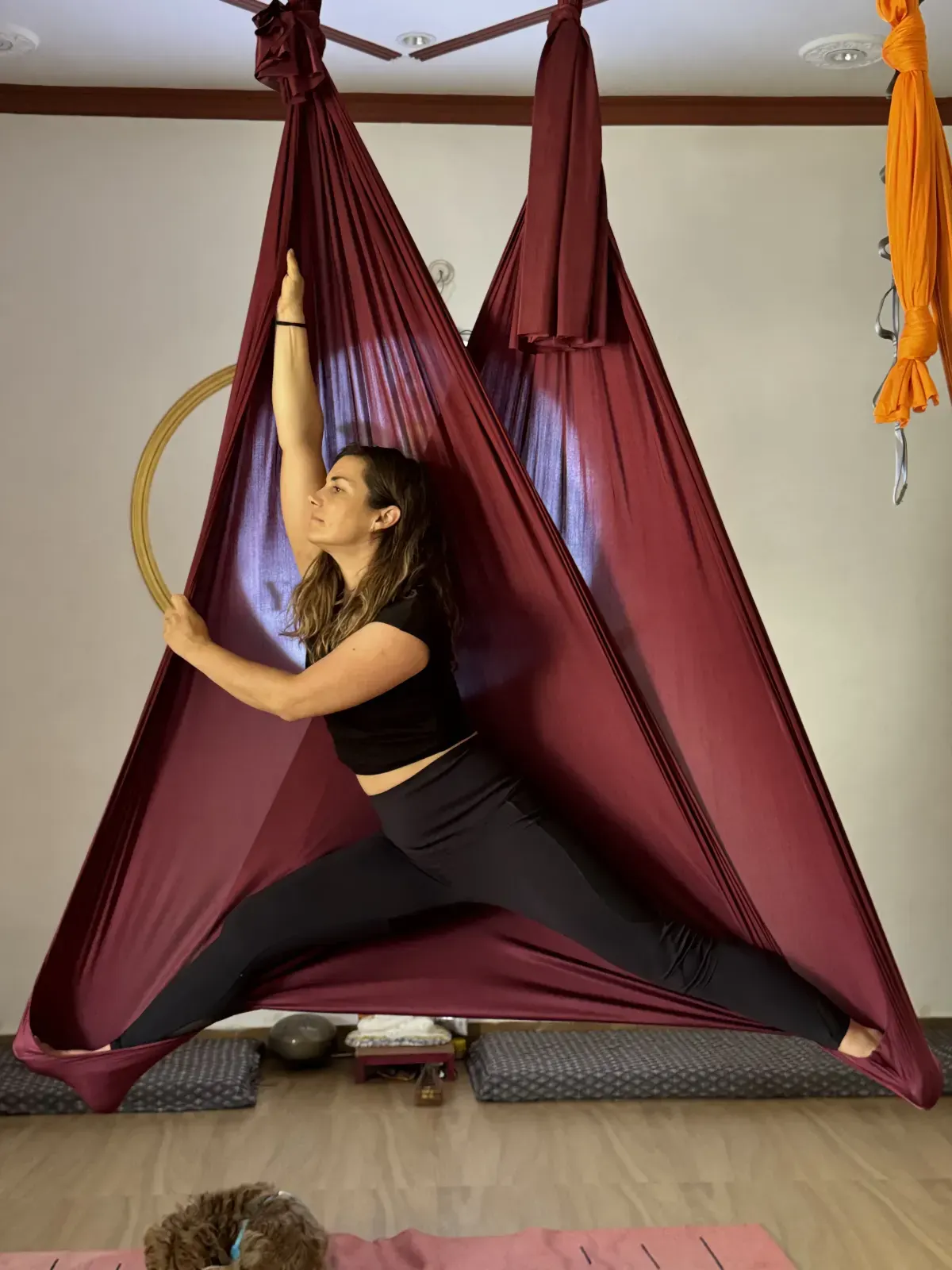
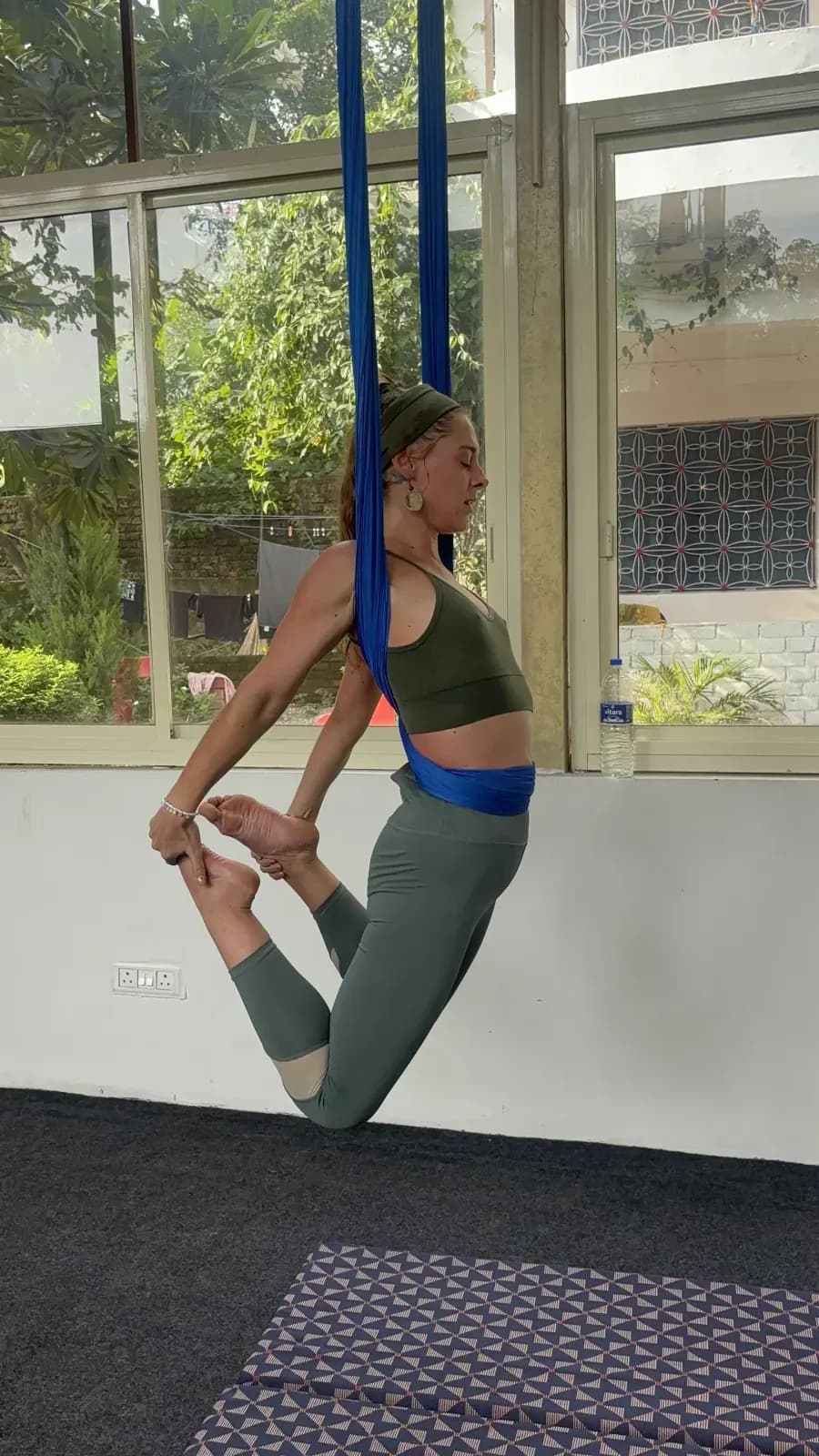
How to Become an Aerial Yoga Instructor: Certification, Training and First Classes
By Aerial Rishikesh · Updated · 11 min read
Quick answer
To become an aerial yoga instructor, complete a dedicated aerial yoga teacher training that covers rigging and safety, spotting, sequencing and supervised teaching practice, then build experience teaching beginner classes. You do not need to be a yoga teacher first, though a prior 200-hour training helps; aerial certifications are usually 50 or 100 hours.
The path, in brief
There is no single licence for teaching aerial yoga. What studios, insurers and students look for is a certified aerial yoga instructor: someone who has completed a structured aerial yoga teacher training with a recognised school, can show a certificate, and has real hours of supervised teaching behind them. The route usually looks like this:
- Practise aerial yoga as a student long enough to know the fabric and enjoy it.
- Train on a dedicated aerial yoga teacher training — typically 50 or 100 hours.
- Certify by completing the course, its practical assessment and its teaching practicum.
- Teach your first beginner classes, ideally with support from an experienced teacher or studio.
- Set up the practical side: insurance, equipment, rigging and pricing.
- Keep learning through further training and your own practice.
The rest of this guide takes each step in turn, from an aerial-only school that trains teachers in Tapovan, Rishikesh.
Do you need to be a yoga teacher first?
Not for our trainings. Our 50-hour and 100-hour courses are open to committed practitioners as well as qualified yoga teachers, and we teach the aerial-specific skills — the fabric, the wraps, the rigging, the spotting — from the ground up.
That said, a prior 200-hour yoga teacher training (RYT-200) genuinely helps. You will already know how to hold a room, cue the breath, sequence a class and think about anatomy, so you can spend your aerial training on what is new. Some studios also prefer to hire aerial teachers who hold a foundational yoga certification.
It is worth being clear about one thing: a 50- or 100-hour aerial course is continuing education, a specialism. It does not replace a 200-hour foundational yoga teacher training, and it does not on its own make you a Registered Yoga Teacher. What it does is qualify you to teach aerial yoga.
Fitness matters less than people expect. You do not need to be especially strong or flexible, because the hammock supports your weight. You do need to be comfortable going upside down with guidance, and to tell us about any health conditions before you arrive.
What a good aerial yoga certification includes
Aerial yoga instructor certification varies a great deal between schools. A weekend that teaches you a list of poses is not the same as a training that teaches you to keep a room full of beginners safe. A good course should cover:
- Rigging and safety. How the fabric, hardware and mounting work as one system; how to inspect every component; when a mounting point needs a professional assessment. Our aerial yoga hammock guide covers the basics.
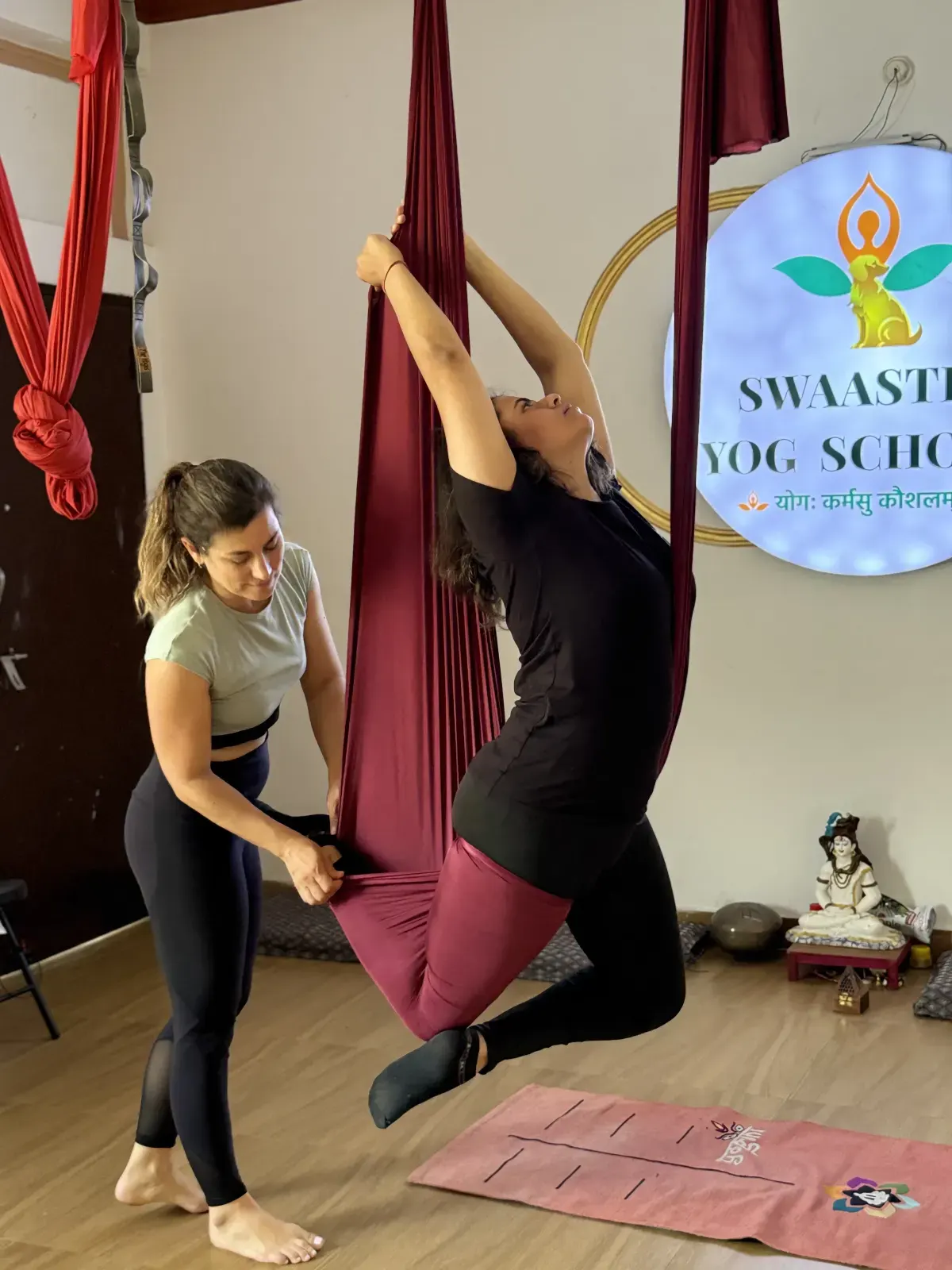
- Spotting. Where to stand, where to put your hands and how to help a student into and out of a pose — especially inversions.
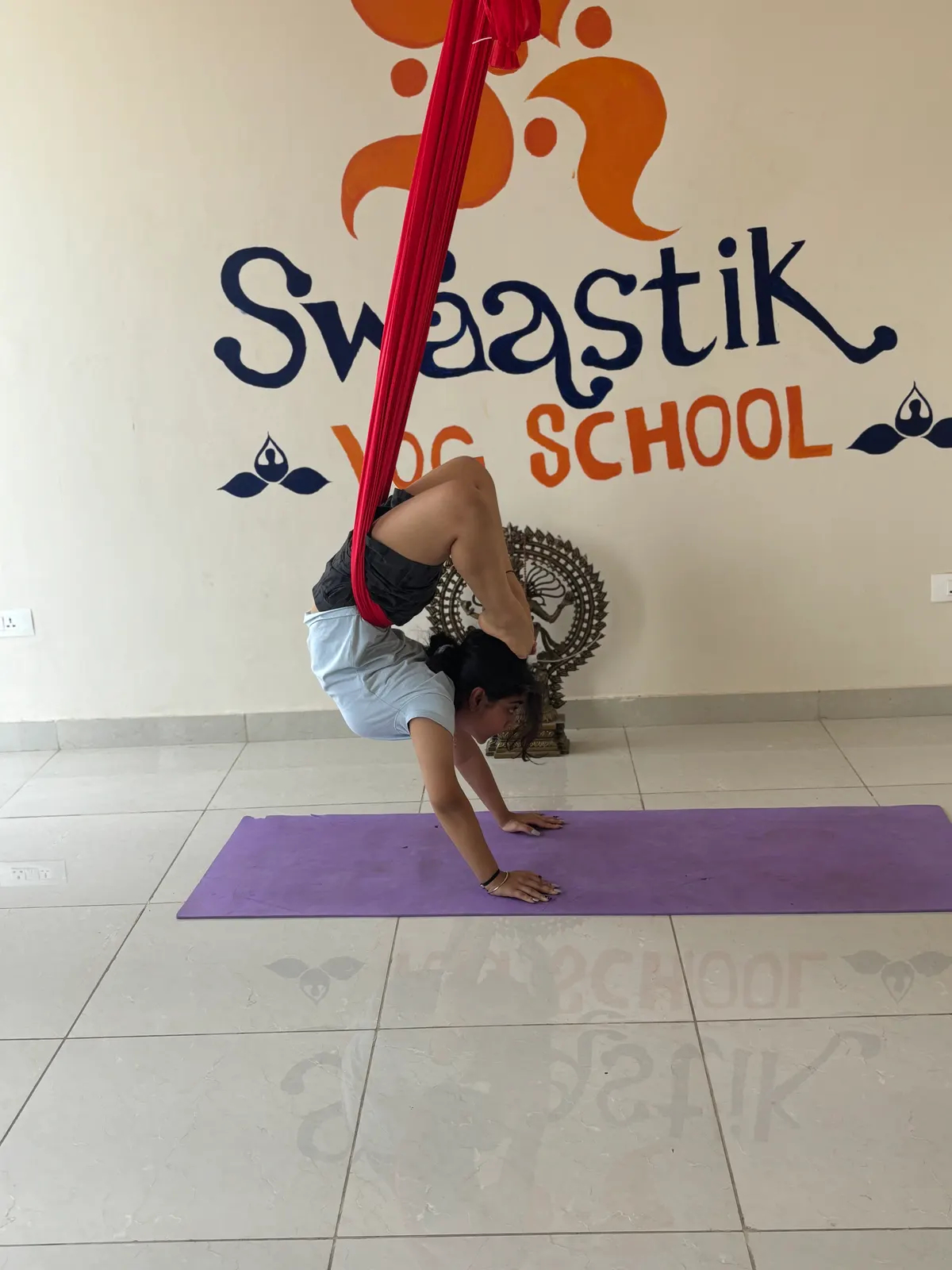
- Asana vocabulary. The core seated, standing, balancing, inverted and restorative postures, with clear entries, exits and modifications. See our overview of aerial yoga poses.
- Sequencing. Building a class that warms the body up, introduces the fabric gradually and finishes in rest — for mixed levels, not just for you.
- Anatomy and contraindications. What inversions do to the body and who should modify or skip them. Our inversions safety guide goes into detail.
- A supervised teaching practicum. Real time teaching real people while an experienced teacher watches and gives feedback. This is the part that turns knowledge into teaching.
- The business side. Equipment, installation, insurance and how to price a class.
YACEP and Yoga Alliance, explained
Yoga Alliance is the best-known registry for yoga teachers and schools. It recognises two quite different things, and the names are easy to mix up:
- RYS (Registered Yoga School) applies to schools running foundational trainings at 200, 300 or 500 hours. Graduates can register as an RYT.
- YACEP (Yoga Alliance Continuing Education Provider) applies to specialist trainings that registered teachers take to deepen their skills — exactly what a 50- or 100-hour aerial course is.
Both our aerial trainings are Yoga Alliance YACEP certified. If you are already a Registered Yoga Teacher, the hours can count towards your continuing education. If you are not, the certificate still stands on its own as proof of a structured, recognised aerial training. Be wary of any 50- or 100-hour aerial course that calls itself an RYS — the label does not apply at those hours.
A note on names: AntiGravity® is a trademarked method with its own licensed instructor training. An aerial yoga certification — ours included — qualifies you to teach aerial yoga, not to teach under the AntiGravity name. Our comparison of aerial yoga vs AntiGravity yoga explains the difference.
50-hour or 100-hour: which aerial yoga teacher training?
Most aerial yoga teacher trainings in Rishikesh stop at 50 hours. We offer both a 50-hour and a 100-hour course, and as one of the very few schools that teaches aerial yoga exclusively, aerial is all our teachers do.
| 50-hour training | 100-hour training | |
|---|---|---|
| Length | 7 days | 12 days |
| Start dates | Every Monday | The 17th of each month |
| Core content | Hammock fundamentals, rigging and safety, core aerial asana, sequencing a beginner class, business basics | Everything in the 50-hour, plus aerial anatomy, advanced inversions and transitions, restorative and yin in the hammock, therapeutic applications |
| Teaching practicum | Supervised practice teaching a beginner class | A much longer supervised teaching practicum |
| Best for | Yoga teachers adding aerial to their classes; practitioners wanting a solid foundation; shorter trips | Anyone planning to teach aerial as a main offering, run a studio programme or work with therapeutic and restorative clients |
| Certification | Yoga Alliance YACEP | Yoga Alliance YACEP |
Both courses are taught by Mayuri Shewale (E-RYT 500, founder) and Priya Sharma (RYT 500, aerial specialist), who are present throughout. Prices include your room, all meals, materials and certification:
| Training | Starts | Dormitory | Shared room | Private room |
|---|---|---|---|---|
| 50-hour aerial YTT7 days | Every Monday | $195 | $385 | $550 |
| 100-hour aerial YTT12 days | 17th monthly | $390 | $770 | $1,100 |
For a fuller breakdown of what drives the price of a course anywhere, read aerial yoga teacher training cost, and for the case for training here, aerial yoga teacher training in India. Course details are on the 50-hour and 100-hour pages.
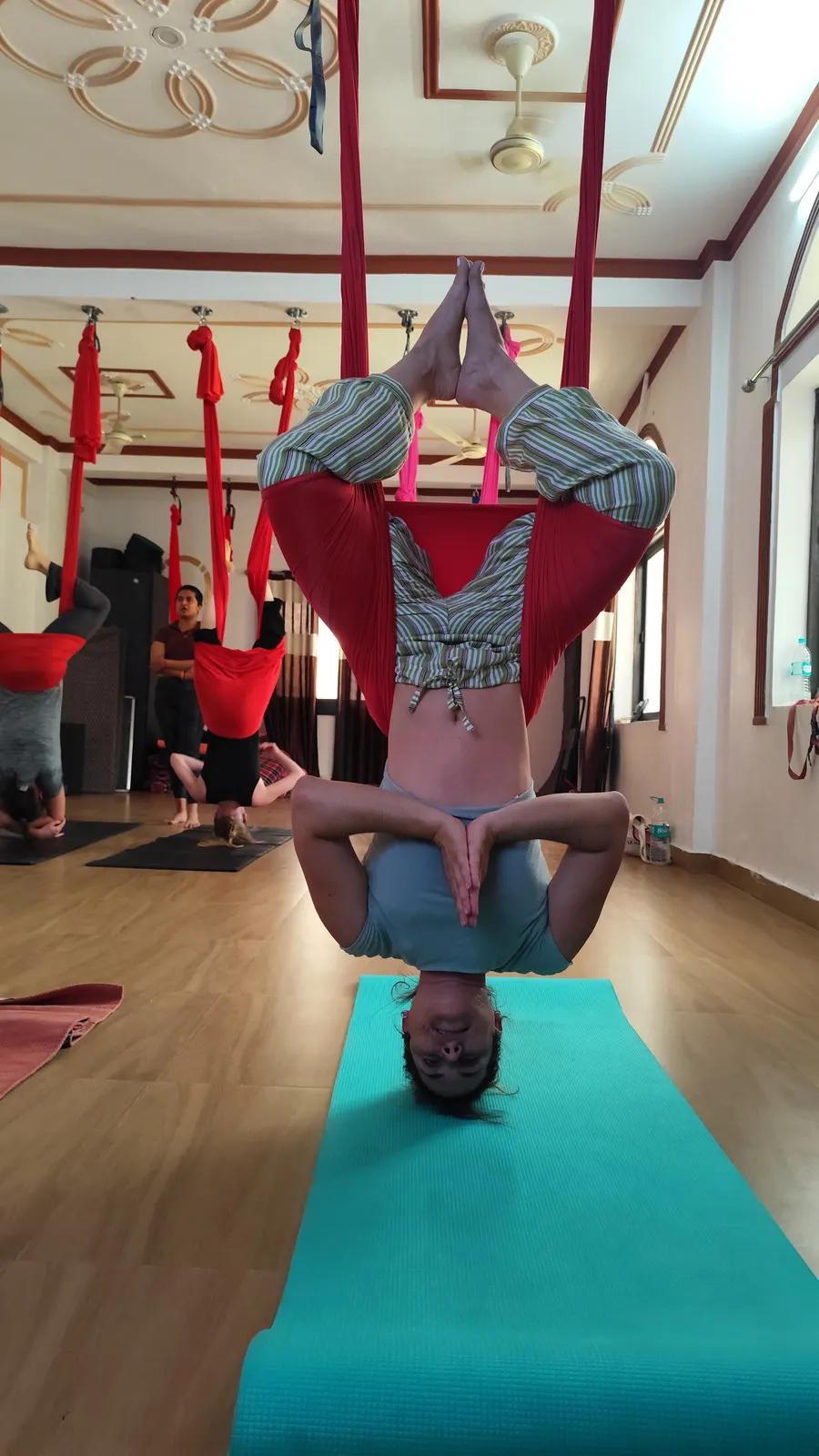
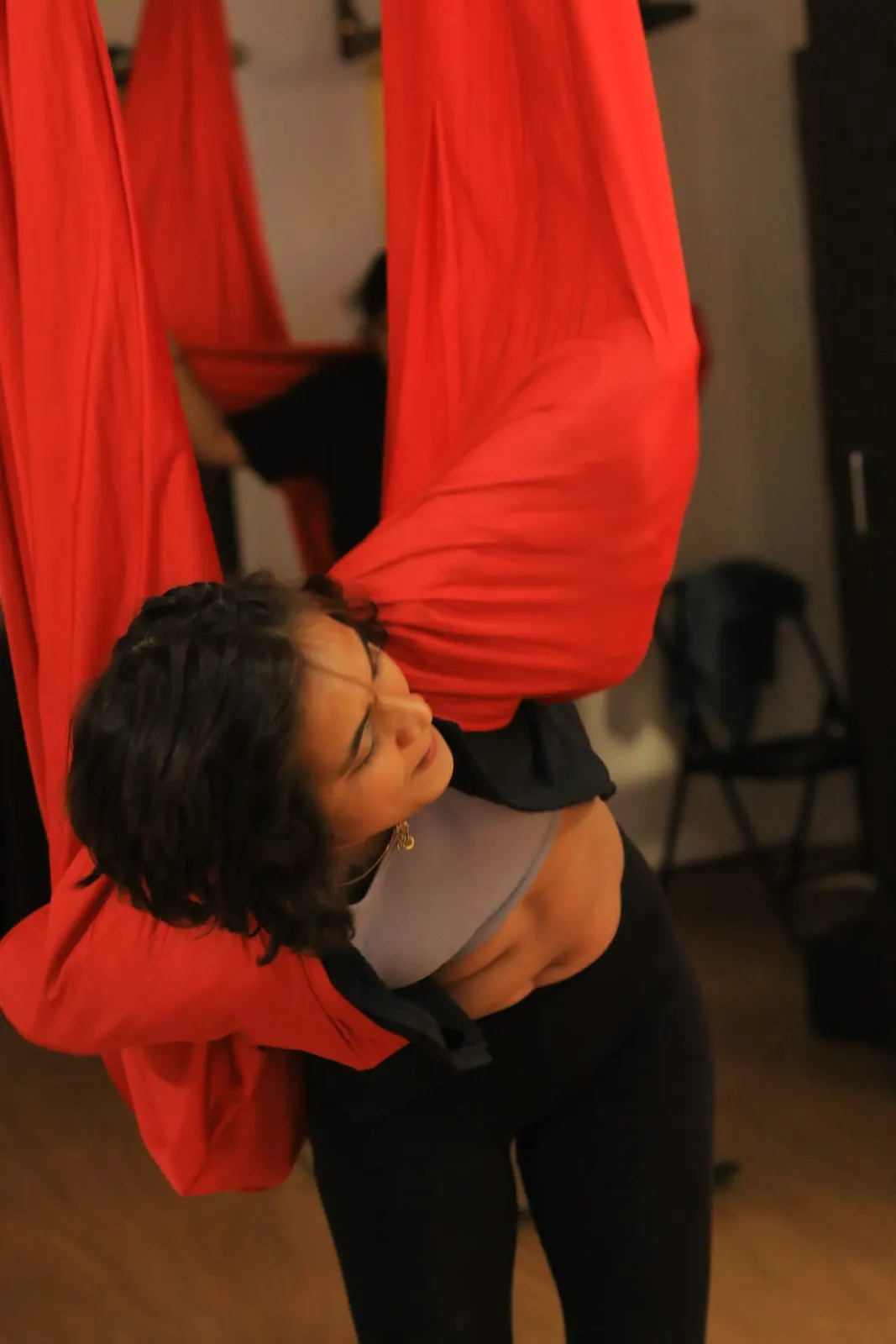
How to choose an aerial yoga teacher training
Before you book anywhere, ask these questions. A good school will answer every one of them plainly.
- Who teaches, and are they there the whole time? Ask for the lead teachers’ names and qualifications, and whether they teach the whole course or only part of it.
- How much of the course is aerial? Some trainings fit aerial into a broader programme. A specialist school spends every hour on it.
- Is rigging taught properly? You should learn how the system works and how to inspect it, not just how to hang a hammock.
- How long is the supervised teaching practicum? Ask how many times you will teach, and who will give you feedback.
- What does the certificate say? Check the accreditation (YACEP for a 50- or 100-hour course) and the hours.
- What is the group size? Smaller groups mean more spotting practice and more feedback.
- What is included? Accommodation, meals, materials and certification can add up if they are extra.
- What is the booking policy? You should be able to ask questions before committing. We take no deposit at enquiry.
From certificate to your first class
A certificate is a starting point. The teachers who settle in fastest treat their first months as an extension of training:
- Keep practising your own aerial yoga, so the entries, exits and wraps stay second nature.
- Assist first if you can. Spotting in an experienced teacher’s class is the quickest way to build confidence.
- Start with beginners and small groups. A short, clear beginner sequence taught well is worth more than an ambitious one taught nervously.
- Write your sequences down and rehearse your cues, especially for inversions.
- Run the safety routine every time: inspect the rigging, check in with each student about health conditions, and explain how to come out of a pose before anyone goes into it.
- Ask for feedback from students and from a mentor, and adjust.
A sensible first class is short and gentle. Begin on the mat with breathing and joint mobility, then bring students into the fabric seated, so they learn how it moves and how to hold it. Add a few supported standing poses and balances, offer one simple inversion only to those who are ready and spotted, and finish everyone in the cocoon for a long, quiet rest. Keep the language plain, demonstrate every entry and exit before anyone tries it, and leave time at the end for questions. Students remember how safe and welcome they felt far more than how many poses they did — and they come back for that.
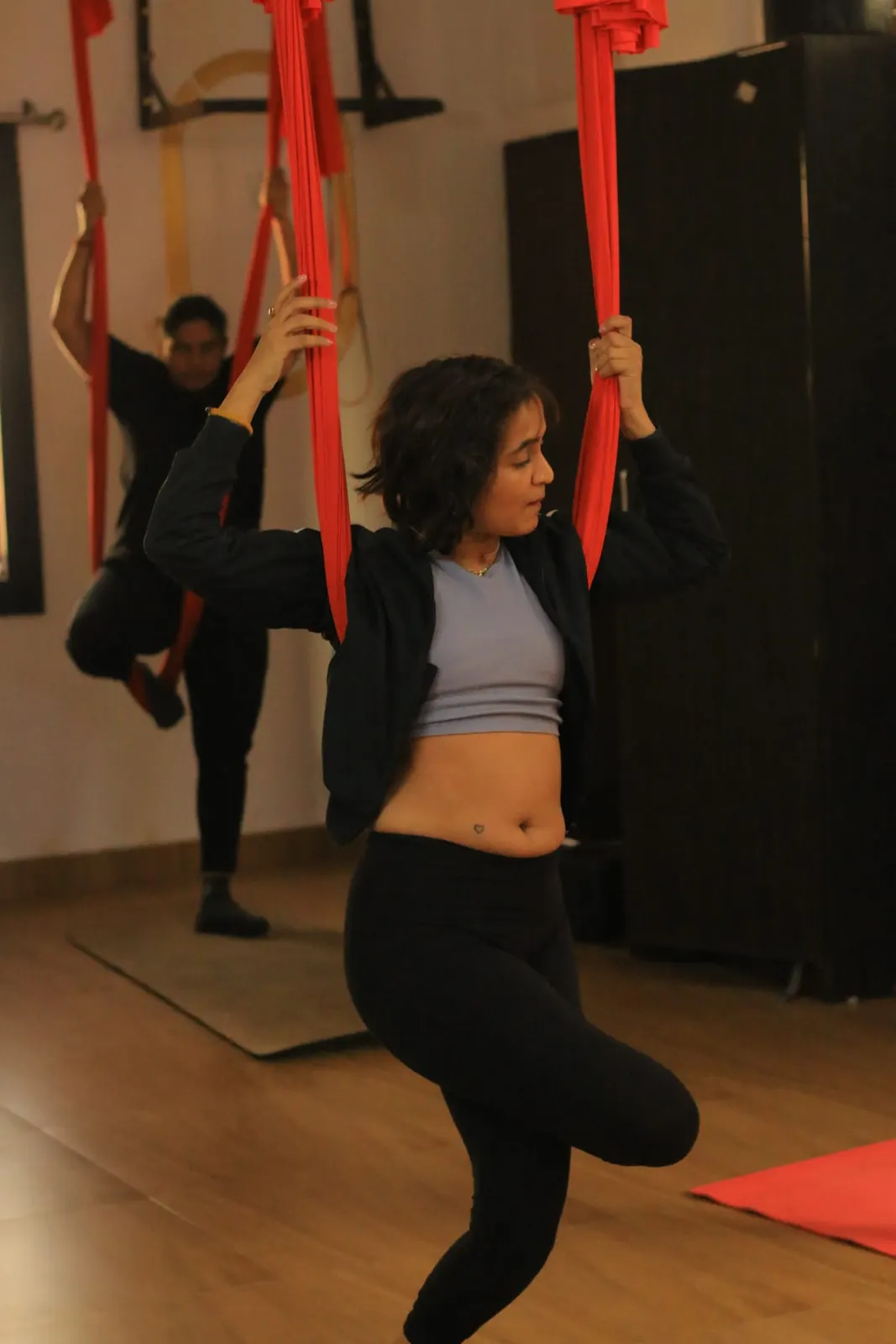
Insurance, equipment and the business basics
If you plan to teach independently, or to add aerial to an existing studio, a few practical questions come before your first paying class:
- Insurance. Check that your professional liability insurance specifically covers aerial yoga — not every yoga policy does. Insurers may ask for your certificate and details of the rigging.
- Rigging. Every mounting point must be assessed and installed by a qualified professional, such as a structural engineer or rigger. Keep records of who did the work and of your regular inspections.
- Equipment. Purpose-made, low-stretch hammocks with certified, locking hardware, plus a plan for inspecting and replacing them.
- Space. Enough ceiling height and clear floor space around each hammock for students to swing and invert safely.
- Pricing. Aerial classes are usually smaller than mat classes because each student needs a hammock and attention, which shapes how you price them.
What about aerial yoga instructor salary?
We will not quote a number, because there is no honest single figure — earnings vary enormously from country to country and city to city. What we can tell you is what drives them:
- Location. Local demand, living costs and how many aerial studios already exist.
- Employed or independent. A studio pays you per class; running your own classes earns more per student but carries rent, equipment and insurance costs.
- Class size. Limited by the number of rigged hammocks in the room.
- Range of skills. Teachers who can offer restorative, therapeutic or advanced classes, or private sessions, can serve more students — one reason some choose the 100-hour training.
- Other teaching. Many aerial instructors combine aerial with mat yoga, workshops or retreats.
Both our trainings cover the business side — equipment, installation, insurance and pricing a class — so you leave with a realistic plan, not just a certificate. If you are still new to the practice itself, start with what is aerial yoga? and the benefits of aerial yoga.
Frequently asked questions
Do I need to be a yoga teacher to take aerial yoga teacher training?
How long does it take to become a certified aerial yoga instructor?
Is your aerial yoga certification recognised by Yoga Alliance?
Should I choose the 50-hour or the 100-hour training?
Can I teach AntiGravity yoga with your certificate?
How much does an aerial yoga instructor earn?
Do I need to pay a deposit to ask about dates?
Aerial yoga teacher training in Rishikesh
Learn to teach the hammock, at a school that teaches nothing else
Seven-day and twelve-day YACEP-certified trainings in Tapovan, with your room and all meals included. Tell us when you want to come — no deposit is taken at enquiry.