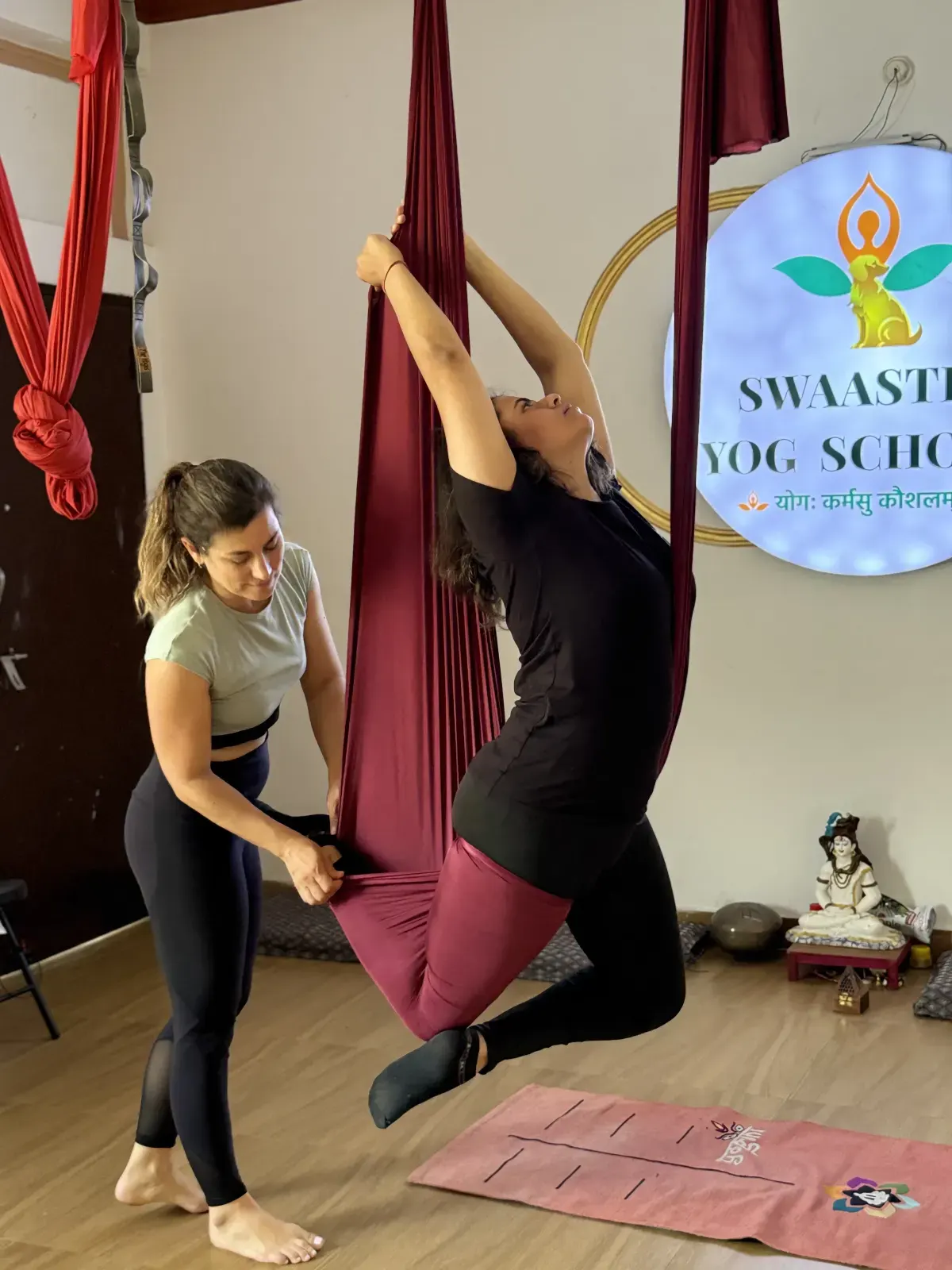
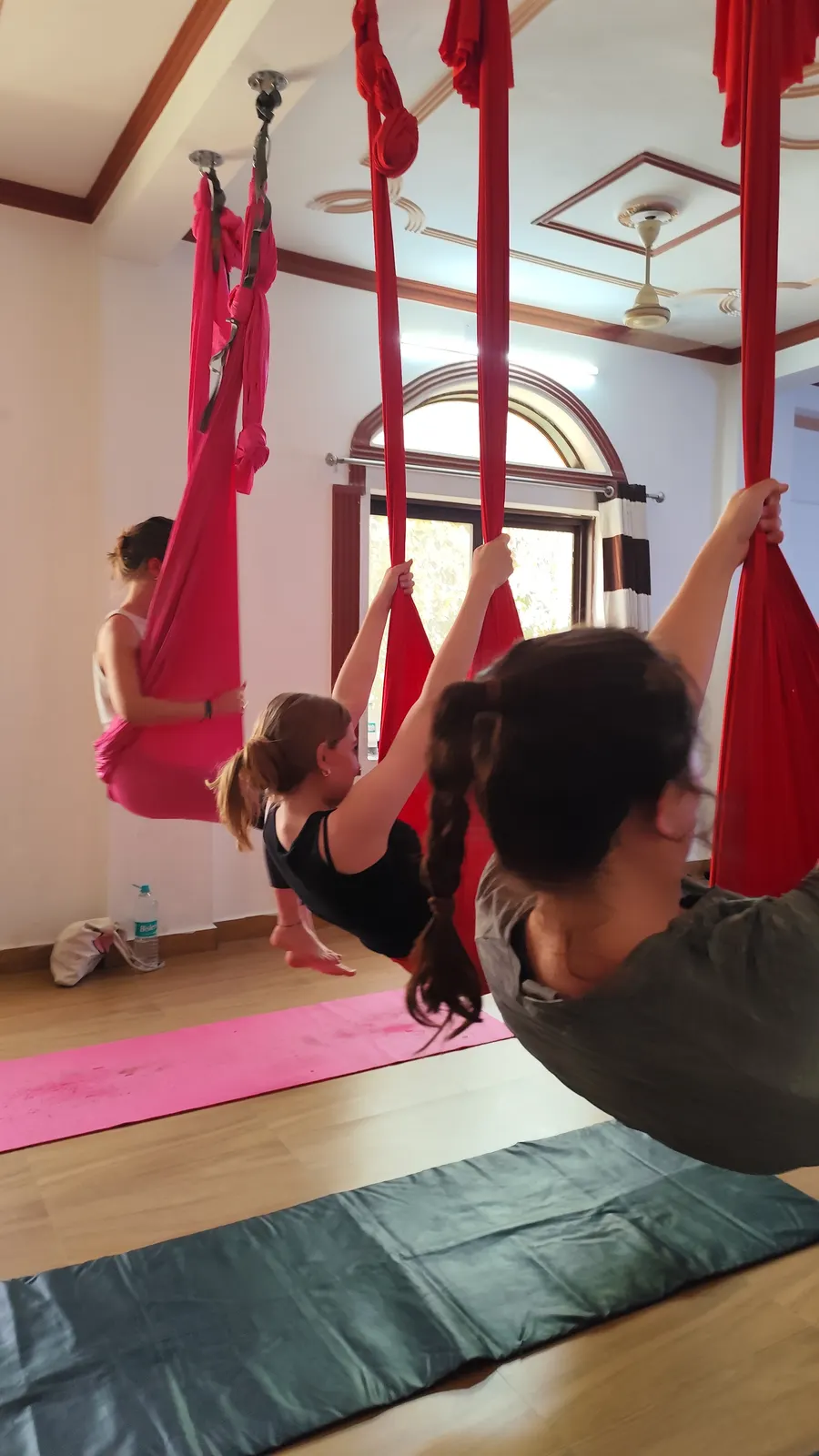
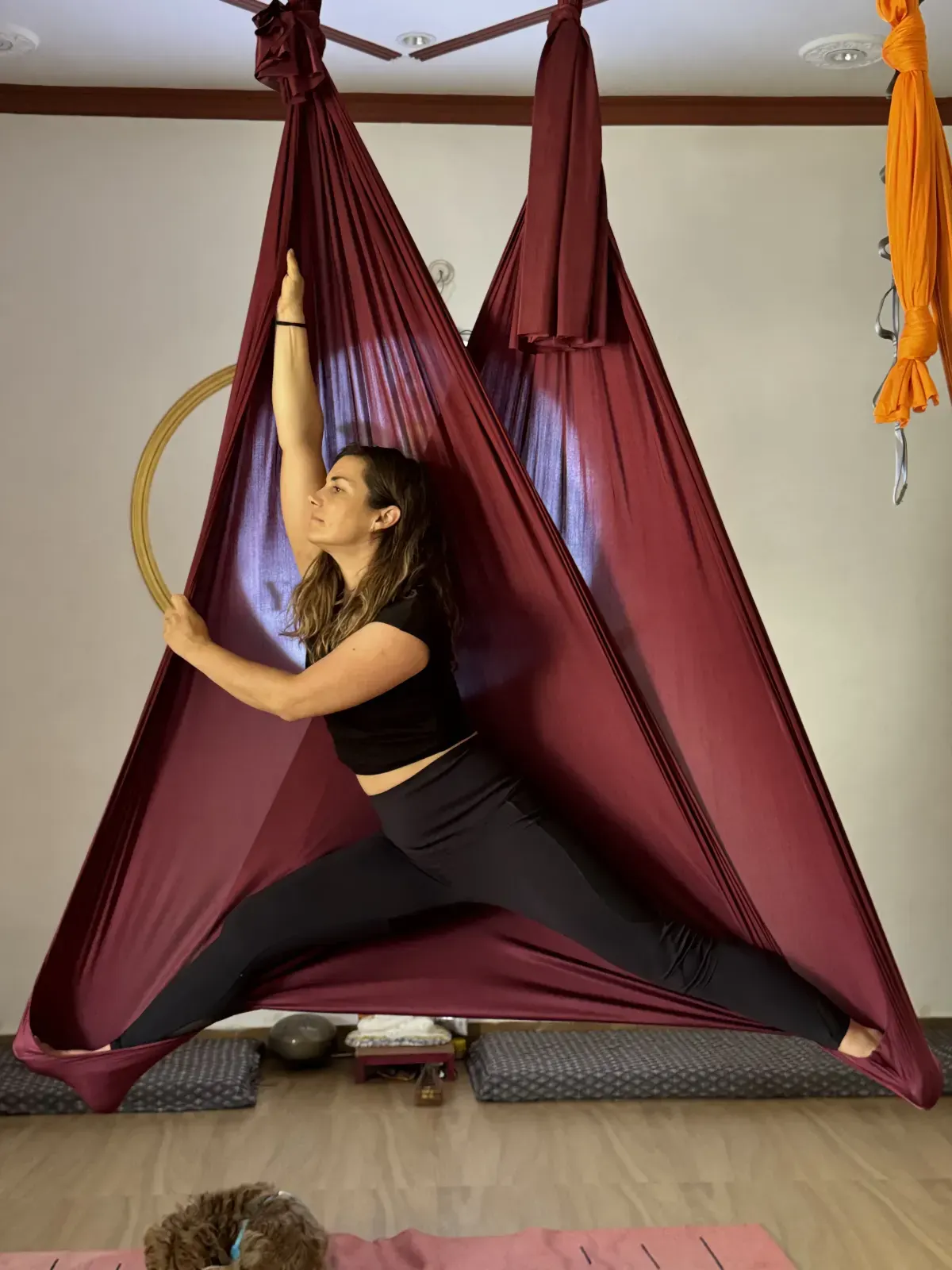
Aerial Yoga Teacher Training in India: Why Rishikesh, and How to Choose Where to Train
By Aerial Rishikesh · Updated · 11 min read
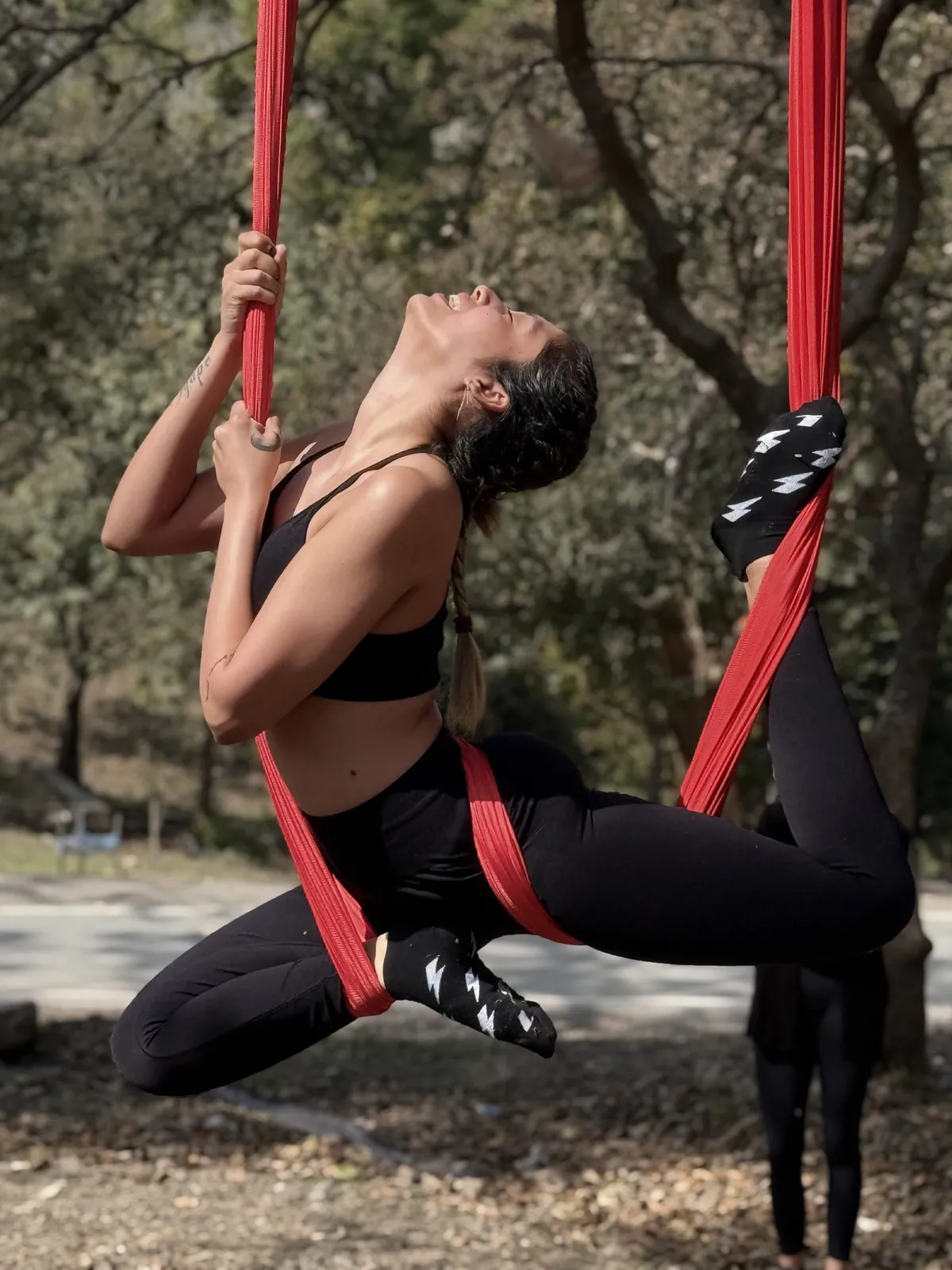
Quick answer
Rishikesh, in the Himalayan foothills of northern India, is one of the best places in the world to take an aerial yoga teacher training: it is the traditional home of yoga, a residential course with room and meals included costs far less than in most Western countries, and you can train full-time for one or two weeks instead of spreading modules over months. What matters most, wherever you train, is the school — its rigging and safety standards, teacher experience, contact hours and how much supervised teaching you do.
Why train in aerial yoga in India at all?
If you live in Europe, North America or Australia, flying to India for an aerial yoga teacher training can sound like a big step when there may be a course an hour from home. It is a fair question, and the honest answer is that it depends on how you learn best and what you want from the experience.
Most aerial trainings at home are delivered in weekend modules: a few days at a time, fitted around work, sometimes spread over several months. That suits plenty of people. A residential training in India works differently. You stop everything else, live a few minutes from the studio, eat the same meals as your group and practise twice a day. The learning compounds, because nothing interrupts it, and you finish in one or two weeks rather than a season.
India also has two practical advantages. The cost of living is low, so an all-inclusive course — tuition, room, meals and certification — usually costs less than tuition alone in many Western cities. And you are learning in the country yoga comes from, which for many students is the reason they wanted to train in the first place.
Why Rishikesh?
Rishikesh is widely called the yoga capital of the world. It sits where the Ganga leaves the Himalayan foothills, and it has drawn yogis, teachers and students for generations. Today it has a concentration of yoga schools, ashrams, vegetarian cafés and practitioners that is hard to match anywhere. Living there for a week or two, yoga is simply the background of daily life.
Our campus is in Tapovan, the quieter, practice-focused part of Rishikesh, about ten minutes’ walk from the river. Morning practice by the Ganga is part of the week, and in the evenings many students walk down to the ghats. It is a setting that makes it easy to focus, which is exactly what an intensive training needs.
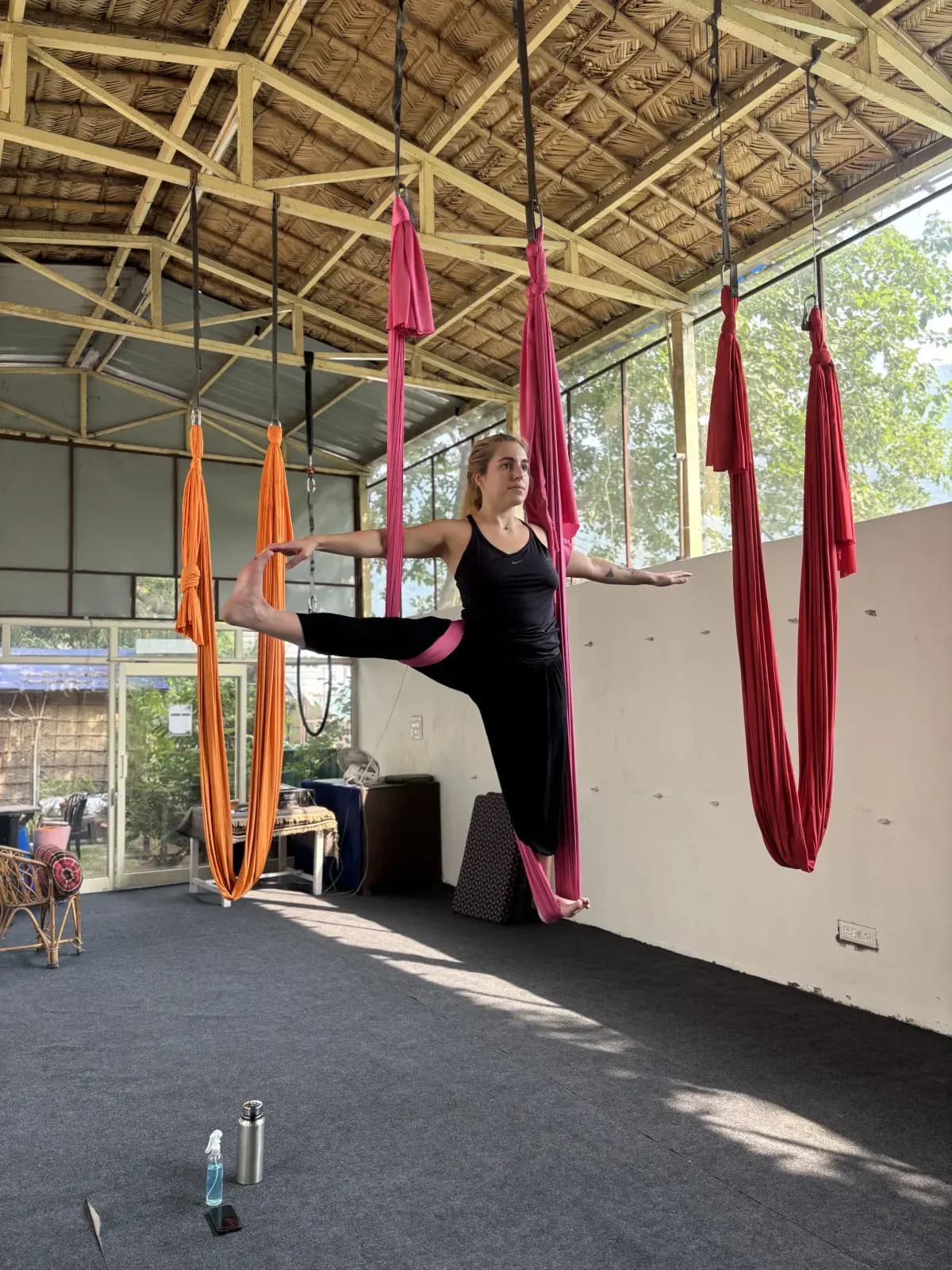
There are many yoga schools in Rishikesh, and several offer aerial yoga alongside their main hatha or vinyasa courses. Most aerial courses there stop at 50 hours. We are one of the very few schools that teach aerial yoga exclusively, and our training goes on to a full 100 hours for those who want to make aerial a serious part of their teaching.
Our aerial yoga teacher trainings in Rishikesh
We run two trainings, both taught in English by our founder Mayuri Shewale (E-RYT 500) and aerial specialist Priya Sharma (RYT 500), who are both present throughout every batch.
- [50-hour aerial yoga teacher training](/50-hour-aerial-yoga-teacher-training) — seven days, starting every Monday. A foundation in rigging and safety, the core aerial vocabulary, spotting, sequencing and teaching beginner classes. No previous aerial experience needed.
- [100-hour aerial yoga teacher training](/100-hour-aerial-yoga-teacher-training) — twelve days, starting on the 17th of each month. Everything in the 50-hour plus deeper anatomy, advanced inversions, restorative aerial and a longer supervised teaching practicum.
Both are certified by Yoga Alliance as continuing education (YACEP), so the hours count towards your continuing-education requirements if you are already a registered teacher. Both include your room, all three daily vegetarian meals, training materials and your certificate. Current prices, by room type, are below.
| Training | Starts | Dormitory | Shared room | Private room |
|---|---|---|---|---|
| 50-hour aerial YTT7 days | Every Monday | $195 | $385 | $550 |
| 100-hour aerial YTT12 days | 17th monthly | $390 | $770 | $1,100 |
What a day looks like on our campus
Days are full but not frantic. Timings shift a little with the season and with each group, and are confirmed on arrival, but a typical training day runs like this:
| Time | What happens |
|---|---|
| 06:00 | Wake up and herbal tea |
| 06:30 | Pranayama and grounding — breathwork before anyone leaves the floor |
| 07:30 | Aerial practice — postures, wraps and inversions in your own body |
| 09:15 | Breakfast — sattvic vegetarian, cooked on site |
| 10:30 | Theory — anatomy, rigging and safety, or sequencing |
| 12:30 | Lunch and rest through the hottest part of the day |
| 15:30 | Methodology and teaching practicum — cueing, spotting and feedback |
| 17:00 | Second aerial session — restorative work or inversions |
| 19:00 | Dinner together |
| 20:00 | Satsang, self-study, or a walk to the ghats |
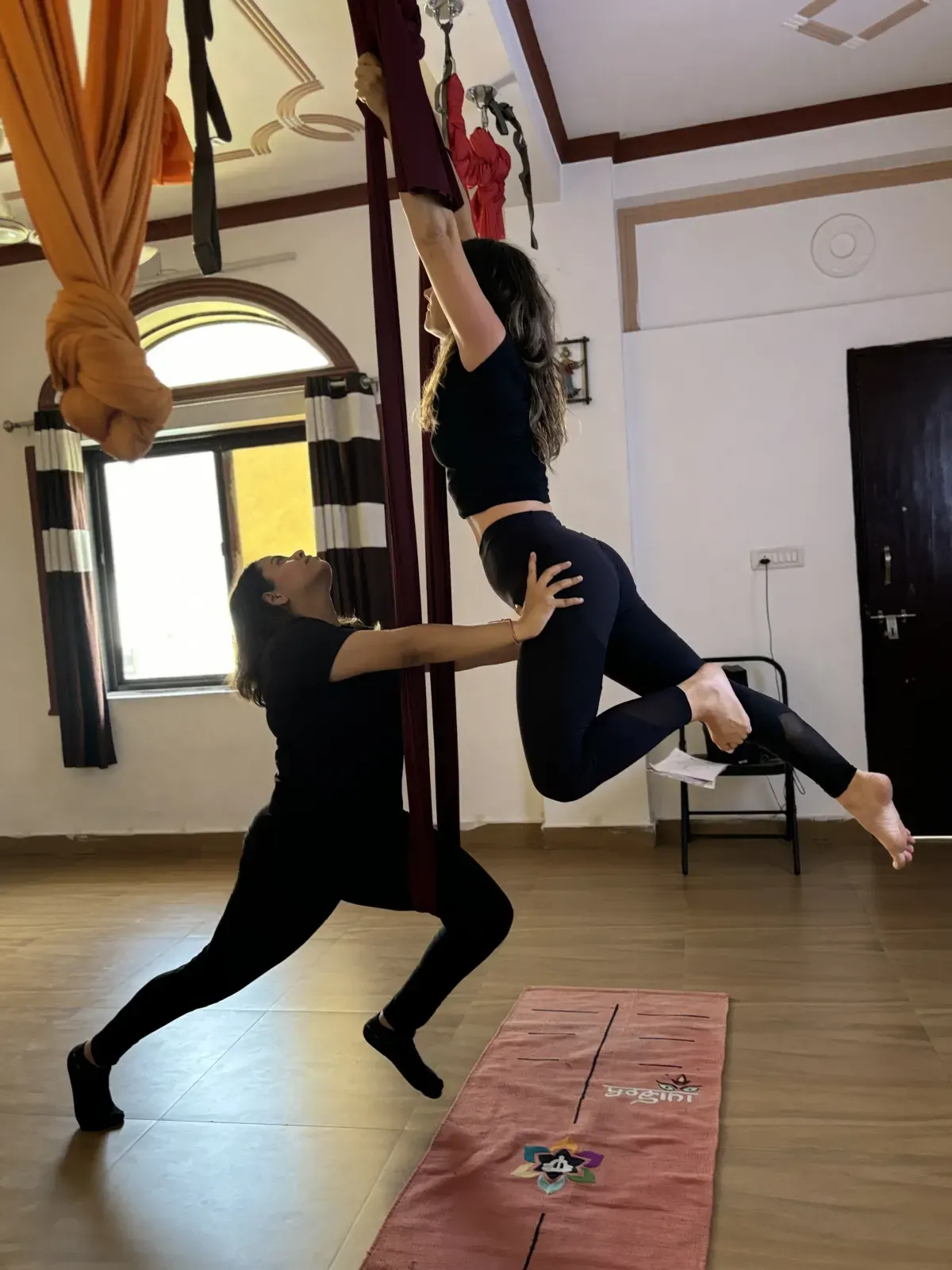
The first day begins with rigging, load and hardware — the safety checks you will run before every class you ever teach — before anyone goes upside down. From there, each skill is learned in your own body first and then taken apart so you can teach it. You will teach in front of the group more than once and receive direct feedback each time.
Accommodation and food
You live on our campus in Tapovan, a short walk from the studio, so there is no commute between sessions. There are three room types — dormitory, shared and private — and the price of the training depends only on which you choose.
All three daily meals are included and are sattvic vegetarian: fresh, lightly spiced food cooked on site, designed to sit well with a day of practice. Rishikesh is a largely vegetarian, alcohol-free town, which many students find surprisingly easy to settle into. If you have allergies or dietary needs, tell us when you enquire.
Travel basics: visas, seasons and getting here
Visas
Most nationalities need a visa to visit India, and many can apply online for an Indian e-visa. Requirements and processing times change, so check the official Indian government e-visa website for your nationality well before you book flights, and only use the official site to apply.
When to come
- September to November — after the monsoon, green, clear and comfortable. One of the most popular times to train.
- February to April — mild to warm days and cool mornings. The other favourite season.
- July to August — monsoon. Heavy rain, high humidity and occasional travel disruption in the mountains. Trainings still run, but plan for wet days.
- December to January — cold mornings and evenings in the foothills; bring warm layers.
Because the 50-hour starts every Monday and the 100-hour on the 17th of each month, you can usually fit a training around your travel rather than the other way round.
Getting here
The nearest airport is Dehradun (Jolly Grant), roughly 45 minutes to an hour from Rishikesh by road. Most international travellers fly into Delhi and connect by domestic flight, train or road. If you have questions about getting here, ask us when you enquire.
Residential immersion or weekend modules: which suits you?
Neither format is better in every case. They suit different people, and it is worth being honest with yourself about which you are before you choose a destination.
- A residential training suits you if you can take one or two weeks away, you learn best by repetition, and you want aerial to feel natural in your body by the end. Practising twice a day, every day, with the same teachers and group builds skill and confidence quickly, and spotting becomes second nature because you do it constantly.
- Weekend modules suit you if you cannot leave work or family for more than a few days, you prefer time between sessions to absorb material, or you want to train at the studio where you will later teach.
- Either way, plan to keep practising afterwards. No training, however good, replaces the months of teaching real classes that follow it. A strong course gives you safe habits and a clear method to build on.
Our trainings are designed for both kinds of student: yoga teachers adding aerial as a specialism, and dedicated practitioners who want to understand the hammock properly before they ever teach. For both, living and training in one place for the whole course is what makes the difference.
India, Bali, Thailand, Europe or at home: how to compare
People searching for an aerial yoga teacher training often compare India with Bali, Thailand, Europe, the UK or Australia. There are good schools in many places, and we would not pretend otherwise. The fair comparison is less about countries than about the format and the school. Here is how India generally compares on the factors that matter:
| Factor | India / Rishikesh | Typical alternatives |
|---|---|---|
| Format | Residential and full-time: one or two weeks of immersion | Often weekend modules at home, or residential retreats in other destinations |
| What the fee covers | Usually tuition, room, all meals and certification together | Varies widely; accommodation and food are often extra |
| Cost of living | Low, so total cost of the trip is usually modest | Generally higher in Europe, the UK and Australia; varies elsewhere |
| Yoga heritage | Rishikesh is widely called the yoga capital of the world | Strong wellness scenes in some destinations, without the same historical roots |
| Aerial focus | Our school teaches aerial only, with a 100-hour option | Aerial is often one module among many in a general yoga school |
| Travel | Long-haul for most, visa usually required | Closer to home for some; no travel at all for local courses |
| Daily life | Largely vegetarian, alcohol-free town; simple, focused living | Ranges from quiet retreat to busy holiday destination |
If you can only train a few days at a time, a good local course may suit you better. If you can take one or two weeks away and want to come back with aerial genuinely in your body, a residential training in Rishikesh is hard to beat for value and focus. For a fuller breakdown of what a training costs, see our guide to aerial yoga teacher training cost.
What to check in any aerial school, anywhere
Wherever you train, these are the questions worth asking before you pay anything:
- Rigging and safety. Who installed the rigging, what is it rated to, and how often is it checked? Is rigging taught as part of the course?
- Teacher experience. Who will actually teach you, and are they present for the whole course? What are their qualifications and how long have they taught aerial specifically?
- Contact hours. How many hours are face-to-face teaching rather than self-study? A 50-hour course in seven days is very different from one spread over two weekends.
- Teaching practice. How many times will you teach in front of the group, and will you get individual feedback?
- Certification. What exactly does the certificate say? Is it Yoga Alliance continuing education (YACEP), and does it match what you want to do with it?
- Trademarked methods. AntiGravity® is a trademarked method with its own licensed instructor training. A general aerial yoga certificate, including ours, does not qualify you as an AntiGravity instructor. Make sure you know which you are buying.
- What is included. Are room, meals, materials and certification in the price, or extras?
- Group size. Smaller groups mean more time spotted and more feedback.
For the wider picture of qualifications and next steps, read how to become an aerial yoga instructor.
Frequently asked questions
Is India a good place for aerial yoga teacher training?
How long is aerial yoga teacher training in Rishikesh?
Is the aerial yoga teacher training Yoga Alliance certified?
Do I need yoga experience to join?
What is the best time of year to train in Rishikesh?
Do I need a visa to study yoga in India?
Will this training qualify me to teach AntiGravity yoga?
Aerial yoga teacher training in Rishikesh
Learn to teach the hammock, at a school that teaches nothing else
Seven-day and twelve-day YACEP-certified trainings in Tapovan, with your room and all meals included. Tell us when you want to come — no deposit is taken at enquiry.