Aerial Yoga vs AntiGravity Yoga: What’s the Difference, and Which Training Do You Need?
By Aerial Rishikesh · Updated · 9 min read
Quick answer
Aerial yoga is the general name for yoga practised in a fabric hammock. AntiGravity® yoga is one specific, trademarked method of it, created by Christopher Harrison, with its own licensed instructor training. The classes look similar, but only an AntiGravity certification lets you teach under the AntiGravity name; a general aerial yoga certification qualifies you to teach aerial yoga.
The short answer
People search for “antigravity yoga” and “aerial yoga” as if they were two names for the same thing, and in everyday conversation they often are. Strictly, though, they are not interchangeable. One is a practice; the other is a brand and method within that practice.
A useful comparison is Pilates and a particular branded Pilates system, or yoga and a named school of yoga. The branded version has its own sequences, terminology, equipment standards and teacher licensing. The general practice is taught by many independent teachers and schools, each in their own way — including us. We are one of the very few schools that teaches aerial yoga exclusively, and we are not affiliated with AntiGravity.
This guide explains the relationship fairly, because the difference matters most at one specific moment: when you are choosing a teacher training.
What AntiGravity yoga is
AntiGravity® is a trademarked method of suspended fitness created by Christopher Harrison, a performer and choreographer, in New York. AntiGravity yoga was among the earliest and best-known forms of hammock-based yoga, and it did a great deal to popularise the whole idea of practising yoga in a soft fabric sling.
Because it is a trademark, the AntiGravity name can only be used by studios and instructors licensed to do so. Those instructors are trained through AntiGravity’s own instructor programme, which teaches the method’s specific sequences and approach. If a studio advertises an “AntiGravity” class, it should be taught by someone certified through that programme.
We would describe AntiGravity fairly as a well-established, carefully structured method with a long track record. If you specifically want to teach that method, under that name, its own training is the right route. Details of its courses, requirements and fees change over time, so check them directly with AntiGravity rather than relying on any third-party summary, including this one.
What aerial yoga is
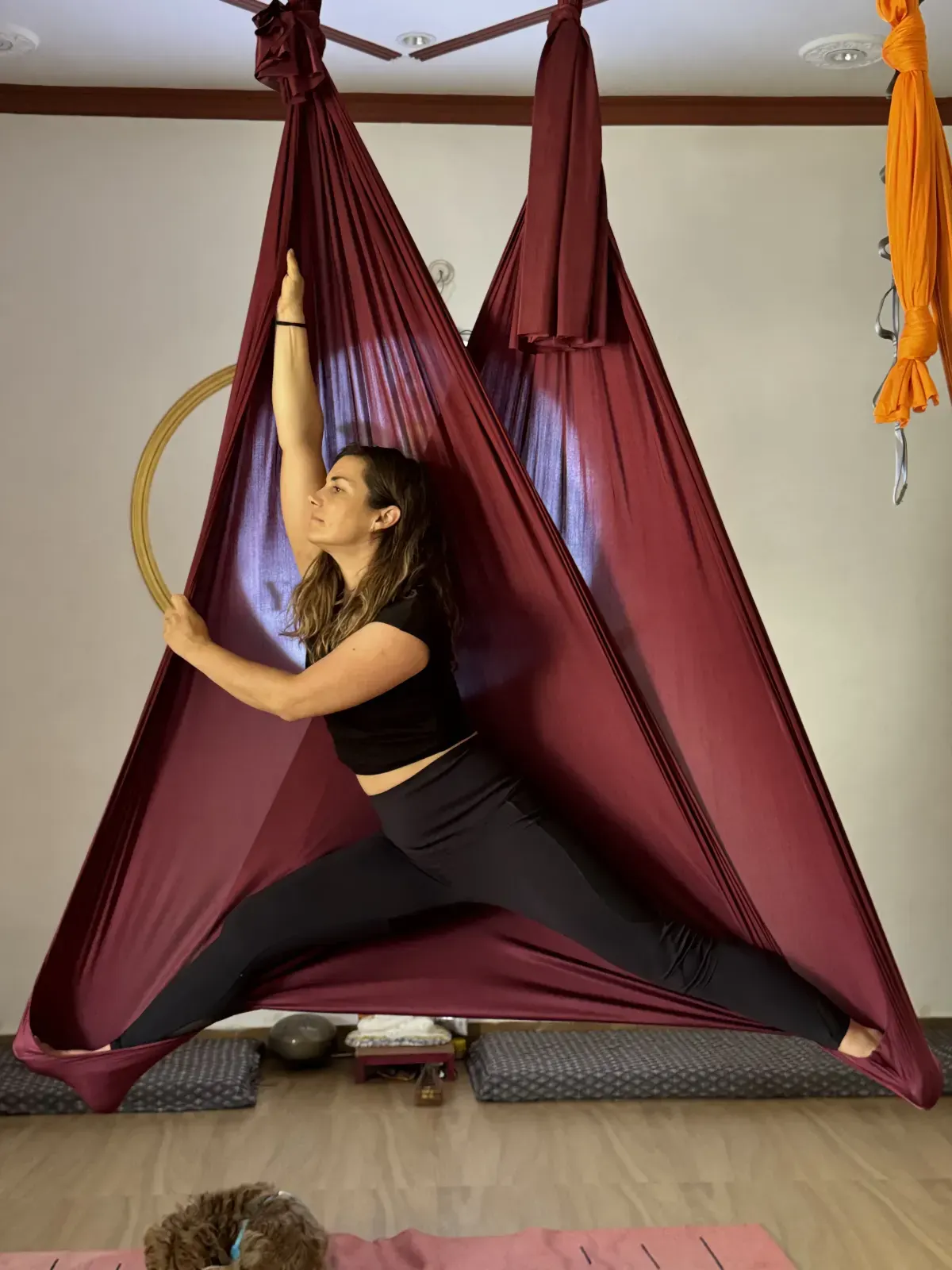
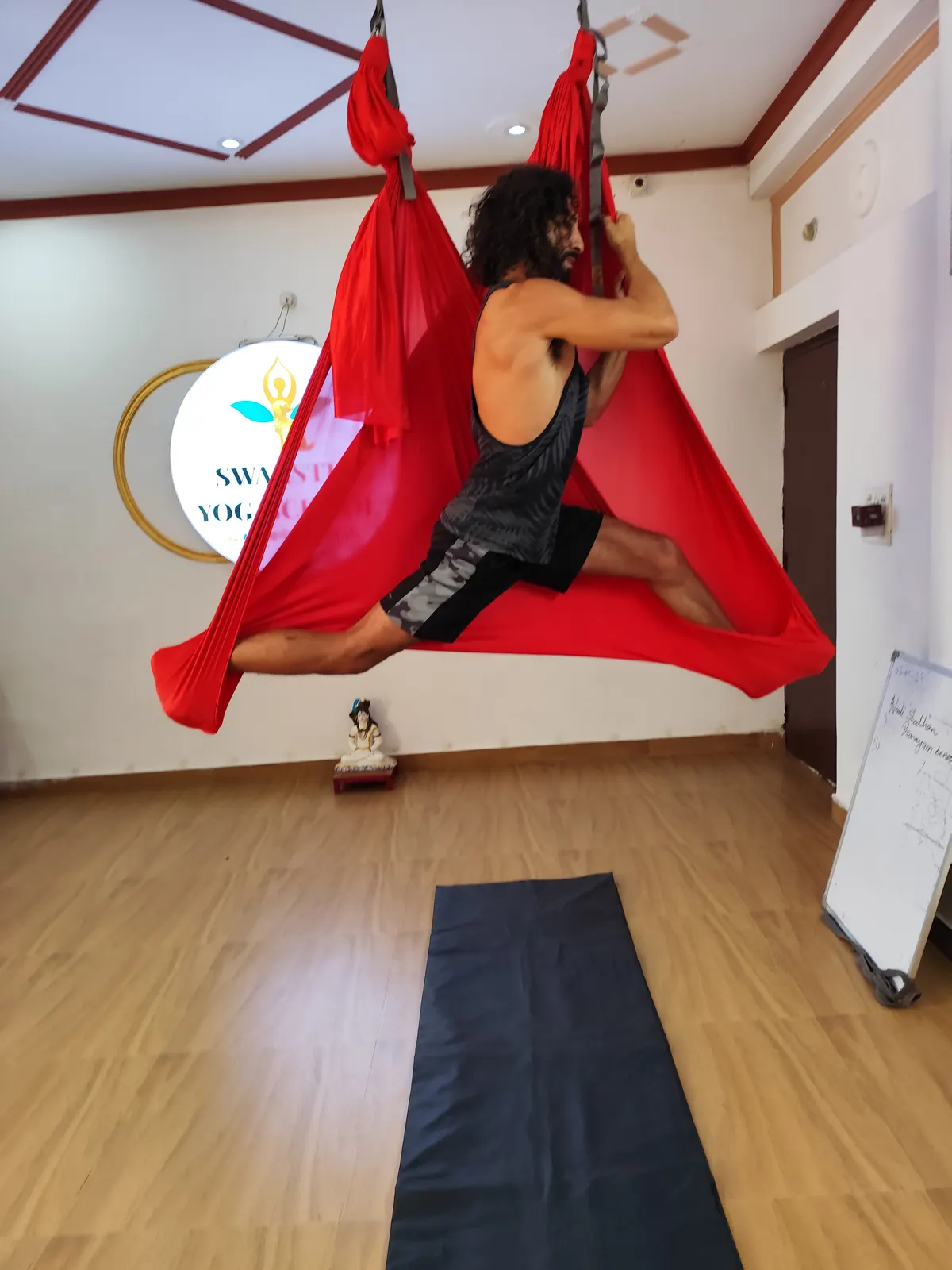
“Aerial yoga” is the general term for the whole family of yoga practised in a fabric hammock hung from rated rigging points. It blends hatha and vinyasa postures with supported stretches, inversions that do not load the head or neck, and a final relaxation lying wrapped in the fabric. Our guide to what aerial yoga is covers the practice in full.
Because the term is not owned by anyone, aerial yoga is taught in many styles: some classes are dynamic and strength-focused, some lean towards flexibility, and some are slow and restorative. Independent schools design their own curricula and certify their own graduates, and some — like ours — are registered with Yoga Alliance as continuing-education providers.
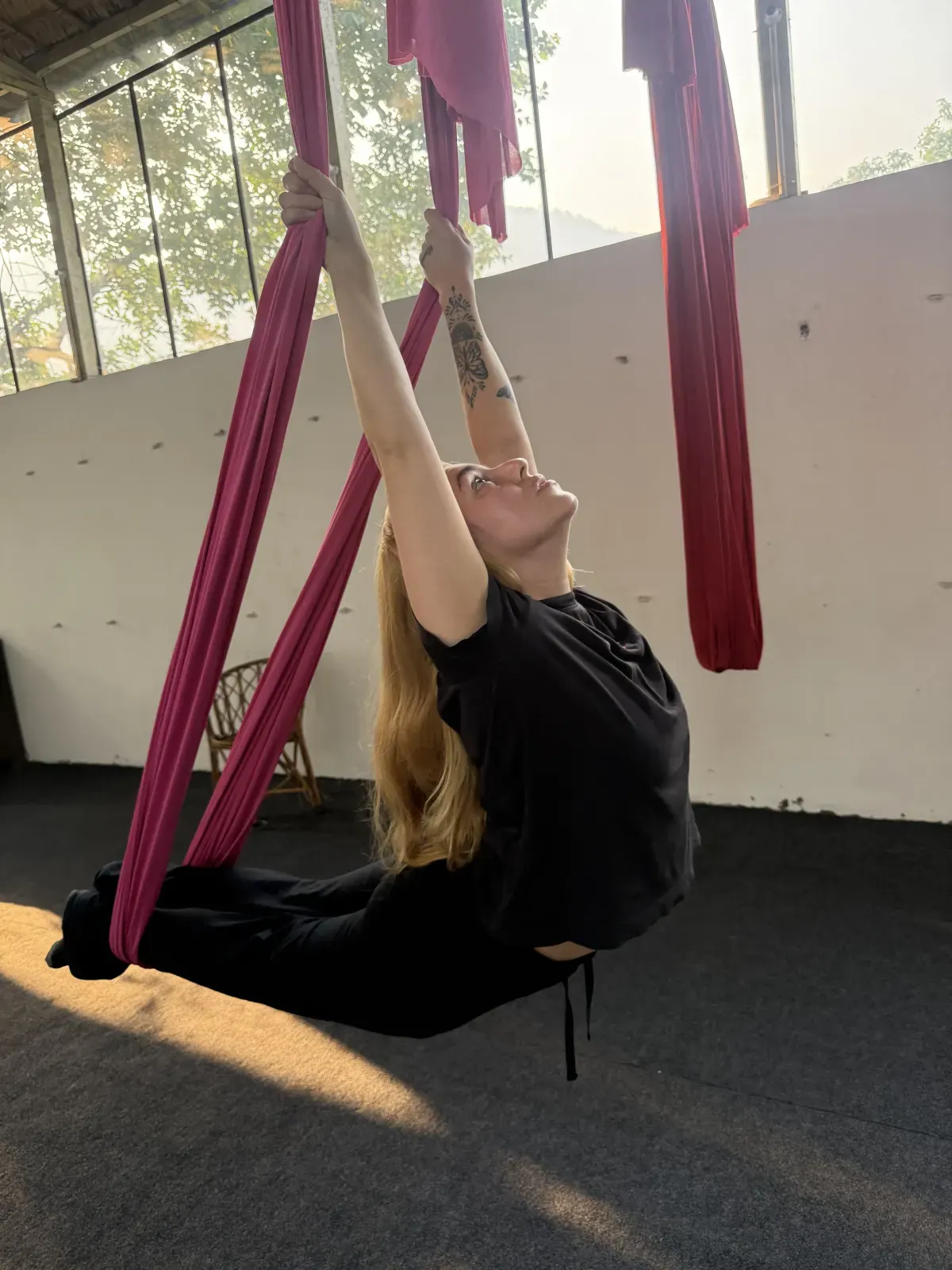
What the classes have in common
If you walk into a well-taught AntiGravity class and a well-taught aerial yoga class, you will recognise a lot of the same things:
- A soft fabric hammock hung from the ceiling, usually at around hip height.
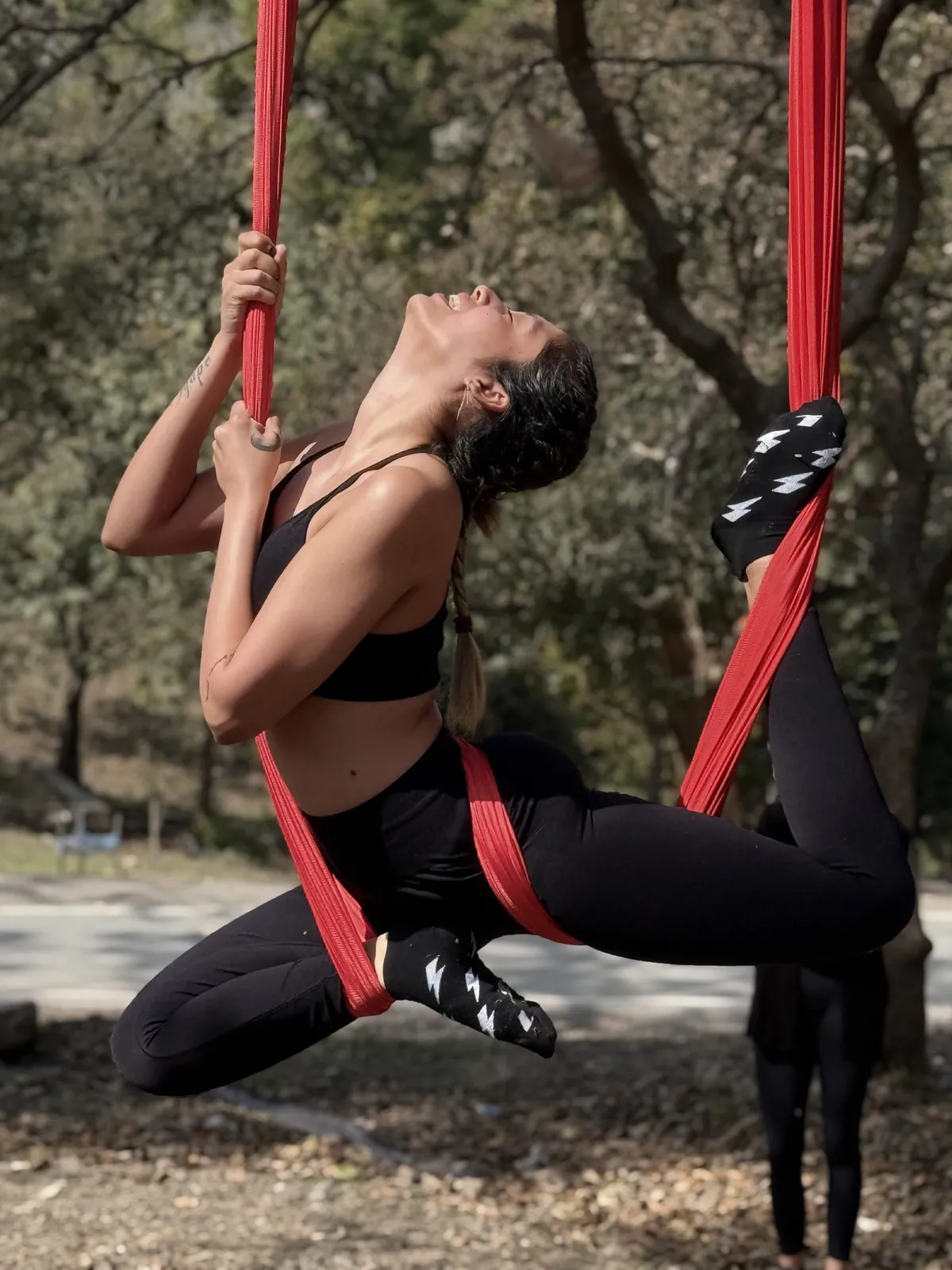
- Supported inversions in which you hang from the hips or legs rather than balancing on the head.
- Familiar yoga shapes — warriors, splits, pigeon, backbends — adapted to the hammock.
- A relaxation at the end, lying inside the fabric.
- The same safety basics: professionally rated rigging, careful entries and exits, and the same contraindications for inversions.
For a student who simply wants to try hanging upside down and stretching in a hammock, the difference between the two is far smaller than the difference between a good teacher and a poor one. Choose the class by the teacher, the studio’s rigging and the class level, not only by the name on the timetable.
Where the two do differ is in the detail: AntiGravity classes follow the method’s own sequencing, terminology and equipment standards, while aerial yoga classes vary with the school and teacher.
Aerial yoga vs AntiGravity yoga: side by side
| Aerial yoga | AntiGravity® yoga | |
|---|---|---|
| What it is | The general practice of yoga in a fabric hammock | A specific trademarked method of hammock-based fitness |
| Who owns the name | Nobody — it is a generic term | AntiGravity, the company founded by Christopher Harrison |
| Who can teach it | Any suitably trained aerial yoga teacher | Instructors licensed through AntiGravity’s own training |
| Class style | Varies by school: dynamic, flexibility-focused or restorative | Follows the method’s own sequences and terminology |
| Teacher training | Offered by many independent schools; content and length vary | Offered through AntiGravity’s official instructor programme |
| What a certificate lets you do | Teach aerial yoga classes | Teach classes under the AntiGravity name |
| Yoga Alliance link | Some schools are YACEP continuing-education providers | Check directly with AntiGravity |
AntiGravity yoga teacher training vs aerial yoga teacher training
This is where the distinction stops being academic. The certificate you earn decides what you can call your classes.
- An AntiGravity instructor certification lets you teach the AntiGravity method and use its name, subject to its licensing terms.
- A general aerial yoga teacher certification — like ours — qualifies you to teach aerial yoga. It does not qualify you as an AntiGravity instructor, and you should not advertise your classes as AntiGravity unless you hold that certification.
Neither is “better” in the abstract. They answer different questions. If a studio you want to work for runs licensed AntiGravity classes, you will need AntiGravity’s training. If you want to teach aerial yoga in your own studio, at a retreat, at a gym or alongside your existing yoga classes, a thorough aerial yoga teacher training is the more common route, and it lets you develop your own sequencing.
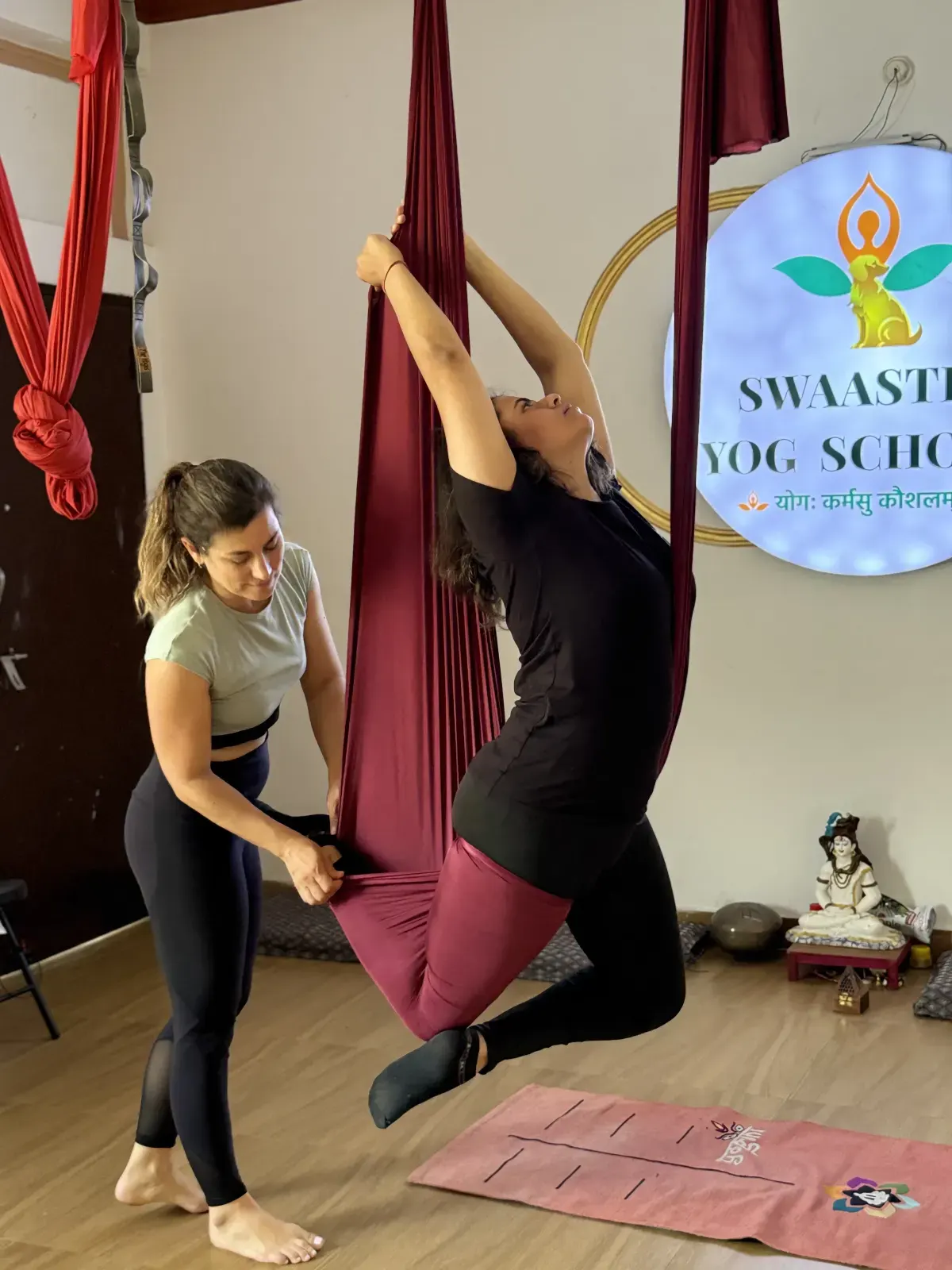
Whichever you choose, look at what a training actually covers. Teaching people to hang upside down safely needs far more than a list of poses: rigging and load checks, spotting, cueing entries and exits, sequencing for mixed levels, anatomy, and the judgement to recognise when an inversion is wrong for someone. Our guide on how to become an aerial yoga instructor walks through what to look for.
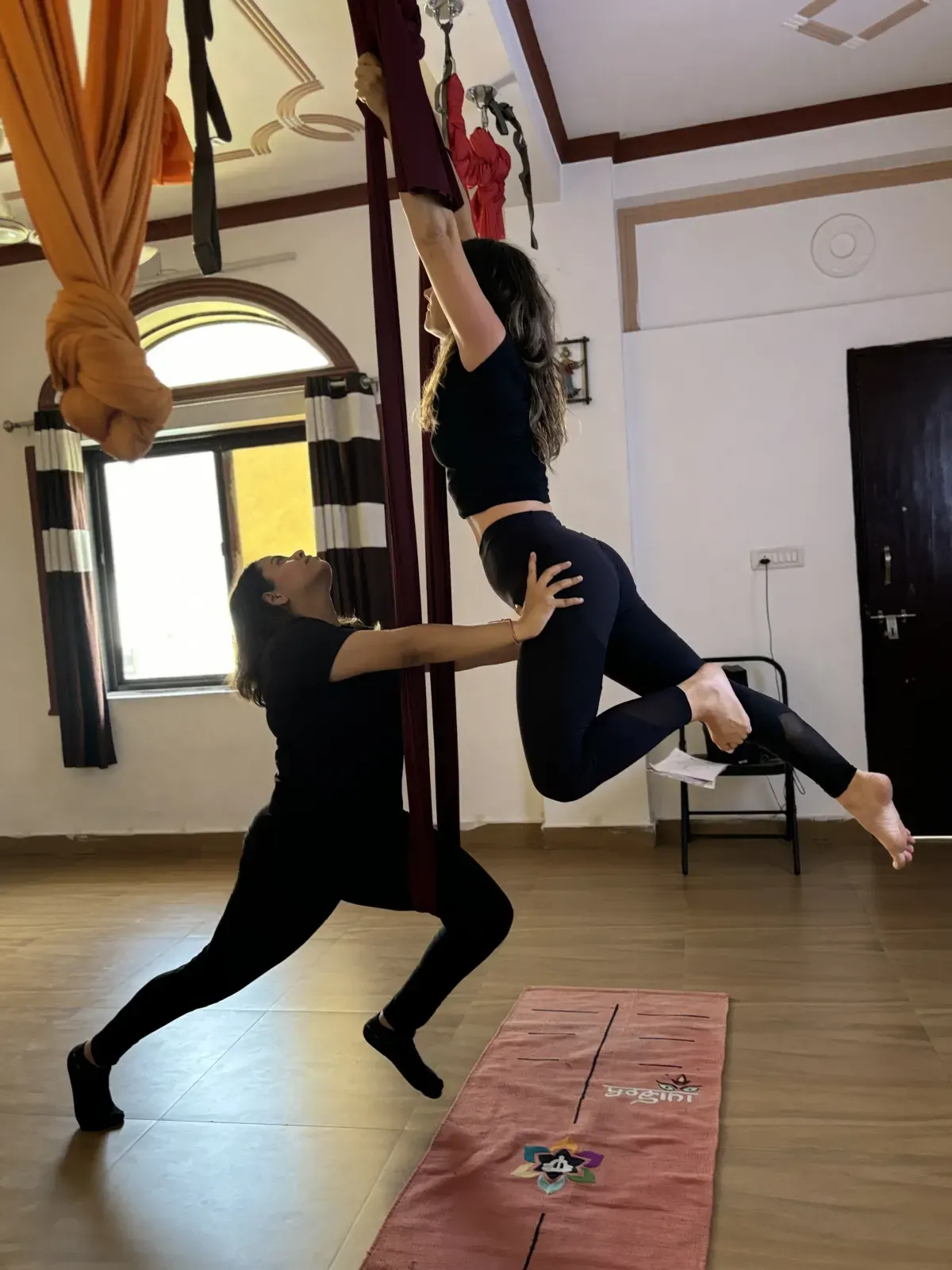
What our aerial yoga teacher training covers
At Aerial Rishikesh, in Tapovan, we teach aerial yoga and nothing else. Most aerial courses in Rishikesh stop at 50 hours; ours goes to 100.
- [50-hour aerial yoga teacher training](/50-hour-aerial-yoga-teacher-training) — seven days, starting every Monday. A foundation for teaching safe, confident beginner classes.
- [100-hour aerial yoga teacher training](/100-hour-aerial-yoga-teacher-training) — twelve days, starting on the 17th of each month. Adds advanced inversions, restorative aerial, deeper anatomy and a longer supervised teaching practicum.
- Both are Yoga Alliance continuing-education (YACEP) certified, and both teach rigging and safety as part of the syllabus. Our own rigging is professional, rated far beyond any practitioner’s weight, and every rig point is checked before each session.
- Teachers: Mayuri Shewale (E-RYT 500, founder) and Priya Sharma (RYT 500, aerial specialist) are present throughout both trainings.
Prices include your room, all meals, training materials and certification:
| Training | Starts | Dormitory | Shared room | Private room |
|---|---|---|---|---|
| 50-hour aerial YTT7 days | Every Monday | $195 | $385 | $550 |
| 100-hour aerial YTT12 days | 17th monthly | $390 | $770 | $1,100 |
To be completely clear: our certificate is a generic aerial yoga teacher certification. It is not an AntiGravity certification, and it does not license you to teach under the AntiGravity name. For a wider look at the options, see our guide to aerial yoga teacher training in India.
How to choose
- If you only want to take classes, pick the teacher, not the label. Ask about their training, how the rigging is installed and checked, and whether the class suits beginners.
- If you want to teach the AntiGravity method, or work at a licensed AntiGravity studio, train with AntiGravity.
- If you want to teach aerial yoga independently — in your own space, at retreats or alongside other yoga — choose a thorough aerial yoga teacher training with plenty of supervised teaching, spotting and rigging content.
- If you are unsure, ask the studios where you would like to teach which certification they accept before you book anything.
Whichever route you take, these are the questions we would ask of any aerial teacher training, ours included, before paying anything:
- Who teaches it, and are they there the whole time? Lead trainers who appear for a day and hand over to assistants are a common disappointment.
- How many hours are spent teaching, not just practising? You learn to teach by teaching real people under supervision, with feedback.
- Is rigging and safety on the syllabus? You should leave knowing how a rig point is assessed and checked, not just how to use one.
- How much spotting practice is there? Spotting inversions safely is a physical skill that needs repetition.
- What exactly does the certificate say, and who recognises it? Ask whether it is registered with Yoga Alliance, and in what category.
- What is the group size? In aerial work, the teacher’s eyes and hands are the safety system.
A good school will answer all of these plainly. If you want a sense of what each option costs, our guide to aerial yoga teacher training cost sets out what to compare beyond the headline price.
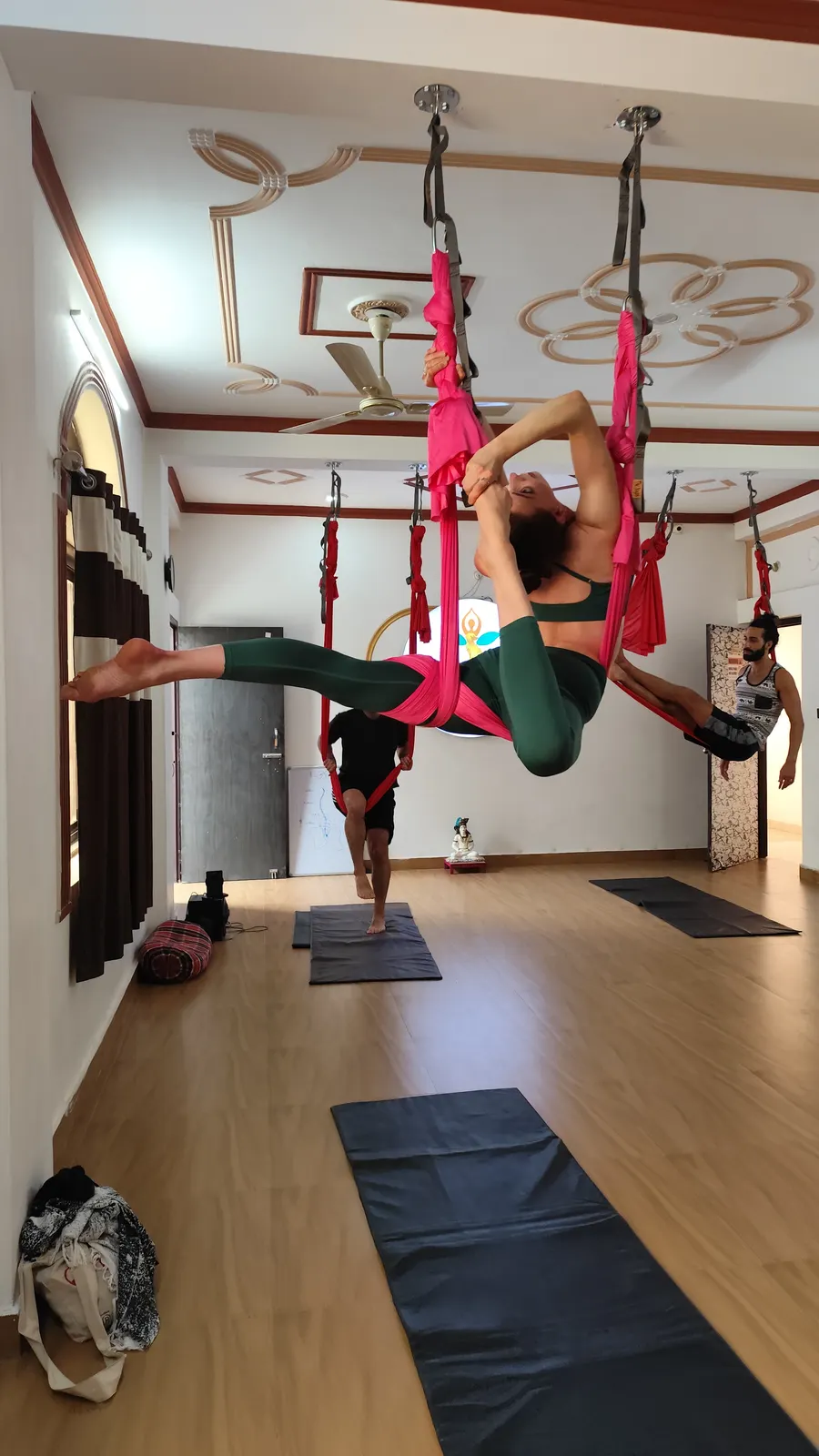
Other names: fly yoga, hammock yoga, air yoga and the yoga trapeze
AntiGravity is not the only name you will meet. Most of the others are simply marketing names for the same practice; one describes a different piece of equipment.
| Name | What it usually means |
|---|---|
| Fly yoga, flying yoga | Studio names for aerial yoga in a fabric hammock. |
| Hammock yoga | A descriptive name for aerial yoga. |
| Air yoga | Another branding name for aerial yoga; check with the studio what the class involves. |
| Aerial yin / restorative aerial | A slow aerial style built around long, supported holds and the cocoon. |
| Yoga trapeze / yoga swing | A different rig: a shorter sling with handles and a bar, rather than an open loop of fabric. Related, but not the same practice. |
| Aerial silks | An aerial acrobatics discipline using two long lengths of fabric, closer to circus arts than yoga. |
If a name is unfamiliar, ask the studio two questions: what equipment do you use, and what is the teacher trained in? Those two answers tell you more than any label.
Frequently asked questions
Is AntiGravity yoga the same as aerial yoga?
Does an aerial yoga teacher training certify me to teach AntiGravity?
Which is better, AntiGravity yoga or aerial yoga?
Who created AntiGravity yoga?
Is anti gravity yoga good for beginners?
Is a yoga trapeze the same as an aerial yoga hammock?
Aerial yoga teacher training in Rishikesh
Learn to teach the hammock, at a school that teaches nothing else
Seven-day and twelve-day YACEP-certified trainings in Tapovan, with your room and all meals included. Tell us when you want to come — no deposit is taken at enquiry.