Aerial Yoga Certification: Types, Hours, YACEP and How to Check a Certificate
By Aerial Rishikesh · Updated · 9 min read
Quick answer
An aerial yoga certification is a certificate from a dedicated aerial yoga teacher training — usually 50 or 100 contact hours — that shows you were trained to teach aerial yoga safely, including rigging, spotting and sequencing. There is no government licence; the most widely recognised marker is a training registered with Yoga Alliance as continuing education (YACEP), backed by named lead teachers and a supervised teaching practicum.
What an aerial yoga certification actually is
An aerial yoga certification is proof that you completed a structured training in teaching yoga in a suspended fabric hammock. It is issued by the school that trained you, not by a government, and nothing in law stops an uncertified person hanging a hammock and calling it a class. That is exactly why the certificate matters: studios, insurers and students use it to tell a trained teacher from an untrained one.
Because each school writes its own certificate, two certificates with the same words on them can mean very different things. This guide is about telling them apart. If you want the full career route — from first class as a student to teaching your own — read how to become an aerial yoga instructor alongside it.
The main types of aerial yoga certification
Most aerial certificates you will come across fall into one of four groups:
| Type | What it is | What to check |
|---|---|---|
| Yoga Alliance continuing education (YACEP) | A specialist training, usually 50 or 100 hours, run by a school registered with Yoga Alliance as a continuing-education provider | That the provider is listed in the Yoga Alliance directory and that the hours on the certificate match the course |
| Independent school certificate | A certificate from a school or studio with no outside registration | Who the lead teachers are, how many contact hours you get and whether teaching practice is assessed |
| Licensed or trademarked method | A training in one branded system, such as AntiGravity®, which licenses its own instructors | Whether you want to teach that brand specifically — the licence usually only covers that method |
| Online-only certificate | Video lessons, sometimes with a recorded assessment | Whether anyone ever watched you spot a real student in a real hammock |
None of these is automatically good or bad. But only the first adds an outside check on top of the school’s own word, and an online-only course cannot teach the hands-on parts — spotting and rigging — that keep students safe.
YACEP, RYS and RYT: what the letters mean
Yoga Alliance is the best-known registry for yoga teachers and schools. Its three most-quoted labels are easy to confuse:
| Label | Stands for | Applies to |
|---|---|---|
| RYT | Registered Yoga Teacher | A teacher who completed a foundational training at a Registered Yoga School (for example 200 hours) and then registered |
| RYS | Registered Yoga School | A school running those foundational 200-, 300- or 500-hour trainings |
| YACEP | Yoga Alliance Continuing Education Provider | A provider of specialist trainings, such as aerial, that registered teachers take to keep learning |
A 50- or 100-hour aerial course is a specialism, so the label that fits it is YACEP. If a 50- or 100-hour aerial course describes itself as an RYS, treat that as a warning sign: the label is not used at those hours. A YACEP aerial course also does not make you a Registered Yoga Teacher on its own — that still takes a foundational training.
Both our trainings are Yoga Alliance YACEP certified. If you are already a Registered Yoga Teacher, the hours can count towards your Yoga Alliance continuing-education requirement. If you are not, the certificate still stands on its own as proof of a recognised aerial training.
How many hours should an aerial certification be?
Aerial certifications are usually 50 or 100 hours. Shorter workshops exist and can be a good taster, but a weekend is rarely enough time to learn rigging, spotting and inversions well enough to teach them to strangers. As a rule of thumb:
| Length | Typically prepares you to | Our version |
|---|---|---|
| Short workshop (a day or a weekend) | Deepen your own practice; not usually enough to teach | We do not certify at this length |
| 50 hours | Teach safe, well-sequenced beginner aerial classes | 7 days, starting every Monday |
| 100 hours | Teach aerial as a main offering, including advanced inversions, restorative and therapeutic work | 12 days, starting on the 17th of each month |
Look at contact hours — time in the room with a teacher — rather than the headline number alone. A course that counts reading or video time towards its hours gives you less hands-on practice than its title suggests. Our 50-hour and 100-hour trainings are both taught in person, residentially, in Tapovan, Rishikesh.
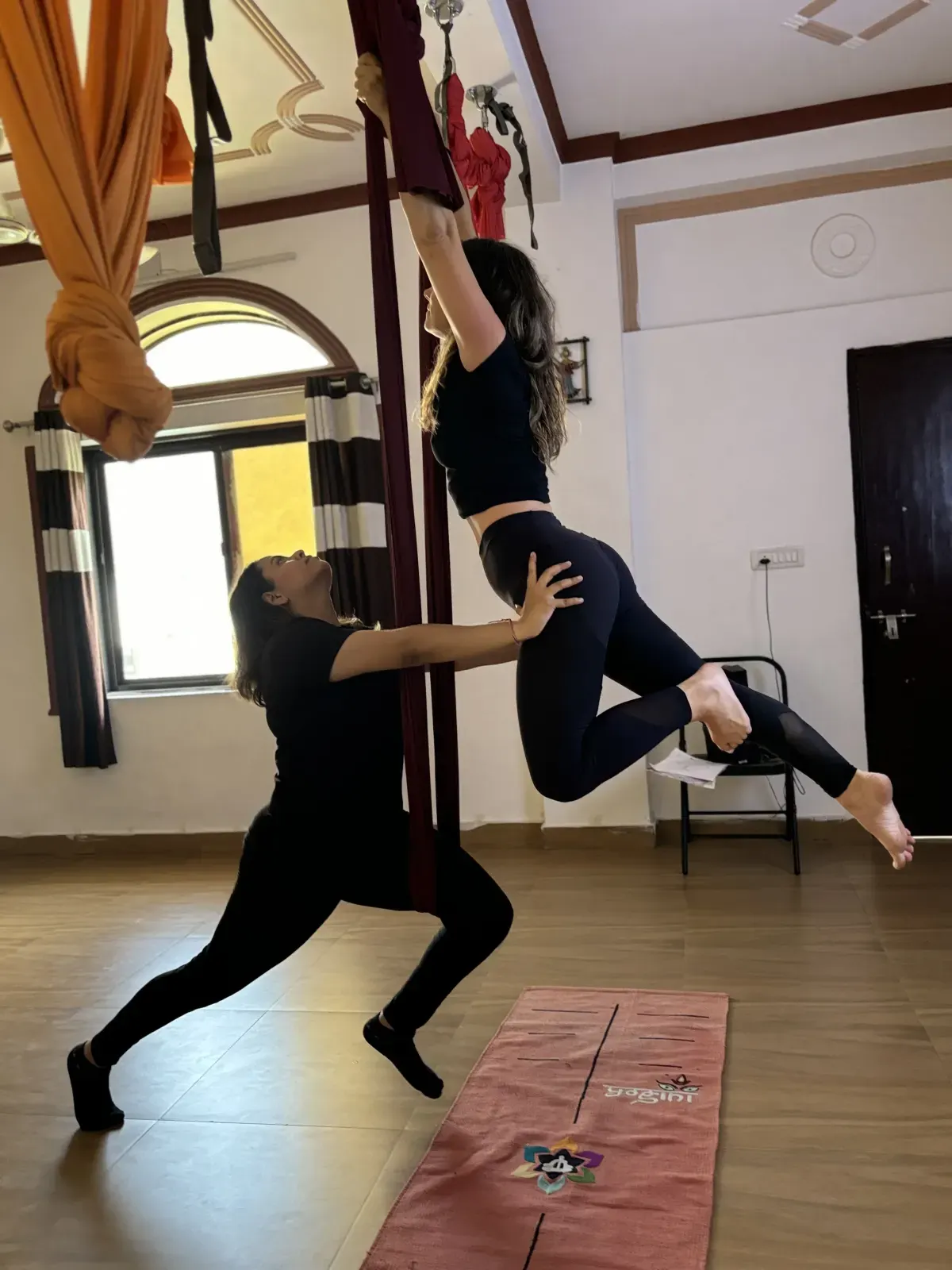
What a credible aerial yoga certificate shows
When you finish a training — or when you are checking someone else’s certificate — a credible aerial yoga certificate, together with the course documents behind it, should make these things clear:
- The school’s full name, so it can be looked up.
- The course name and the word “aerial”, not just “yoga”.
- The number of hours, ideally stating that they are contact hours.
- The dates the training ran.
- Who taught the course, so their own credentials can be checked.
- The accreditation, if any — for a 50- or 100-hour aerial course, YACEP.
Behind the paper, the training itself should have covered rigging and hardware inspection, spotting, the core aerial postures with entries and exits, sequencing a class, contraindications for inversions, and a supervised teaching practicum where you taught and were given feedback. Our inversions safety guide and hammock guide show the level of safety detail to expect.
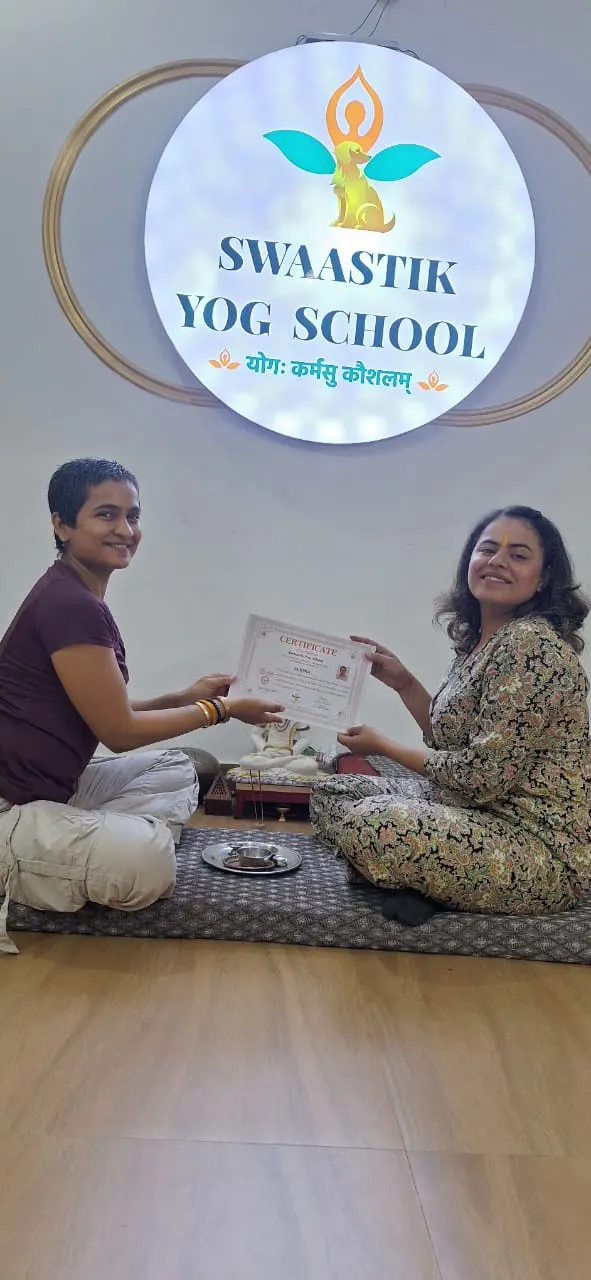
How to verify an aerial yoga school before you pay
A few minutes of checking can save you a wasted trip. Before you book any aerial yoga certification, anywhere:
- Search the Yoga Alliance online directory for the school and the lead teachers. A YACEP provider and a registered teacher can both be looked up by name.
- Ask who teaches and whether they are present for the whole course, not just the first day.
- Ask how much of the course is aerial. Some schools fit aerial into a general programme as one module; a specialist course spends every hour on it.
- Ask how rigging is taught — how the system works and how to inspect it, not just how to hang a hammock.
- Ask how many times you will teach during the practicum, and who gives the feedback.
- Read recent reviews from past trainees, and look for photos and video of real classes.
- Ask to see a sample certificate so you know exactly what you will receive.
Our lead teachers are Mayuri Shewale (E-RYT 500, founder, with 15 years of teaching) and Priya Sharma (RYT 500, aerial specialist), and both are present throughout every batch. We are one of the very few schools in Rishikesh that teach aerial yoga exclusively, and we are happy to answer every question on this list before you commit.
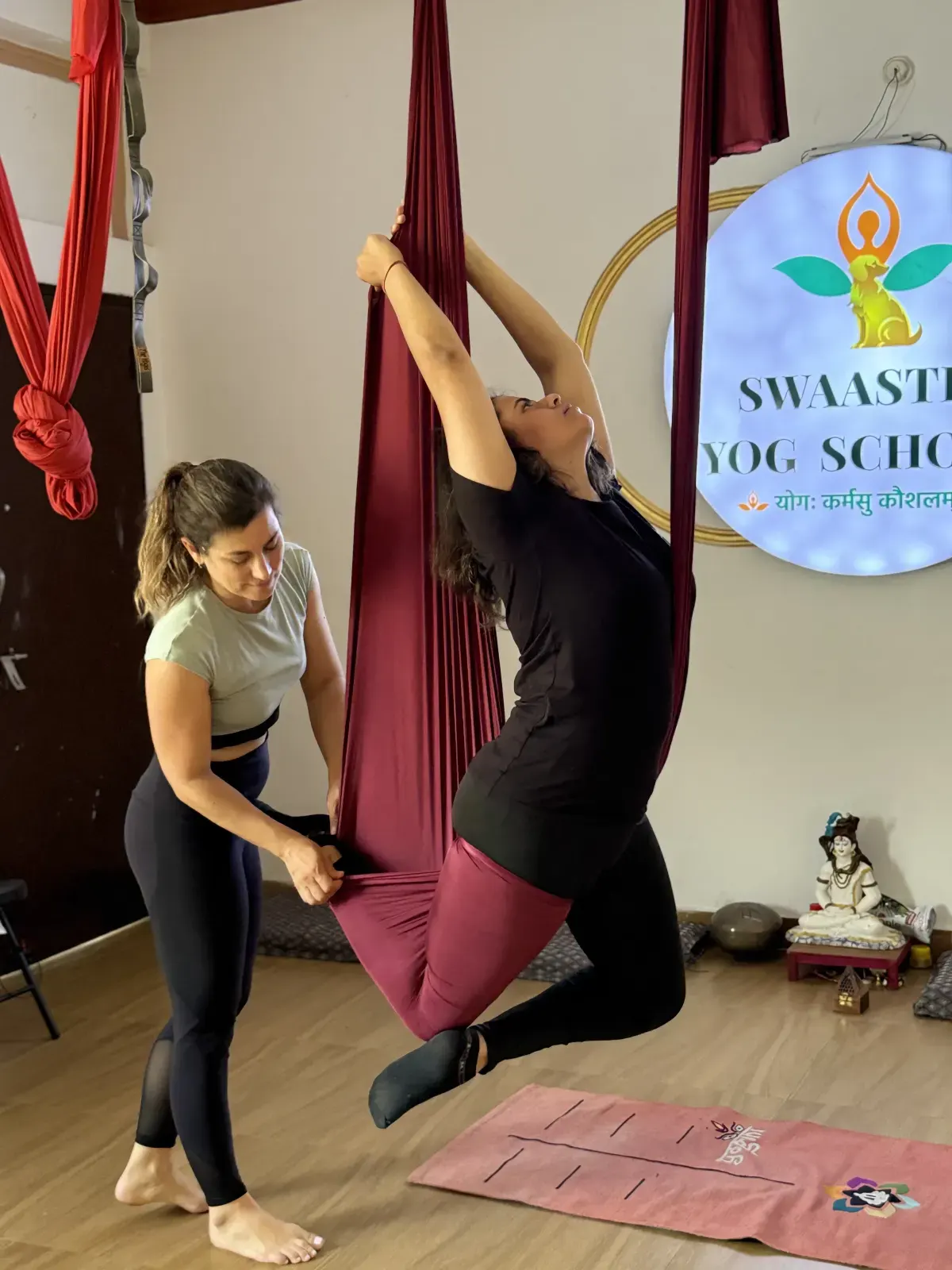
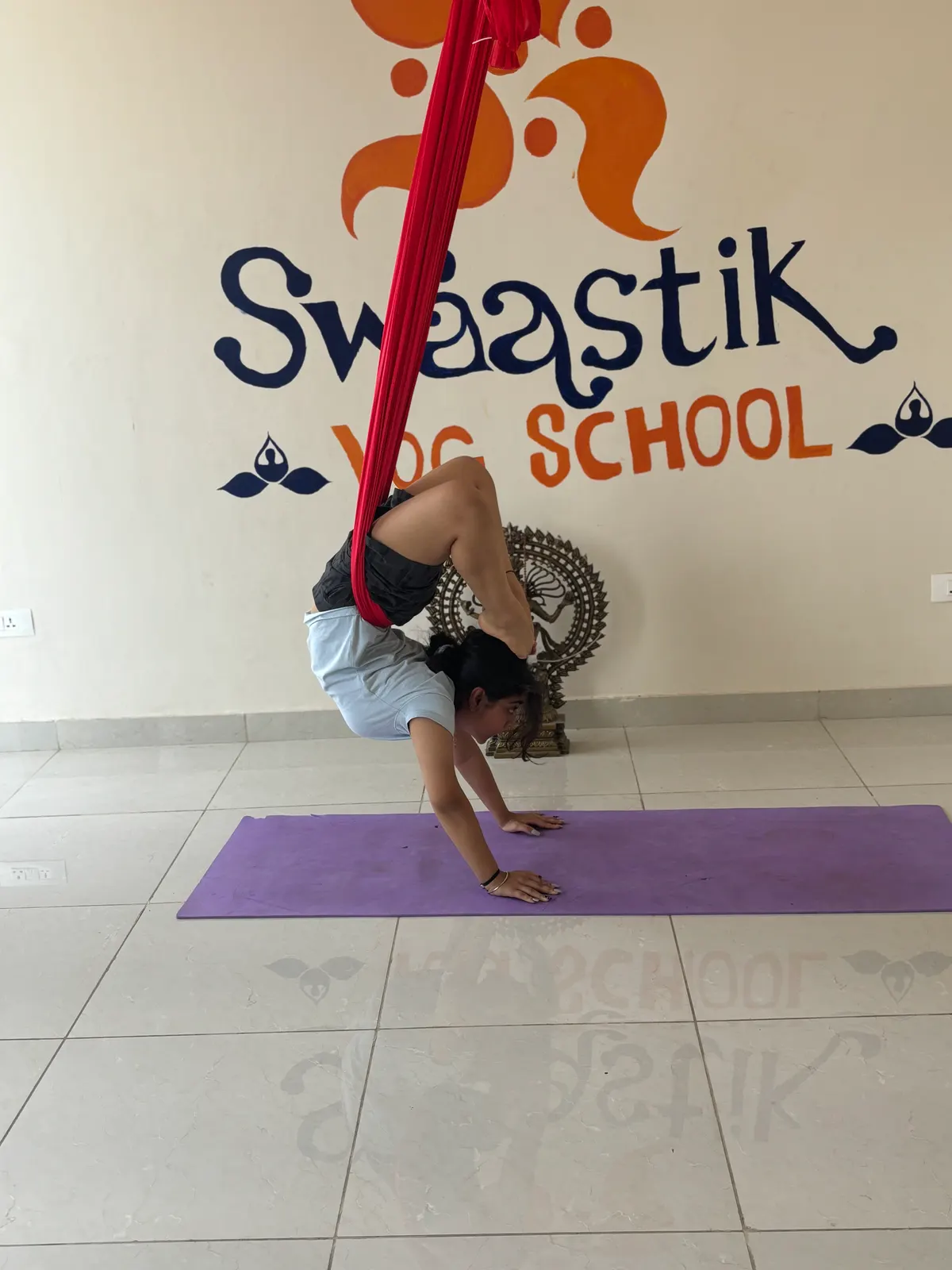
What an aerial yoga certification costs
Prices vary widely by country, length and what is included. Many courses charge tuition only, so accommodation, meals and the certificate itself can add up. Ours include your room for the whole course, three vegetarian meals a day, use of all hammocks and rigging, your course manual and your YACEP certificate, and are priced by room type:
| Training | Starts | Dormitory | Shared room | Private room |
|---|---|---|---|---|
| 50-hour aerial YTT7 days | Every Monday | $195 | $385 | $550 |
| 100-hour aerial YTT12 days | 17th monthly | $390 | $770 | $1,100 |
For what drives the price of any course and the hidden costs to ask about, read aerial yoga teacher training cost. If you are weighing up where to train, aerial yoga teacher training in India compares Rishikesh with other destinations.
After you are certified
- Check your insurance. Not every yoga policy covers aerial; insurers may ask to see your certificate.
- Keep your certificate and course outline together — studios sometimes ask what the training covered, not just its length.
- Log your continuing education with Yoga Alliance if you are a Registered Yoga Teacher.
- Keep training. You can start with 50 hours and take a 100-hour training later, once you are teaching regularly and want advanced inversions, restorative and therapeutic work.
- Remember the brand rule. An aerial yoga certification lets you teach aerial yoga, not trademarked methods — see aerial yoga vs AntiGravity yoga.
Frequently asked questions
Is aerial yoga certification recognised internationally?
Do I need to be a yoga teacher before getting an aerial yoga certification?
How many hours is an aerial yoga certification?
Can I get a credible aerial yoga certification online?
How do I check that an aerial yoga school is genuine?
Why is your aerial course YACEP and not RYS?
Aerial yoga teacher training in Rishikesh
Learn to teach the hammock, at a school that teaches nothing else
Seven-day and twelve-day YACEP-certified trainings in Tapovan, with your room and all meals included. Tell us when you want to come — no deposit is taken at enquiry.